
Protein is the backbone of a canine diet. It fuels muscles, repairs tissue, and provides essential amino acids that a dog’s body cannot synthesize on its own. But when you open a bag of kibble, how does the manufacturer guarantee that the stated protein percentage (e.g., “Crude Protein Min 26%”) is actually in the bowl?
It is not a matter of luck. Behind the bag is a rigorous system of formulation science, ingredient selection, process control, and post-production verification. Here is an inside look at how the industry ensures protein consistency, batch after batch.
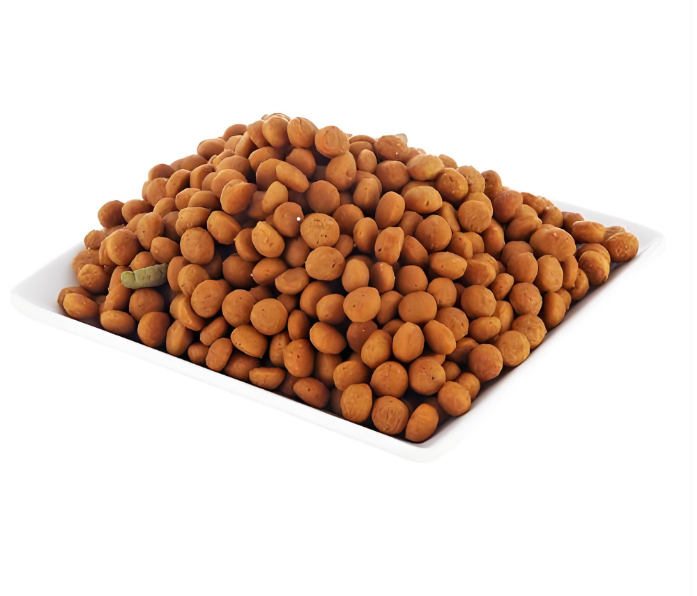
1. Formulation: Building the Blueprint
Before a single ingredient is mixed, the protein target is set using specialized software (known as linear programming). The system calculates the cheapest combination of ingredients that meets the minimum protein requirement while balancing amino acid profiles.
The manufacturer must distinguish between two numbers:
- Crude Protein: The total nitrogen content multiplied by 6.25. This includes both true protein and non-protein nitrogen (e.g., urea, which is illegal in dog food but occasionally a concern in adulterated meals).
- Available (Digestible) Protein: The portion the dog actually absorbs. A high crude protein value is useless if the protein is bound to indigestible fibers or damaged by heat.
To guarantee the label claim, manufacturers build in a safety margin. If the bag says “Min 26%,” the internal target might be 27-28%. This buffer accounts for natural variation in raw materials and minor process losses.
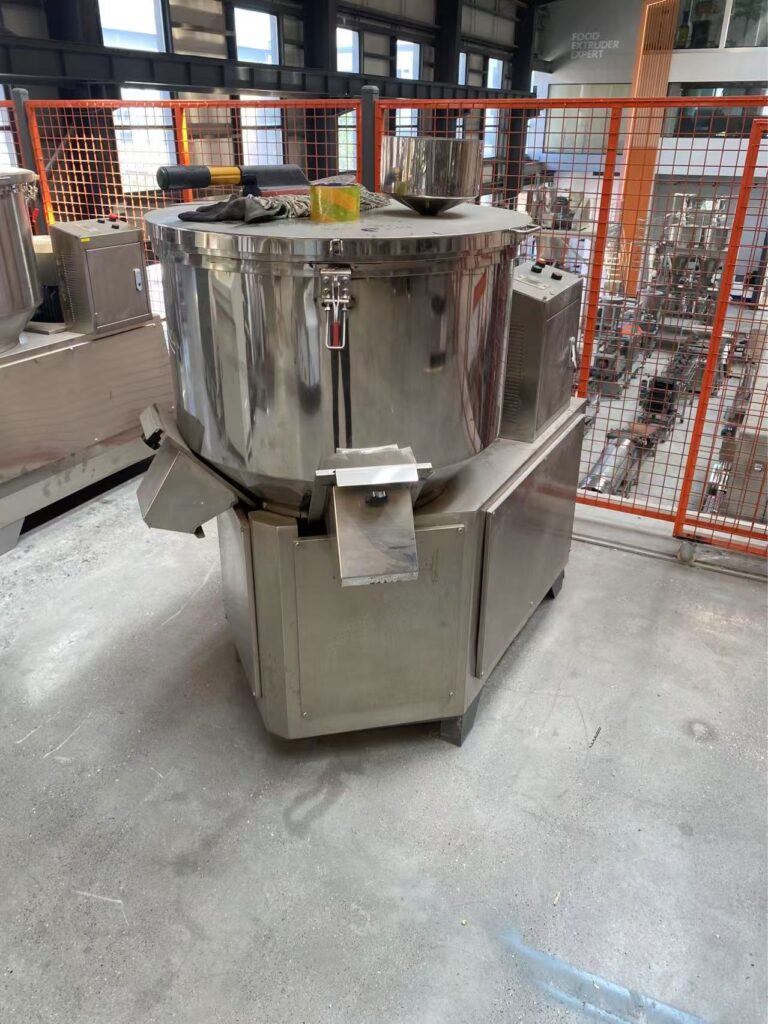
2. Ingredient Selection: The Hierarchy of Meat Meals
Not all protein sources are equal. The form of the ingredient dictates how much protein survives the cooking process.
| Ingredient | Moisture | Protein (As-Is) | Advantages |
|---|---|---|---|
| Fresh/Refrigerated Meat (Chicken, Beef) | 60-70% | 10-18% | High palatability, but mostly water. Requires large volumes. |
| Meat Meal (Chicken Meal, Lamb Meal) | 8-10% | 50-65% | The workhorse. Concentrated protein, stable, cost-effective. |
| Plant Proteins (Soy, Pea, Corn Gluten) | 8-12% | 30-60% | Inexpensive but often lacks methionine (essential amino acid). |
The Secret: Guaranteeing high protein in the finished kibble is nearly impossible using only fresh meat. Because fresh meat is 70% water, when that water evaporates during cooking, the protein contribution shrinks dramatically. Therefore, meat meals (rendered, dried, and ground tissues) are the primary tool for hitting protein targets. A kibble containing “Chicken Meal” is almost always more protein-dense than one listing “Chicken” first.
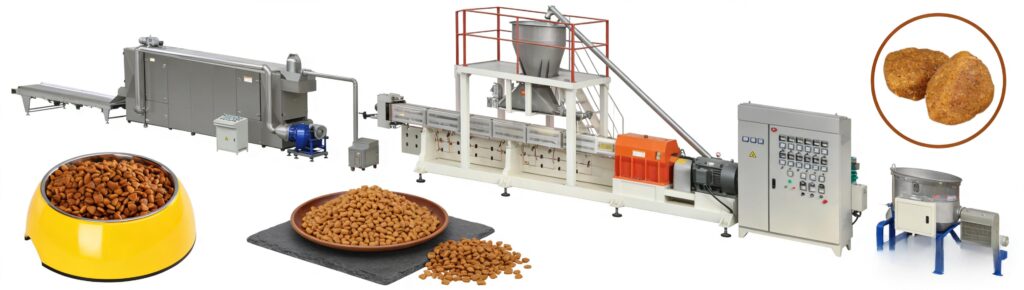
3. The Extrusion Challenge: Preserving Protein Through Heat
The extrusion process (the same high-pressure, high-temperature cooking used for floating fish feed) is a double-edged sword for protein.
The Benefit: Heat denatures protein, unfolding its complex 3D structure. This actually improves digestibility because it exposes peptide bonds to digestive enzymes. A raw protein may be biologically intact but inaccessible; a properly cooked protein is highly digestible (often >85%).
The Risk: Too much heat destroys protein. Specifically, the Maillard reaction—while desirable for browning and flavor—can “lock up” lysine (an essential amino acid) into an indigestible form. This is called heat damage.
To guarantee protein content without destroying quality, manufacturers control three variables:
- Thermal Profile: The extruder barrel is divided into zones. The initial zones cook the starch (90-100°C), but the final zone before the die is often cooler to prevent scorching the protein.
- Residence Time: Dough stays inside the extruder for only 15-30 seconds (short-time, high-temperature). Prolonged cooking degrades amino acids.
- Screw Speed: Faster screws increase shear, generating frictional heat. Too much shear mechanically shreds protein chains.
4. The “Protein Gap”: Why Amino Acids Are Added Separately
Here is a counterintuitive fact: sometimes manufacturers add isolated amino acids to guarantee the effective protein content, even if the crude protein target is already met.
Why? Because plant proteins (corn, wheat, soy) are deficient in methionine and lysine. If a formula relies heavily on pea protein to hit 30% crude protein, the dog may still suffer from a methionine deficiency.
To solve this, manufacturers add crystalline amino acids (e.g., DL-Methionine, L-Lysine) directly into the mixer before extrusion. These synthetic versions are heat-stable (up to 120°C) and guarantee that the amino acid profile matches the “complete and balanced” standard set by the AAFCO (Association of American Feed Control Officials).
Without these additions, a high-protein plant-based kibble would be biologically incomplete.
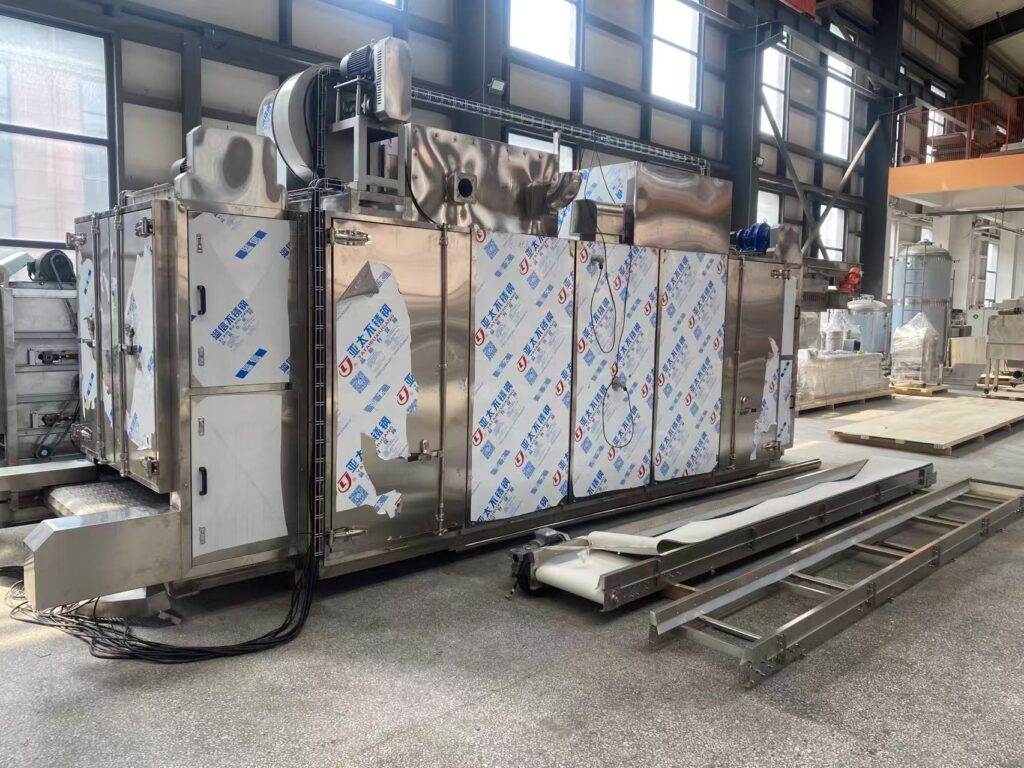
5. The Drying Dilemma: The Final Concentration Step
After extrusion, the kibble contains about 22-28% moisture. It is soft, puffy, and heavy. To become shelf-stable kibble, dog food making machine it must enter a multi-pass dryer (often 20-30 minutes at 90-120°C).
As water evaporates, the protein becomes concentrated. A wet kibble with 10% protein (as-is) will test at 25% protein after drying to 10% moisture. This is a simple mathematical concentration effect.
However, the drying process carries a hidden risk: condensation. If the dryer temperature fluctuates, moisture can migrate to the surface of the kibble. Surface moisture + heat + protein = bacterial growth and mold. Manufacturers use airflow management to ensure rapid, even drying that does not linger at dangerous moisture levels (above 14%).
6. Verification: The Analytical Safeguards
Promising protein is one thing; proving it is another. Finished batches are tested using standardized methods:
- Kjeldahl Method: The gold standard. The sample is digested in sulfuric acid, converting all nitrogen to ammonia. The ammonia is distilled and titrated. The total nitrogen is multiplied by 6.25 to give Crude Protein. This is the number on the bag.
- Dumas Method: A faster, combustion-based alternative. The sample is burned in pure oxygen, and the released nitrogen is measured via thermal conductivity.
- Amino Acid Profile: For premium brands, HPLC (High-Performance Liquid Chromatography) identifies individual amino acids. This verifies that the protein is not adulterated (e.g., no added melamine to inflate nitrogen numbers) and that methionine/lysine targets are met.
The Warning Signs: When Protein Guarantees Fail
Even with strict protocols, things go wrong. As a consumer, be aware of:
- Ash Content: If crude protein is high but ash (mineral residue) is also high (>8-10%), the protein may be coming from low-quality bone meal rather than muscle tissue.
- The “Pea Protein” Loophole: Pea protein concentrate can boost crude protein numbers cheaply, but it has a different amino acid signature than meat. A dog can only utilize a fraction of it.
- Heat Damage Indicator: If kibble is excessively dark (burnt-looking) or has a bitter, acrid smell, the lysine has likely been destroyed. The crude protein number will look fine, but the dog will not absorb it.
Conclusion: The Art of the Guarantee
Guaranteeing protein in dog food is not a single step—it is a chain of custody. dog food making machine It begins with the selection of concentrated meat meals, continues through careful extrusion that cooks without scorching, involves synthetic amino acids to patch plant-based deficiencies, and ends with rigorous nitrogen testing.

The next time you read a guaranteed analysis, remember: that number represents the successful marriage of agricultural science, chemical engineering, and quality control. It is a promise that, despite the violence of the extruder and the heat of the dryer, the protein your dog needs has survived intact.
 Italian
  English
  Russian
  Spanish
  Arabic
  Portuguese
  German
  French
  Japanese
  Moroccan Arabic
  Persian
  Belarusian