
There is a magical moment when you bite into a well-made cheese puff or a corn curl: the shell shatters with a crisp snap, the interior melts into an airy fluff, and the whole structure collapses with a delicate, tender chew. This is not luck; it is food engineering at its finest. puffed snack food machine Achieving that perfect balance of crispy, puffy, and tender is a complex interplay of raw materials, moisture control, and thermal processing. Here is how snack manufacturers create that iconic texture.
1. The Right Foundation: Starches and Proteins
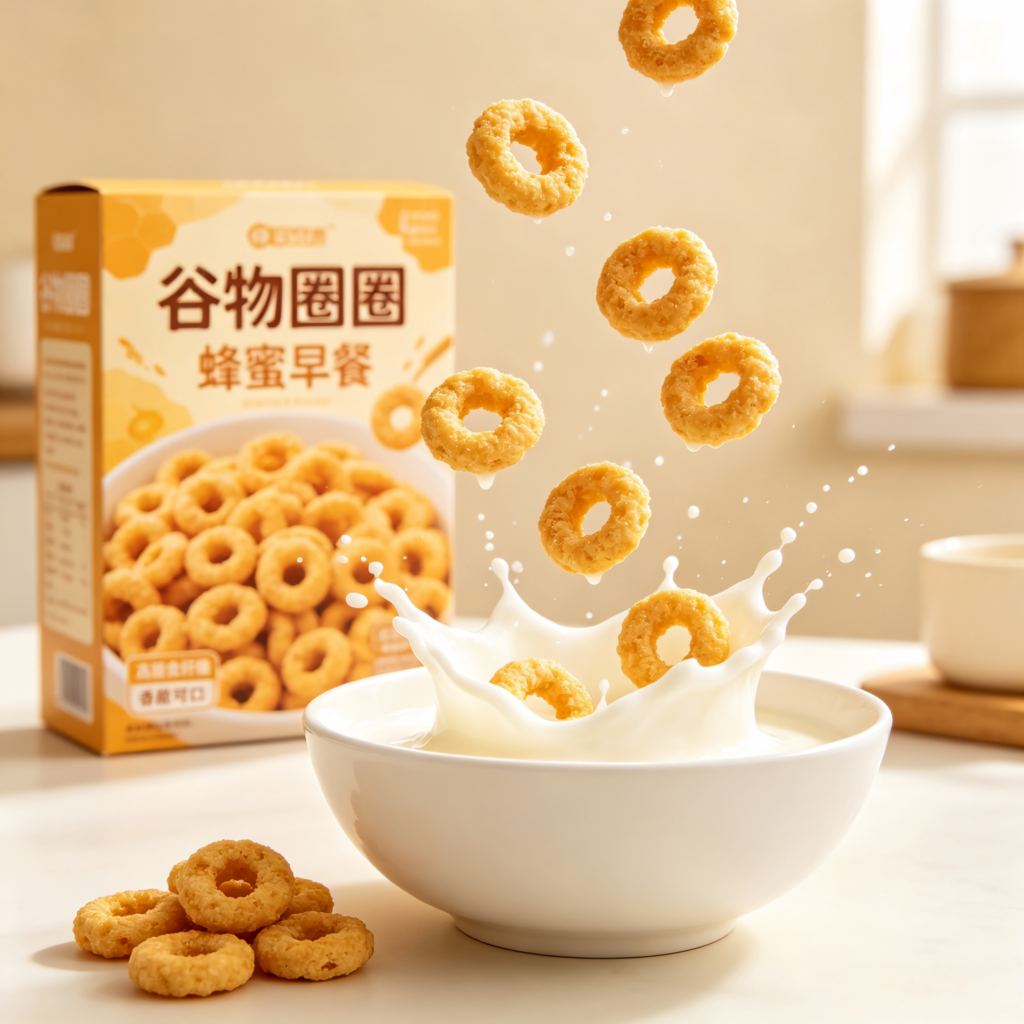
Texture begins with the recipe. The primary structure of puffed snacks comes from starch, typically corn, wheat, rice, or potato. To achieve puffiness, you need a starch with a high proportion of amylopectin (the branched-chain molecule). Waxy corn starches are ideal because they gelatinize easily and hold steam without collapsing.
However, crispness requires structure. Adding a small percentage of protein (from soy flour or wheat gluten) reinforces the cell walls. Too much protein, though, makes the snack tough; too little, and it becomes fragile. The sweet spot is a base flour with 8–12% protein, which provides just enough scaffolding to hold the puffed shape.
2. The Moisture Sweet Spot (15–18% is Gold)
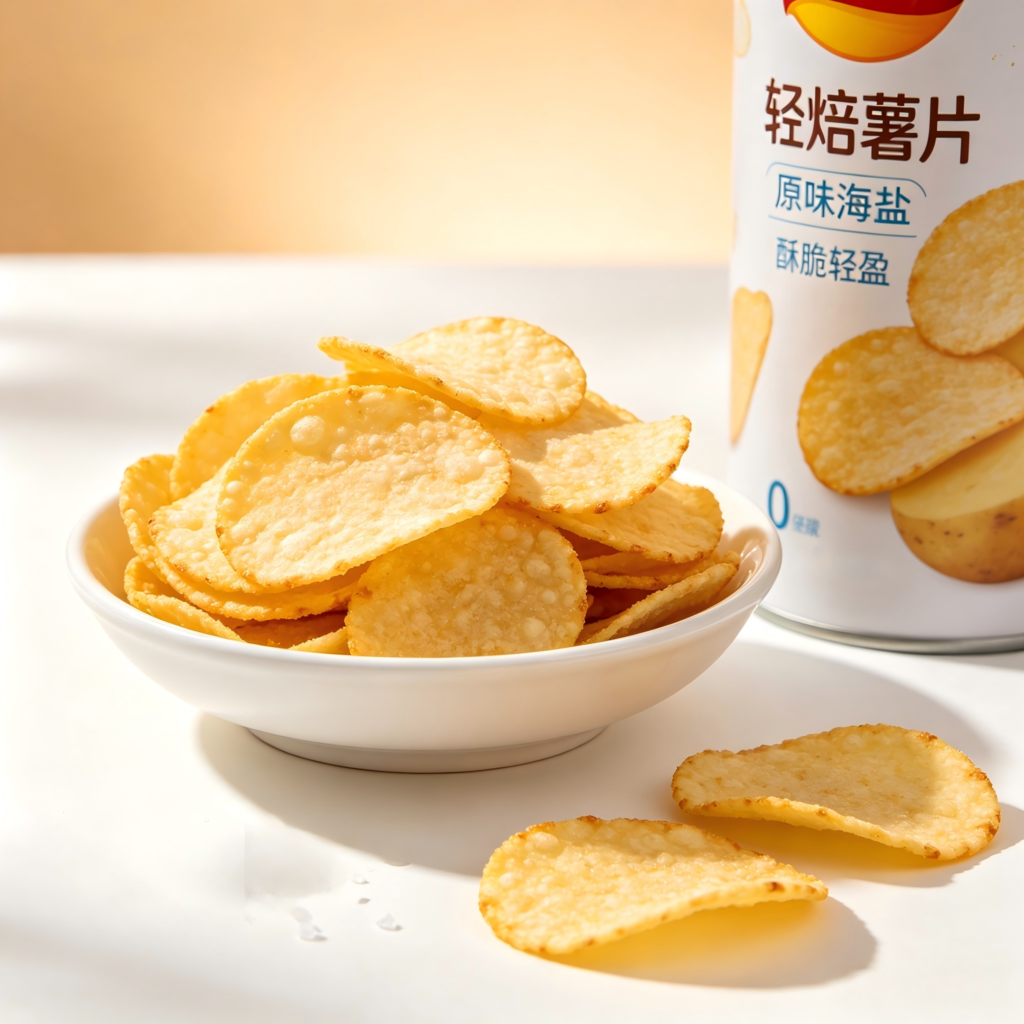
Water is the invisible leavening agent. In extrusion cooking, the dough entering the extruder must have a precise moisture content of about 15–18%. This water serves two purposes:
- It plasticizes the starch, allowing it to melt and flow through the die.
- It becomes superheated steam the moment the extruded piece exits the high-pressure barrel and hits atmospheric pressure.
If moisture is too high (>20%), the steam expands violently, creating large, coarse air cells that feel brittle and hard. If moisture is too low (<14%), puffed snack food machine there isn’t enough steam to puff the matrix, resulting in a dense, hard pellet. The 15–18% range ensures a fine, uniform cellular structure, which is the foundation of tenderness.
3. Temperature and Shear: Cooking the Starch
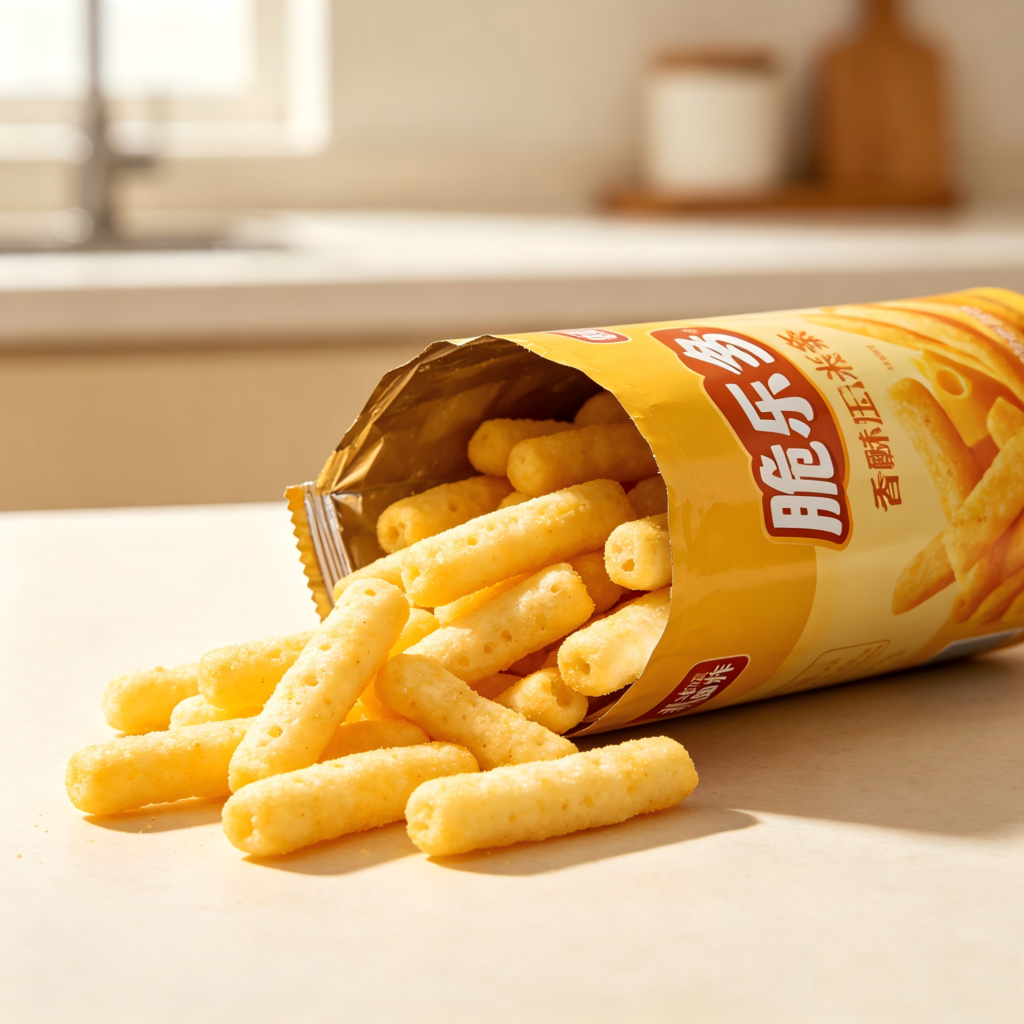
Inside the extruder barrel, temperatures typically range from 120°C to 180°C. At these temperatures, the starch gelatinizes – the crystalline granules melt into an amorphous, plastic-like mass. Simultaneously, the high-speed screw rotation creates mechanical shear, which physically tears the long starch molecules into shorter chains. This “dextrinization” reduces the final product’s hardness, making it more tender on the tongue.
The key is to fully cook the starch while minimizing burning. Over-shearing destroys the molecule completely, yielding a sticky, gummy texture upon expansion. Under-shearing leaves ungelatinized granules that create gritty, hard spots.
4. The Die and Expansion: Controlled Explosion
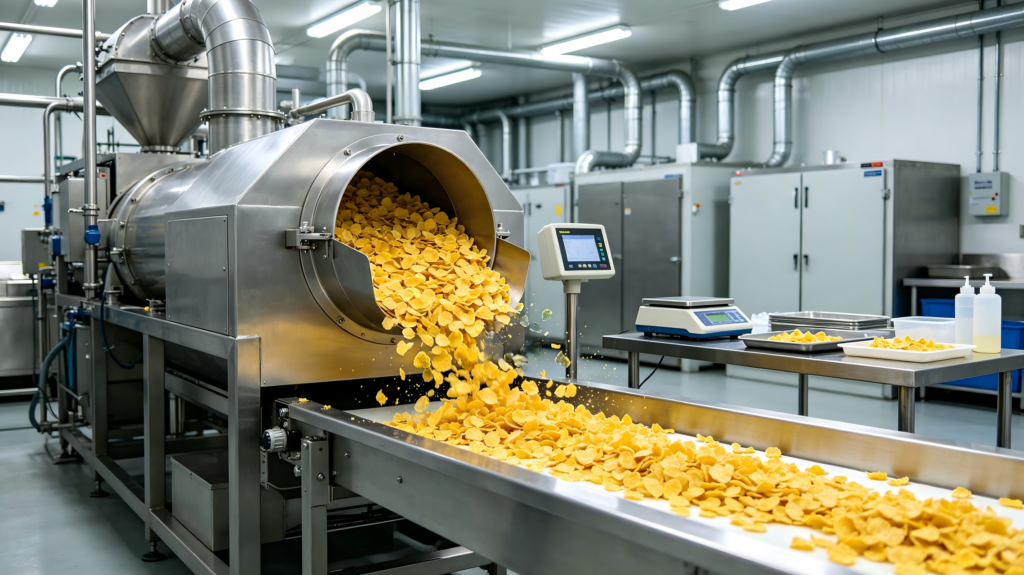
The die (the metal plate with holes) is where the magic happens. The shape of the die – round, star-shaped, or ridged – affects pressure drop. puffed snack food machine A rapid, even pressure drop creates a uniform puffed cell structure. For maximum crispness, manufacturers often use a “restriction ring” just before the die to build back-pressure, ensuring that the melt is homogenous before expansion.
A critical trick for tenderness is allowing the extrudate to expand freely in the first 0.5 seconds after exiting. Any physical contact (like a cutter blade) during this initial expansion will collapse the airy matrix, leading to dense, chewy texture. Thus, cutting is timed to occur 1–2 seconds after the puff is fully formed.
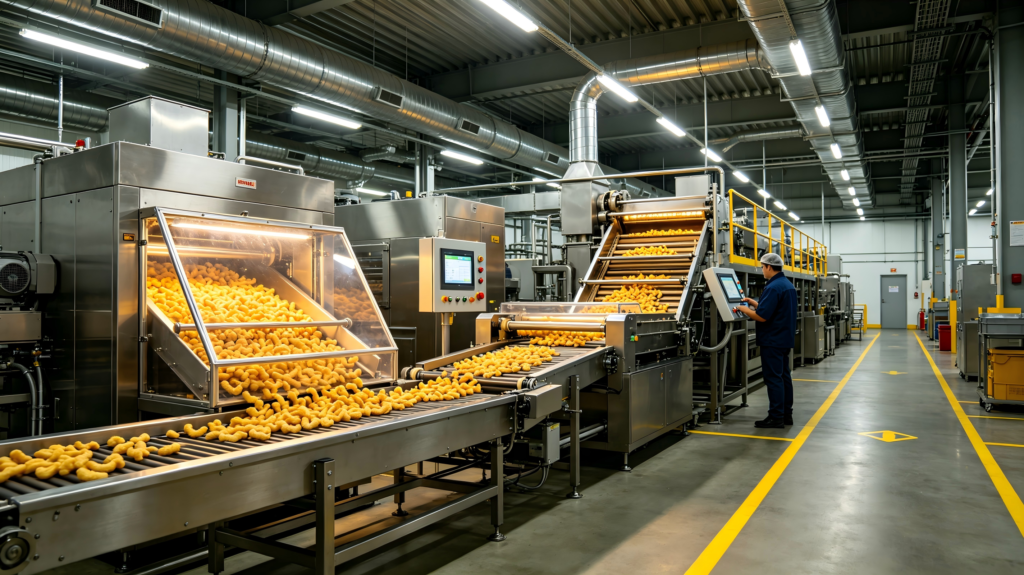
5. Drying and Equilibration: The Firming Phase
Freshly extruded snacks are actually moist (about 8–10% moisture) and slightly leathery. They need to be dried in a multi-zone oven at 60°C–100°C for 5 to 15 minutes. This drying serves to:
- Reduce moisture to a final 2–3%, which creates that crispy snap when bitten.
- Even out moisture gradients within the piece.
However, drying too fast or at too high a temperature case-hardens the outer surface while leaving the center moist, yielding a “soft outside, soggy inside” defect. Slow, gentle drying allows moisture to migrate uniformly outward, ensuring that every air cell wall is equally glassy and crisp.
After drying, the snacks are rested in a conditioning bin for 30–60 minutes. This equilibration period allows the residual moisture (about 3%) to spread evenly throughout the matrix. This is the “tender” secret: the internal moisture remains just enough to prevent the snack from feeling like sharp glass, giving it a gentle crumble instead of a painful shatter.
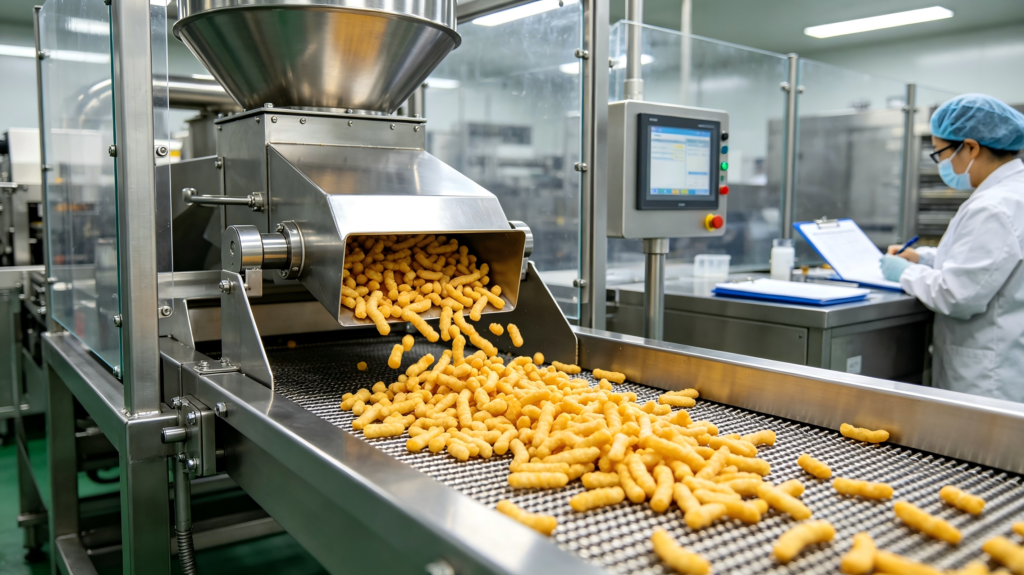
6. The Role of Frying vs. Baking (Two Paths)
There are two primary methods for final crisp development:
- Baked (Expanded) – Relies purely on steam expansion and low-fat drying. These snacks tend to be lighter and more brittle. To make them tender, oil is often sprayed on after baking, which plasticizes the cell walls slightly, reducing harshness.
- Fried – The extruded pieces are dried to 8–10% moisture, then submerged in oil at 180°C–200°C for 15–30 seconds. The oil rapidly displaces the remaining water, creating a uniform, crispy crust. The absorption of oil (about 25–35% by weight) coats every tiny air cell with a lipid film, which slows moisture absorption from the air and gives a melt-in-your-mouth tenderness that baked snacks struggle to achieve.
7. Final Coating and Seasoning: The Finishing Touch
Post-extrusion coatings affect texture dramatically. Oil-based slurries (containing 10–15% oil) are sprayed onto the warm snacks, followed by dry seasoning powders. puffed snack food machine The oil not only adheres the flavour but also lubricates the surface, reducing friction against the palate. This enhances the perception of tenderness because the snack doesn’t scrape the roof of the mouth; it glides, shatters, and then dissolves.

Conclusion: The Golden Triangle

Creating a truly exceptional puffed snack – one that is crispy, puffy, and tender – comes down to mastering the golden triangle of starch quality, moisture management, and thermal processing. It requires viewing water not as an ingredient, but as a tool. When starch is perfectly gelatinized, expanded by controlled steam, and gently dried to a precise equilibrium, the result is a piece of foam that offers resistance (crispness), volume (puffiness), and a gentle collapse on the tongue (tenderness). It is a delicate balance, but when achieved, it transforms a simple grain into a sensory delight.
 Persian
  English
  Russian
  Spanish
  Italian
  Arabic
  Portuguese
  German
  French
  Japanese
  Moroccan Arabic
  Belarusian