
Introduction
Potato chips are one of the world’s most beloved snack foods. However, not all potato chips are created equal. Walk down the snack aisle of any supermarket, and you will notice two distinct types: chips sold in bags (pouches) and chips sold in rigid tubes or cans. This packaging difference is not merely cosmetic—it reflects a fundamental distinction in how the chips are made. The snack industry categorizes potato chips into two main types based on their production method: sliced potato chips (also known as fresh-cut or traditional chips) and formulated (compound) potato chips (also referred to as fabricated or restructured chips).
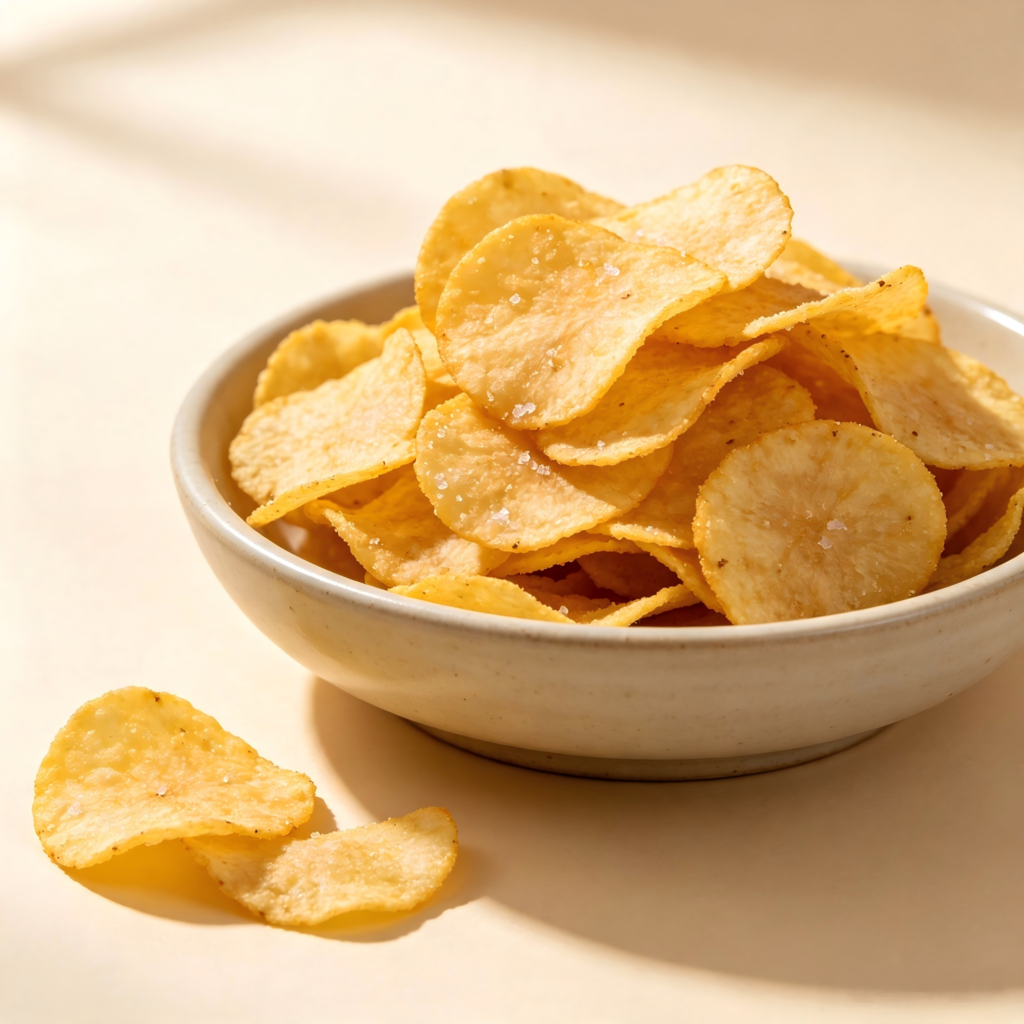
This article explores the key differences between these two types of chips across multiple dimensions, including raw materials, manufacturing processes, physical structure, taste and texture, packaging, and even nutritional implications.
1. Raw Materials: Fresh Potatoes vs. Potato Powders
The most fundamental difference lies in the starting ingredients.
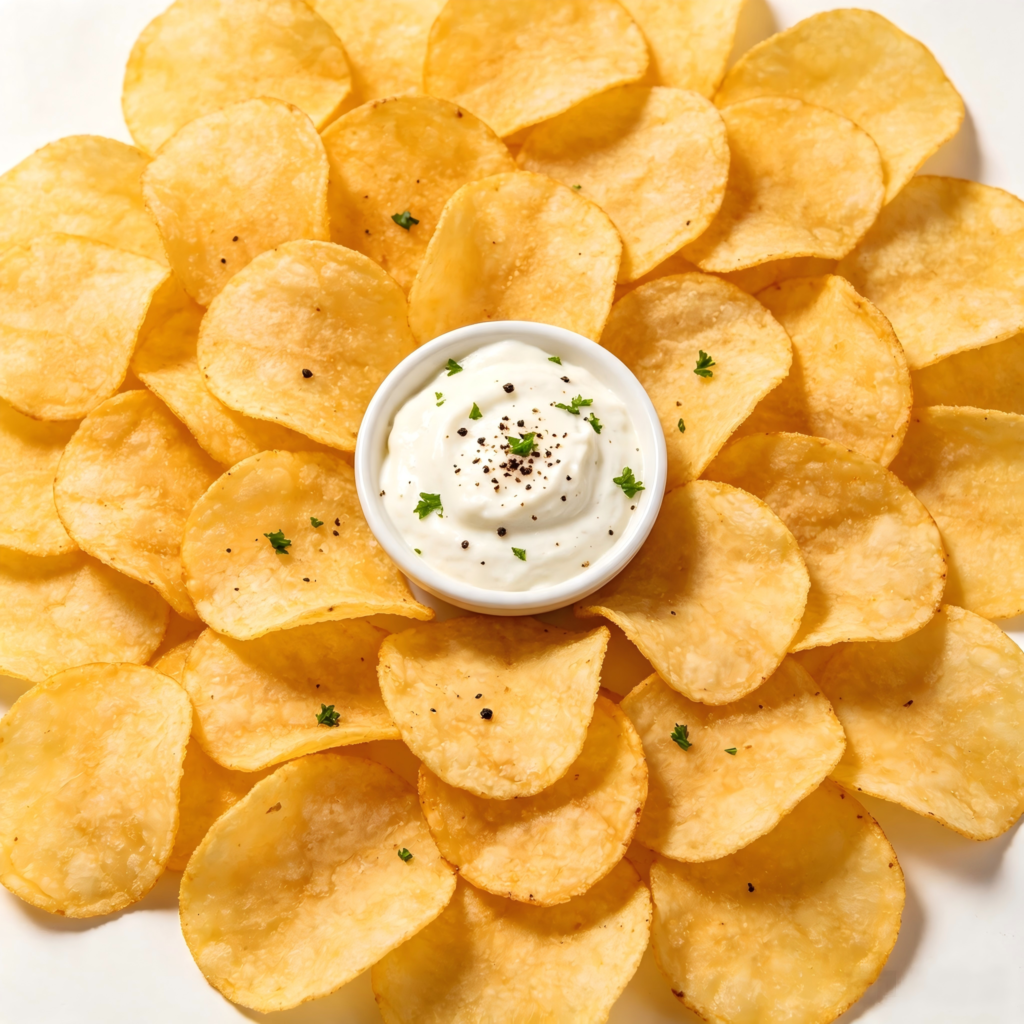
Sliced potato chips are made from whole, fresh potatoes. The process begins with selecting raw potato tubers, which are then washed, peeled, and sliced directly. If you look at the ingredient list of a sliced chip product, the first ingredient is simply “potatoes”. This is why sliced chips are often considered the “real” or “authentic” potato chip.
Formulated (compound) potato chips, on the other hand, are made from reconstituted potato products. The primary ingredients are potato flakes, potato flour (such as potato), potato granules, and starches, often combined with other flours like corn flour or rice flour. In these products, the first ingredient listed is typically “potato flour” or “potato” rather than whole potatoes. Some industry sources note that the potato content in formulated chips may be only around one-third to two-thirds of the total ingredients, with the remainder being starches and other fillers.
2. Manufacturing Process: Slicing vs. Forming
The production methods for the two types of chips are entirely different.
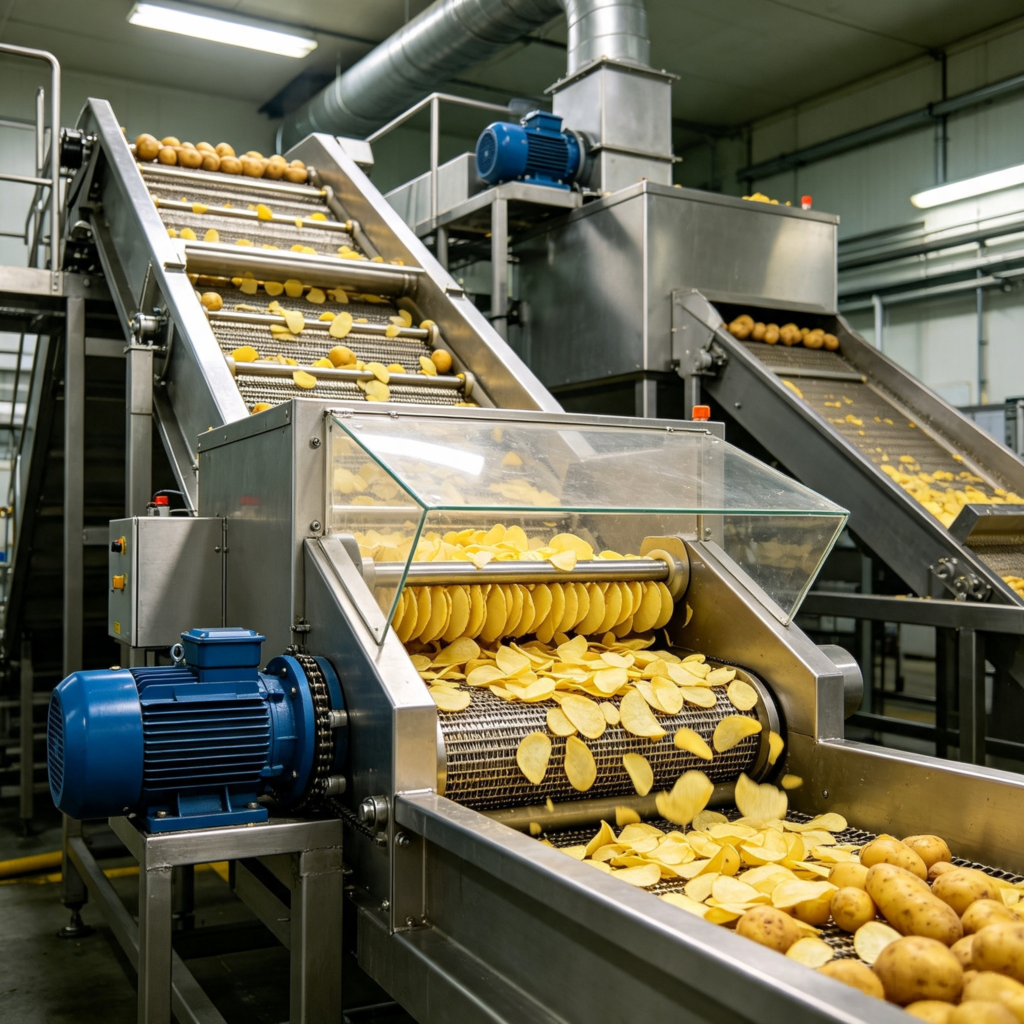
Sliced potato chips follow a traditional, straightforward process:
- Whole potatoes are cleaned, peeled, and sliced into thin pieces
- The slices are rinsed and sometimes blanched
- They are deep-fried in vegetable oil until golden and crisp
- Finally, they are seasoned and packaged
Because each potato is unique in size and shape, the resulting chips vary in size and form—no two sliced chips look exactly alike.
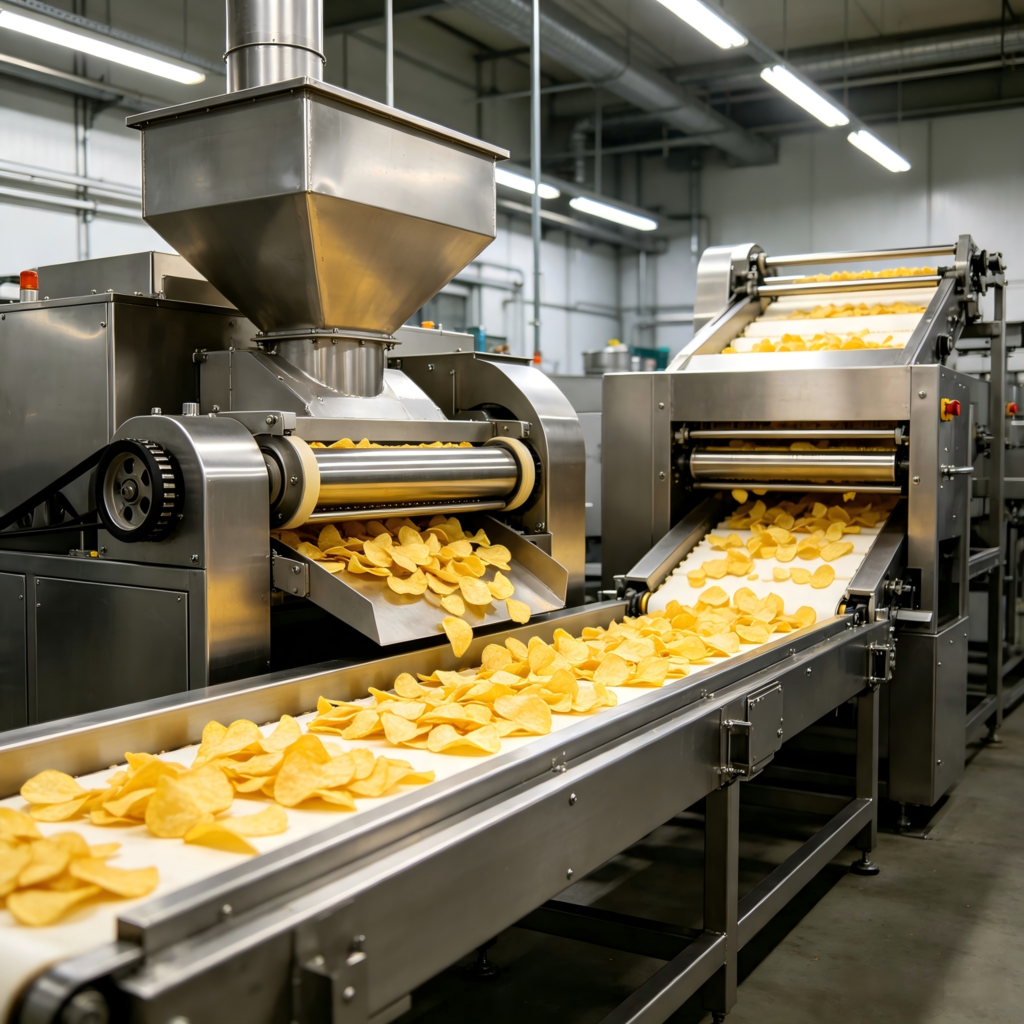
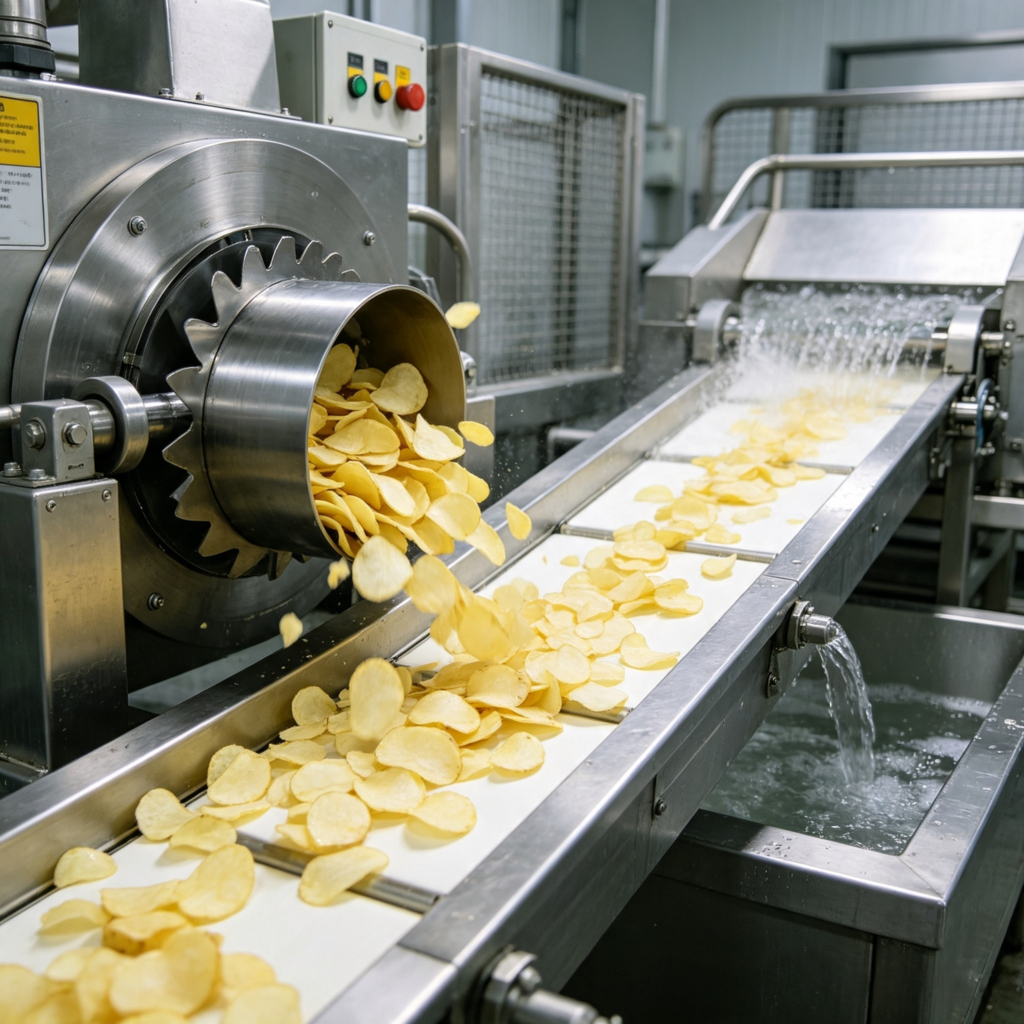
Formulated potato chips involve a more complex, industrial process:
- Potato flakes or flour are mixed with starches, water, and other ingredients to form a dough
- The dough is kneaded and rolled into large thin sheets using rollers
- The sheet is then cut into uniform shapes using molds or dies
- These shaped pieces are fried or sometimes baked
- Any leftover dough scraps can be recycled and re-pressed into new chips
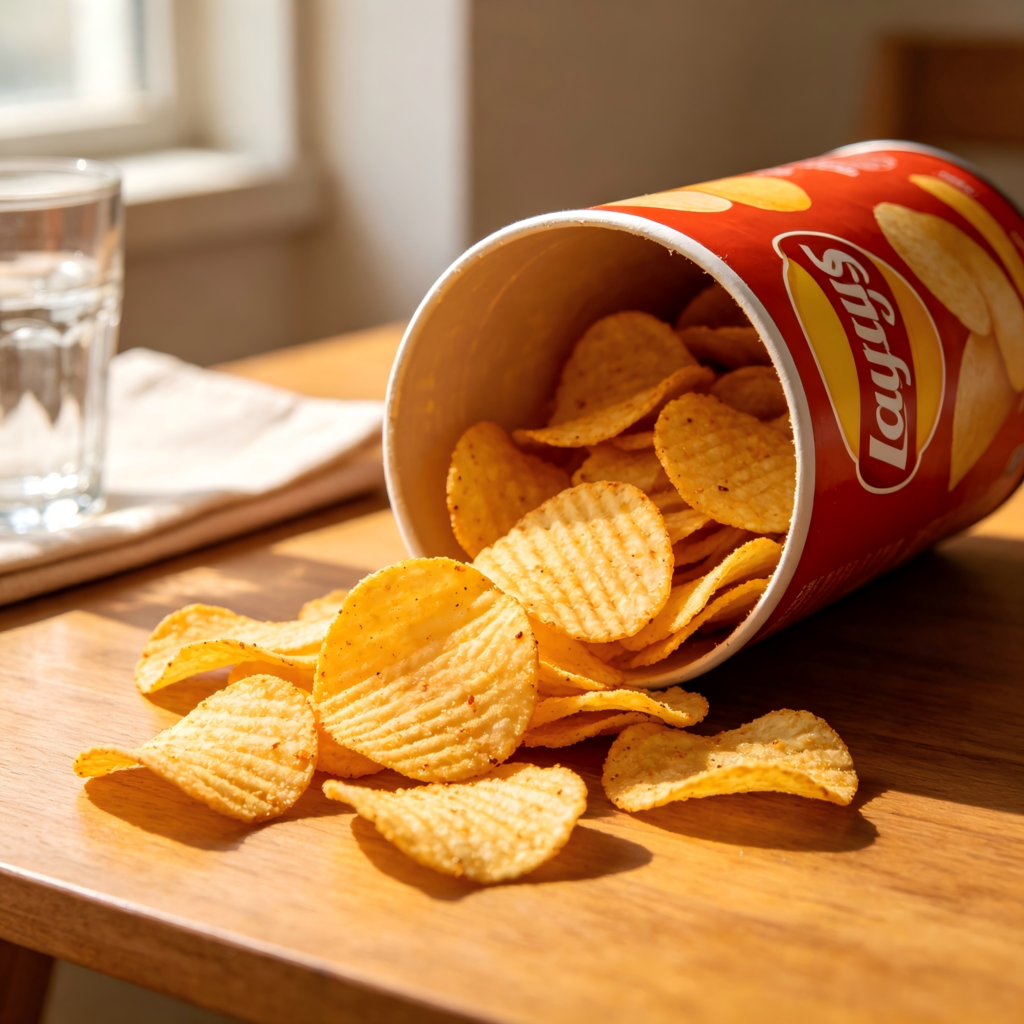
This method allows for high consistency in size, shape, and thickness, and enables manufacturers to produce chips in various uniform shapes—most notably the iconic saddle-shaped (hyperbolic paraboloid) design commonly seen in tubular containers.
3. Physical Structure: Cellular Integrity vs. Reformed Matrix
The structural differences between the two chip types are significant at the microscopic level and have been the subject of scientific study.
Sliced potato chips preserve the intact cellular structure of the potato tuber. The potato’s natural cell walls remain largely intact throughout the frying process, with lipids (fats) surrounding the parenchyma cell walls. This cellular integrity is what gives sliced chips their characteristic light, porous, and brittle texture. When hydrated (for example, during digestion), the tissue structure of sliced chips remains essentially intact.
Formulated potato chips, in contrast, have little to no intact cellular structure. They consist of a loosely packed starch matrix formed from reconstituted potato powders. The potato cells in formulated chips separate and disperse when hydrated, rather than holding together as a cohesive tissue structure. This reformed matrix results in a denser, more uniform internal structure.
These structural differences also affect how the chips behave during digestion. Research has shown that while the total amount of fat released during digestion is similar between the two types, the timing of fat release differs significantly. Sliced chips release free fatty acids steadily throughout digestion, while formulated chips release them in a peak around 240–300 minutes. Additionally, sliced chips release more saturated fatty acids, whereas formulated chips release more unsaturated fatty acids.
4. Taste and Texture: Thin and Crispy vs. Thick and Uniform
For most consumers, the most noticeable difference is in how the chips taste and feel when eaten.
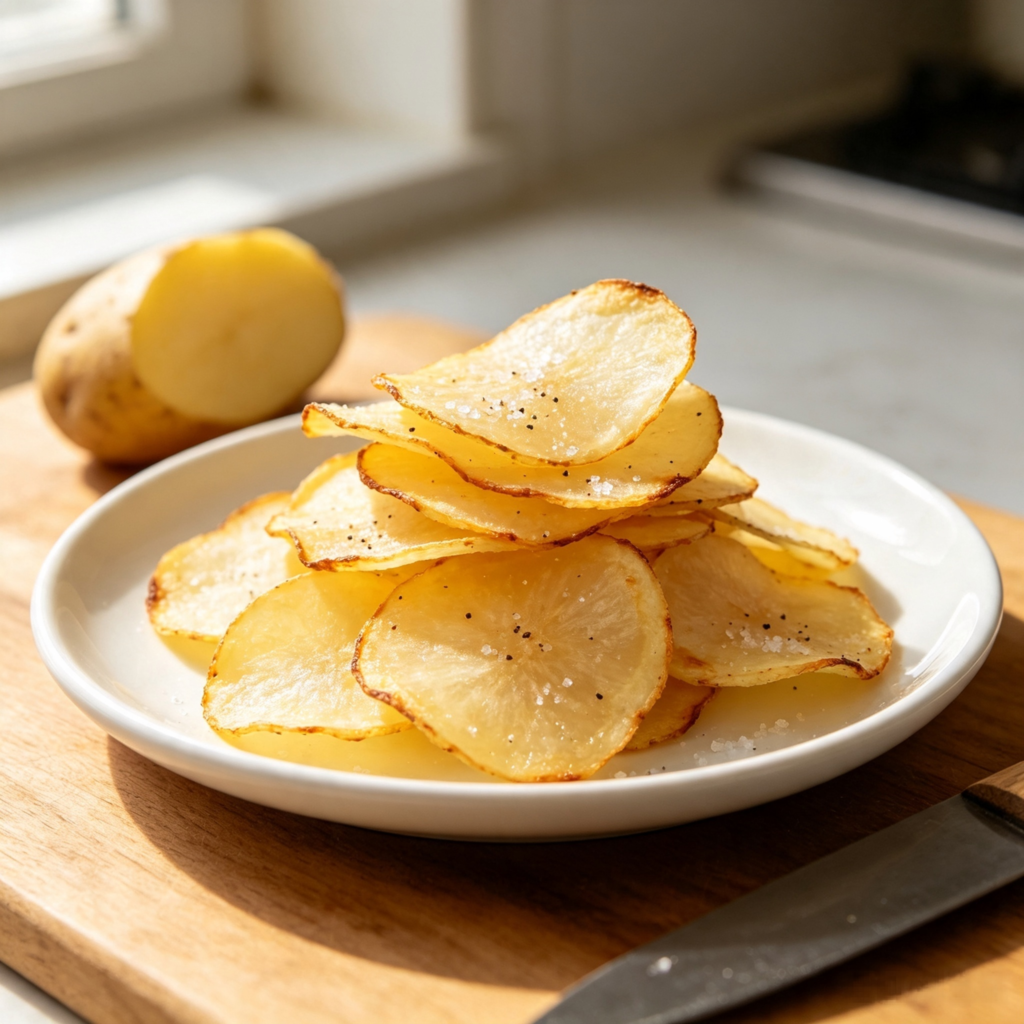
Sliced potato chips are generally thinner, crispier, and more flavorful. Because they are sliced directly from fresh potatoes, they can be cut very thin—often thinner than what can be achieved with a dough-based process. The preservation of the potato’s natural cellular structure creates a loose, airy texture that shatters cleanly when bitten. In terms of flavor, sliced chips have a more pronounced, earthy potato taste because they contain no fillers that dilute the natural potato flavor. The limited ingredient list—essentially potatoes, oil, and salt—allows the authentic potato taste to shine through.
Formulated potato chips are typically thicker, denser, and less crisp. The dough-based production process results in a tighter internal structure that feels harder and less airy on the palate. Many consumers describe the taste as having a noticeable “starchy” or “floury” quality. The addition of corn flour, rice flour, or other starches dilutes the potato flavor, resulting in a milder taste that allows seasonings to stand out more prominently. Some food writers have even described formulated chips as “potato-flavored crisps” rather than true potato chips.
5. Packaging and Preservation: Bags vs. Tubes
The packaging differences between the two chip types are not arbitrary—they are directly tied to the chips’ physical properties and susceptibility to damage.
Sliced potato chips are almost exclusively sold in bags (pouches) filled with nitrogen gas. There are several reasons for this:
- Sliced chips are thin and brittle, making them prone to breaking during
- Because sliced chips contain fewer additives and preservatives, they are more susceptible to oxidation and spoilage
- The nitrogen gas serves multiple purposes: it slows oxidation, prevents moisture absorption (which would make the chips soggy), inhibits bacterial growth, and provides cushioning to reduce breakage during shipping
Formulated potato chips are typically packaged in rigid tubes or cans. The uniform, thicker shape of formulated chips makes them more structurally robust and less prone to breaking. The compact, stackable design of tubular packaging protects the chips effectively without the need for nitrogen flushing. However, some formulated chip brands (such as the version ) do use nitrogen-filled bags as an exception.
6. Nutritional and Production Considerations
There are also differences in how the two chip types perform during frying and their nutritional profiles.
Frying characteristics: Sliced chips require more oil to fry properly because the fresh potato slices have higher moisture content and need thorough cooking. In contrast, formulated chips, made from dehydrated potato products, typically fry at lower temperatures (around 160°C) for shorter periods (about 40 seconds), as the dough-based has higher moisture content.
Oil absorption: Some research suggests that chips made from potato flakes may absorb less oil—reducing oil uptake by approximately 15% compared to fresh potato slices—when fried at 170–180°C.
Cost and consistency: From a manufacturing perspective, formulated chips offer advantages in production cost control and product consistency. The ability to recycle dough scraps, use standardized ingredients, and produce uniform shapes makes large-scale production more efficient and predictable.
Summary Table
| Aspect | Sliced Potato Chips | Formulated (Compound) Potato Chips |
|---|---|---|
| Raw Material | Whole fresh potatoes | Potato flour, flakes, starches, other flours |
| First Ingredient | Potatoes | Potato flour or potato |
| Production | Sliced directly from whole potatoes | Dough mixed, sheeted, and die-cut |
| Cellular Structure | Intact potato cell walls | Reformed starch matrix, minimal cell integrity |
| Thickness | Thin | Thicker |
| Texture | Light, airy, very crispy | Dense, harder, less crisp |
| Potato Flavor | Strong, authentic | Milder, starchy, diluted |
| Packaging | Bags with nitrogen gas | Tubes/cans (mostly) |
| Shape Consistency | Irregular, varies by potato | Highly uniform, mold-cut |
Conclusion

Sliced and formulated potato chips represent two fundamentally different approaches to snack food production. Sliced chips celebrate the natural characteristics of the potato—its cellular structure, its authentic flavor, and the irregular beauty of a freshly cut tuber. Formulated chips, by contrast, prioritize consistency, durability, and manufacturing efficiency, creating a uniform product from reconstituted ingredients.
Neither type is inherently “better” than the other; they simply cater to different preferences and use cases. Sliced chips offer a more intense potato flavor and a lighter, crispier texture that many consumers prefer. Formulated chips provide uniformity, stackability, and a milder canvas for bold seasonings. Understanding the differences between them allows consumers to make more informed choices—whether they are reaching for a bag of classic sliced chips or a tube of uniformly shaped, formulated crisps.
 Persian
  English
  Russian
  Spanish
  Italian
  Arabic
  Portuguese
  German
  French
  Japanese
  Moroccan Arabic
  Belarusian