
The production of nutritional rice—more precisely termed fortified rice—is fundamentally a remediation technology. Milling removes the bran and germ layers where most vitamins and minerals reside, leaving a polished grain that is energy-dense but nutrient-poor. Fortification seeks to restore or enhance the nutrient content of milled rice without asking consumers to change their staple food. Among the available technologies, extrusion-based production of fortified rice kernels (FRK) dominates commercial-scale operations because it yields a stable, wash-resistant product that can be blended invisibly into ordinary rice . The following discussion traces the process from raw material to finished blend, highlighting the critical control points that determine whether the final product delivers its nutritional promise.
Raw Material Selection and Flour Preparation
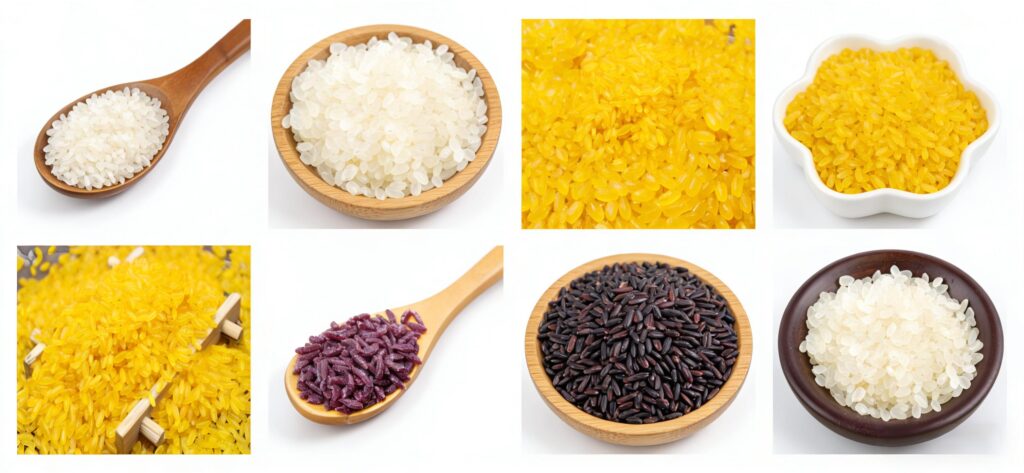
The extrusion pathway begins not with whole rice grains but with broken kernels. Broken rice is a lower-value milling byproduct, and using it as the substrate for fortification reduces raw material costs while creating a uniform matrix into which micronutrients can be dispersed . The broken kernels are ground into a fine flour, typically through a micropulverizer, to ensure that the subsequent dough or melt is homogeneous . Particle size consistency matters here: coarse flour can lead to uneven hydration and incomplete starch gelatinization during extrusion, producing kernels with variable density and cooking behavior.
Formulation with the Vitamin-Mineral Premix
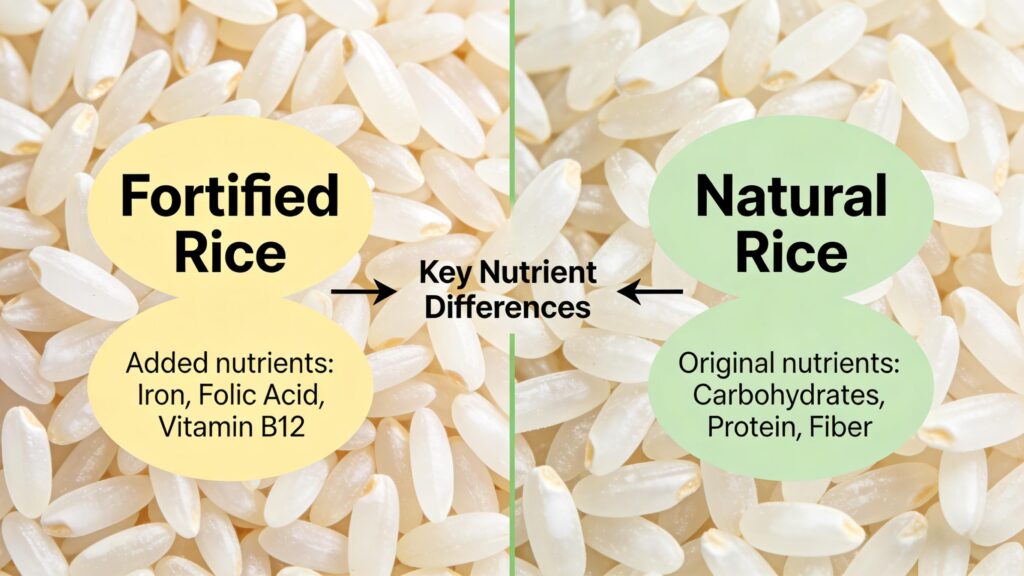
The flour is blended with water and a precisely formulated micronutrient premix. The composition of this premix is dictated by public health targets and regulatory standards—commonly iron, folic acid, vitamin B12, vitamin A, zinc, and B-complex vitamins . The blending step is a critical control point because uneven distribution of the premix at this stage cannot be corrected downstream. The ratio of premix to flour is typically high in the FRK itself—iron concentrations on the order of 1,200 mg per 100 g of premix are used so that the final blended rice, diluted at roughly 1:100 with ordinary rice, reaches the target fortification level of about 12 mg iron per 100 g . This concentration strategy means that any blending error or segregation during transport translates directly into nutrient variability in the consumer’s pot.
Extrusion: The Core Transformation
The flour-premix-water mixture is fed into a twin-screw extruder, where it is subjected to controlled heat and shear. The extrusion temperature is not a trivial parameter. Hot extrusion (roughly 70–110°C) gelatinizes the starch fully or partially, producing kernels that closely resemble natural rice in appearance and cooking behavior . Cold extrusion (30–40°C) leaves the starch uncooked, yielding opaque kernels that are visually distinguishable from ordinary rice—a disadvantage in markets where consumers scrutinize their staple grain. Warm extrusion (60–80°C) offers an intermediate compromise .
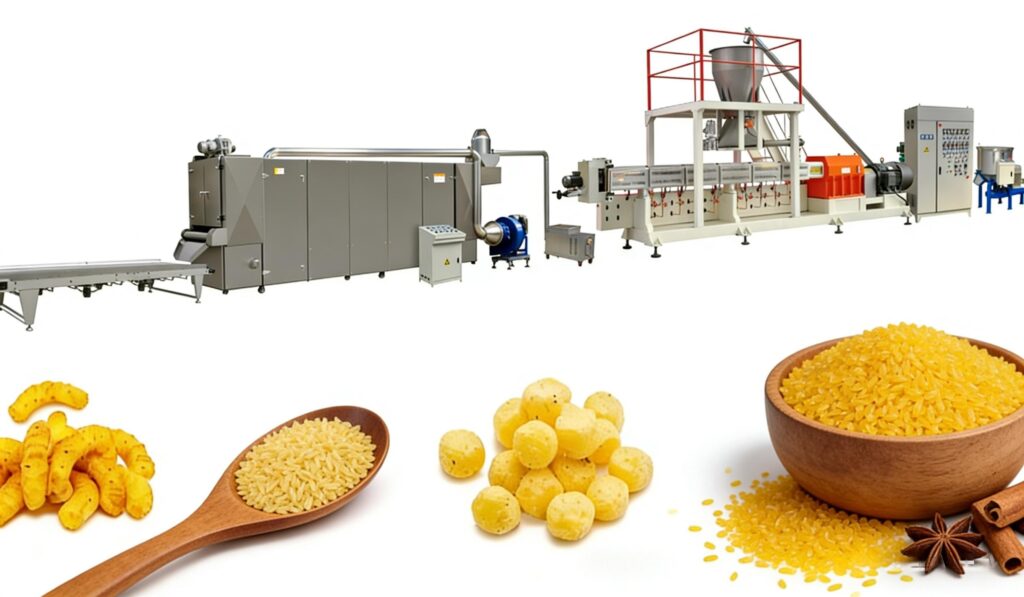
Temperature also interacts with nutrient retention and stability. High-temperature, low-moisture, high-shear conditions can degrade heat-sensitive vitamins, a limitation inherent to conventional extrusion that has driven interest in alternative processes such as supercritical fluid extrusion, which operates below 100°C and uses supercritical CO₂ as a blowing agent to minimize thermal damage . For standard hot extrusion, however, research indicates that extrusion temperature does not significantly affect iron bioavailability, though it does influence the fraction of resistant starch and the kernel’s tendency to lose minerals during washing . The practical implication is that processors must balance appearance and cooking quality against the washing practices of the target population: if consumers routinely rinse rice before cooking, cold-extruded kernels are a poor choice because their mineral retention under washing is inferior .
The extrudate is cut at the die face into rice-shaped kernels. The cutter speed and die design determine kernel dimensions, and consistency here affects both the visual match with natural rice and the blending homogeneity—kernels that differ in size or density from the bulk rice will segregate during transport and handling, defeating the purpose of fortification.
Drying, Polishing, and Quality Control
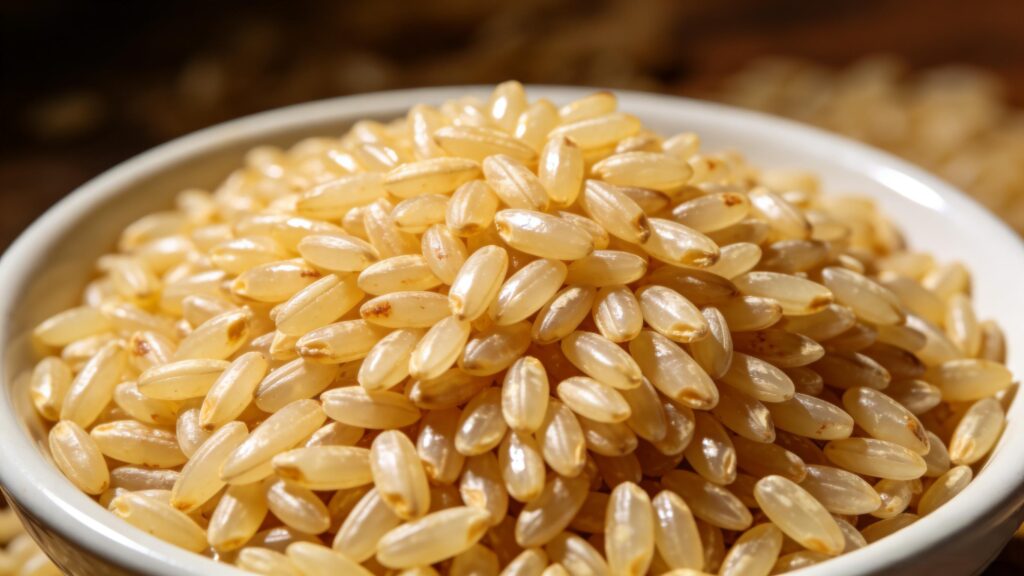
The extruded kernels carry substantial moisture and must be dried to a shelf-stable level, typically in multilayer dryers that control temperature and airflow to prevent case-hardening or fissure formation . After drying, the kernels may be polished to improve surface appearance and reduce the visual contrast with natural rice. At this stage, quality assurance checks verify micronutrient content, kernel integrity, and color. Color is a particularly sensitive attribute: fortified kernels that deviate visibly from the bulk rice invite consumer suspicion, and in some contexts extruded kernels have been misidentified as “plastic rice,” a perception that can undermine acceptance regardless of the product’s nutritional merits .
Blending with Ordinary Rice
The finished FRK is blended with milled, unfortified rice at a ratio typically between 0.5% and 2%, depending on the premix concentration and the target nutrient level . This dilution step is where the precision of the entire upstream process is tested. A 1:100 blend means that a small error in FRK nutrient content or blending uniformity translates into a proportionally small but potentially meaningful deviation in the final product. Blenders must achieve homogeneous distribution without damaging the fragile FRK kernels, and the blended product must be packaged promptly to avoid segregation during handling .
Alternative Approaches and Their Limitations
Extrusion is not the only route to fortified rice, and the alternatives are instructive precisely because of their shortcomings. Surface coating and dusting apply nutrients to the exterior of whole kernels, but these nutrients are readily washed away during rinsing and cooking . Soaking whole rice in a nutrient solution can drive minerals into the grain, but the moisture gradient often produces fissures that compromise kernel integrity . Ultrasonication-assisted soaking has shown promise in laboratory settings, achieving substantial enrichment with iron, zinc, thiamine, and folic acid while largely preserving eating quality, but the process has not displaced extrusion at commercial scale . Microwave-assisted spray soaking combined with short-time superheated steam treatment represents a more recent attempt to embed micronutrients within the starch matrix of whole grains without creating fissures, aiming for physicochemical properties indistinguishable from natural rice . These technologies address the central weakness of extrusion—the sensory and visual difference of the FRK—but they remain less mature and more costly than the established extrusion line.
The Persistent Challenge: Retention Through the Cooking Cycle
A fortified rice that loses its nutrients in the kitchen is a technical success and a public health failure. The FRK must withstand rinsing, soaking, and cooking without releasing its micronutrients into the discard water. Extrusion provides a structural advantage here: embedding the vitamins and minerals within a gelatinized starch matrix protects them to a greater degree than surface application . Nevertheless, retention is not absolute. Water-soluble vitamins can leach, and the extent of loss depends on the kernel’s structural integrity, the cooking method, and whether the consumer rinses the rice beforehand. Processors must therefore validate their product against realistic cooking protocols used in target populations, not idealized laboratory conditions.

In summary, nutritional rice production is a chain of tightly coupled decisions: the choice of broken rice as substrate, the formulation and dispersion of a concentrated premix, the temperature and shear regime of extrusion, the drying and polishing that determine visual acceptability, and the blending precision that ensures every serving delivers the intended nutrient dose. The technology is mature and scalable, but its effectiveness ultimately depends on whether the fortified kernel survives the journey from factory to cooking pot with its nutritional payload intact.
 Persian
 English
 Russian
 Spanish
 Italian
 Arabic
 Portuguese
 German
 French
 Japanese
 Moroccan Arabic
 Belarusian