Selecting the right extrusion equipment is a foundational decision that directly impacts production efficiency, product quality, and operational costs. In polymer processing, the choice between a single-screw extruder (SSE) and a twin-screw extruder (TSE) is particularly critical. While both machines serve the same fundamental purpose—melting and conveying polymeric materials—their underlying mechanics, capabilities, and ideal applications differ significantly .
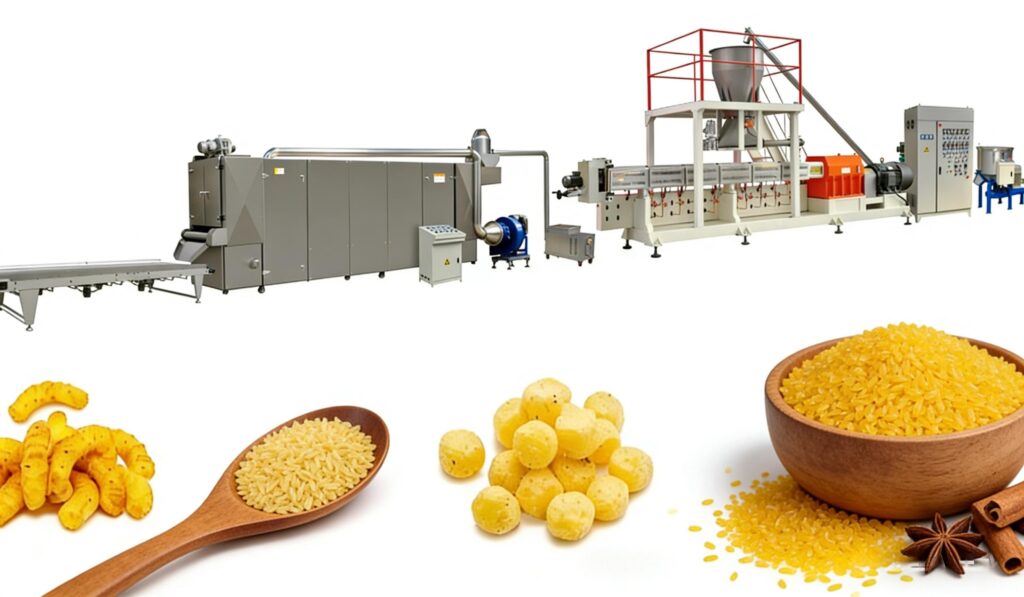
Fundamental Design and Material Conveyance
Single-Screw Extruders
The single-screw extruder is the simpler and more widely used machine. It consists of one rotating screw within a cylindrical barrel. Its operation relies on drag flow—the friction between the polymer pellets and the heated barrel wall pulls the material forward . The material is conveyed, compressed, melted, and pumped toward the die in a continuous process. The screw geometry is typically divided into three functional zones: the feed section, the transition (compression) section, and the metering section .
Twin-Screw Extruders
Twin-screw extruders feature two intermeshing screws rotating inside a figure-eight-shaped barrel. They come in two primary configurations: co-rotating (screws turn in the same direction) and counter-rotating (screws turn in opposite directions) . Instead of relying on friction, these machines use positive displacement—the screws physically push the material forward, offering superior control over material transport .
Counter-rotating twin-screw extruders are reminiscent of gear pumps and provide the maximum amount of positive displacement, making them ideal for profile extrusion. Co-rotating designs, on the other hand, are better suited for compounding, mixing, devolatilization, and chemical reactions due to the complex flow patterns in the intermeshing region .

Key Technical Differences
| Feature | Single-Screw Extruder | Twin-Screw Extruder |
|---|---|---|
| Conveyance Mechanism | Relies on friction between material and barrel (drag flow) | Uses positive displacement via intermeshing screws |
| Mixing Capability | Basic; limited to melting and pumping. Can be improved with mixing elements | Excellent; provides both distributive and dispersive mixing |
| Material Flexibility | Best for free-flowing pellets; less effective with powders or fluff | Wide range—pellets, powders, flakes, regrind, and even thermally sensitive materials |
| Self-Cleaning | None | Excellent (intermeshing design wipes screw surfaces) |
| Residence Time Control | Moderate; throughput and screw speed are interdependent | Precise; modular screw design allows fine-tuning |
| Devolatilization (Venting) | Limited capability | Superior performance for removing volatiles and moisture |
| Capital Cost | Lower initial investment | Higher (typically 2–3× the cost of a single-screw) |
| Maintenance | Simpler, less complex | More complex, requires specialized knowledge |
| Pumping Efficiency | Efficient at building pressure for simple extrusion | Generally less efficient at pressure generation than a single-screw |
When to Choose Each Type
Opt for a Single-Screw Extruder When:
- You are processing a single, well-characterized polymer into a consistent product like pipes, sheets, or profiles .
- Cost sensitivity is a primary concern—the lower capital investment and simpler operation are advantageous .
- Your formulation does not require extensive mixing or compounding of multiple ingredients .
- You are running high-volume, single-material production lines (e.g., PE pipe, PVC window profiles) .
Opt for a Twin-Screw Extruder When:
- Your process involves compounding multiple components—fillers, additives, glass fibers, or color masterbatches .
- You are processing recycled or contaminated materials that require thorough mixing and venting .
- You need to perform reactive extrusion (polymerization, grafting, crosslinking) .
- Producing engineering plastics, biodegradable compounds, or high-filler formulations that demand superior melt homogeneity .
- Handling thermally sensitive materials or powders that would slip in a single-screw .
Operational Trade-offs
While twin-screw extruders offer superior versatility and mixing, these advantages come at a cost. The complex gearbox required to drive two intermeshing screws in sync is significantly more expensive to manufacture and maintain . Furthermore, achieving optimal performance requires a higher degree of process knowledge—operators must manage more variables, including screw configuration, element selection, speed, and feed rate .

Conversely, single-screw extruders remain the workhorses of the industry for straightforward tasks. Their simplicity, reliability, and favorable performance/cost ratio make them indispensable for high-volume production of commodity plastics . The decision ultimately hinges on balancing the required processing capabilities against the total cost of ownership and operational complexity.
 Persian
  English
  Russian
  Spanish
  Italian
  Arabic
  Portuguese
  German
  French
  Japanese
  Moroccan Arabic
  Belarusian