Unlike traditional dry breadcrumbs (which are dense and granular), puffed breadcrumbs are characterized by their light, airy, flaky, needle-like structure. They absorb less oil, stay crispy longer, and provide a superior “crunch” to fried foods like tonkatsu, shrimp, and chicken tenders.
This guide covers the industrial and small-batch processing methods, from raw materials to the final packaged product.
Phase 1: Raw Material Selection
The quality of puffed breadcrumbs starts with the formula.
Key Ingredients (Baker’s Percentage)
Ingredient
Percentage
Function
High-gluten flour (Bread flour)
70%
Structure & elasticity
Low-gluten flour (Cake flour)
30%
Tenderness & crispness
Yeast (Instant dry)
1.5%
Leavening (creates air pockets)
Salt
1%
Flavor & gluten control
Sugar
3-5%
Browning & yeast food
Oil (Vegetable shortening)
3-5%
Tenderness & moisture retention
Water
45-50%
Hydration
Pro Tip: Add whey powder (2%) for faster browning and enzyme (transglutaminase) for stronger flake formation.
Phase 2: Dough Preparation (The Fermentation Step)
Unlike conventional breadcrumbs, panko requires a fermented dough to create internal gas cells.
Step-by-Step:
Mixing: Combine all dry ingredients. Add water (90°F/32°C) and oil. Mix with a dough hook until gluten develops (windowpane test).
Bulk Fermentation: Rest dough at 80°F (27°C) for 60–90 minutes. Punch down halfway.
Dividing & Molding: Form into large loaves or sheets (about 2–3 inches thick). This thickness is critical for flake formation.
Science: Yeast produces CO², creating thousands of tiny gas pockets. These pockets become the future “flakes.”
Phase 3: Baking (The Initial Drying)
The dough must be just baked enough to set the structure without drying completely.
Oven Type: Tunnel oven or rack oven.
Temperature: 320–360°F (160–180°C).
Baking Time: 30–45 minutes (until internal temperature reaches 200°F/93°C).
Target Crumb Color: Pale white to golden (not brown). Over-baking destroys elasticity for shredding.
Cool the baked bread loaves to room temperature (about 2 hours). Do not slice while warm—it will tear.
Phase 4: Shredding (The Panko Signature Step)
This is where flat bread becomes needle-like flakes. Use a bread crumb shredder (a rotary grater with finger rollers).
Equipment Settings:
Parameter
Setting
Roller gap
3–8 mm (adjust for flake length)
Roller speed
Low to medium (prevents powdering)
Bread moisture
35–38% (critical – see below)
Critical Moisure Control:
If bread is too dry (>30% moisture loss): It shatters into fine powder.
If bread is too wet (>40%): It smears into paste.
Ideal moisture at shredding: 35–38%. Achieve this by baking slightly less or using a conditioning chamber.
Shredding Result:
Good: 3–10mm long, irregular, flaky needles.
Bad: Round pellets or dust.
Phase 5: Drying (Creating the “Crunch”)
Wet crumbs must be dried to achieve the final snap.
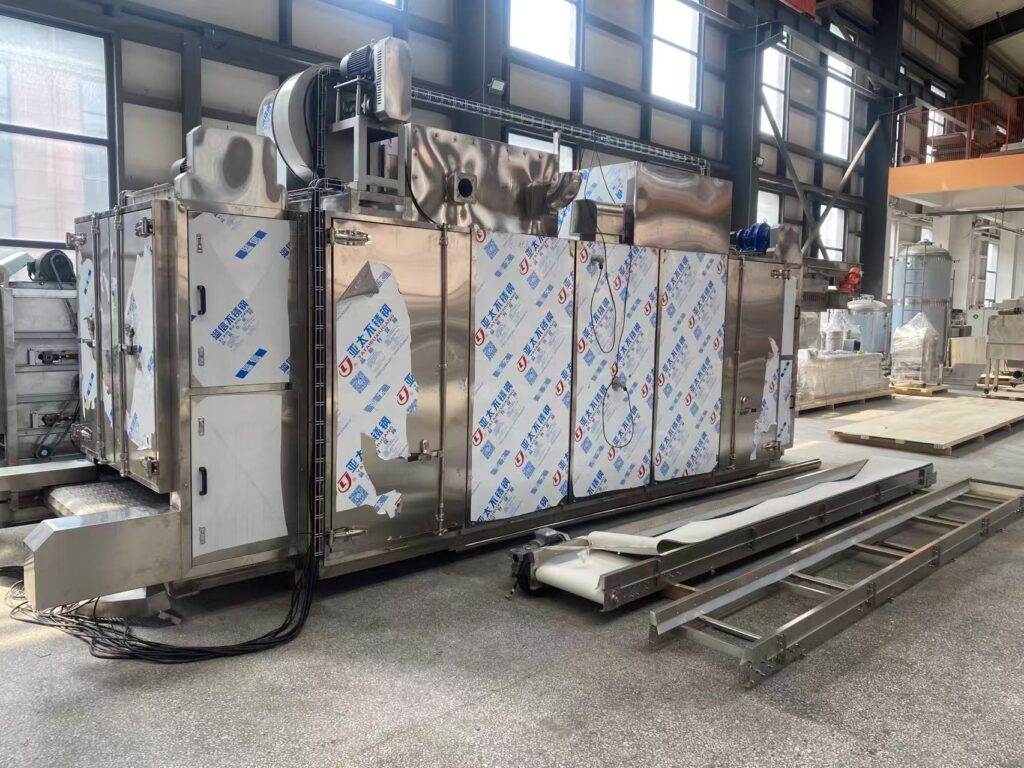
Industrial Method: Fluid Bed Drier
Air Temperature: 200–250°F (93–121°C)
Time: 15–25 minutes
Final Moisture: 6–8%
Alternative (Dehydrator/Oven Method for Small Batch):
Spread shreds 1 inch thick on mesh trays.
Dry at 200°F (93°C) for 2–3 hours, stirring every 30 minutes.
Test for doneness: A crumb should snap cleanly with a crisp sound. No rubberiness.
Phase 6: Sifting & Grading
After drying, the crumbs have irregular sizes. Use vibratory sifters with stacked mesh screens.
Grade
Mesh Size
Use Case
Coarse
6–10 mesh (2–3mm)
Tonkatsu, deep-fried shrimp
Medium
10–20 mesh (0.8–2mm)
Chicken tenders, onion rings
Fine
20–40 mesh (0.4–0.8mm)
Fish sticks, nuggets
Powder
<40 mesh
Recycling into dough (up to 10%)
Phase 7: Toasting / Color Development (Optional)
For a golden panko (often called “golden panko”):
Method: Pass dried crumbs through a rotary drum toaster.
Temperature: 300°F (150°C) for 3–5 minutes.
Target color: Golden brown (L-value = 55–60 on color meter).
Note: Toasting reduces moisture further (to 3–4%). These crumbs fry faster but may burn if oil is too hot.
Phase 8: Packaging & Shelf Life
Puffed breadcrumbs are highly hygroscopic (absorb moisture rapidly).
Packaging Requirements:
Barrier: Metalized film or foil-laminated bags (PET/AL/PE).
Gas flush: Nitrogen flush (residual oxygen <2%) to prevent rancidity.
Seal: Hermetic (airtight).
Storage Conditions:
Temperature: 50–70°F (10–21°C)
Relative Humidity: <60%
Avoid temperature fluctuations (causes condensation in bag).





 Persian
  English
  Russian
  Spanish
  Italian
  Arabic
  Portuguese
  German
  French
  Japanese
  Moroccan Arabic
  Belarusian