
Rice is a staple food for more than half of the world’s population, particularly in Asia, Africa, and Latin America. However, regular rice — especially white rice — loses most of its natural nutrients during milling. To address widespread micronutrient deficiencies (often called “hidden hunger”), food scientists and public health experts have developed fortified rice.
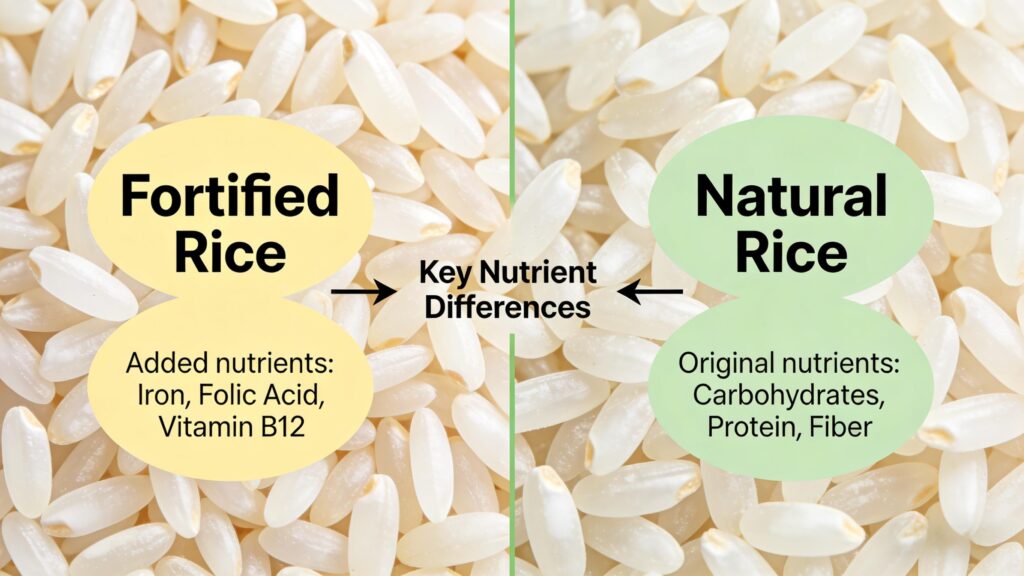
This article explains what fortified rice is, how it is made, and its essential differences from ordinary rice.
What Is Fortified Rice?
Fortified rice is rice that has been artificially enriched with additional vitamins and minerals to improve its nutritional value. Common nutrients added include:
- Iron (to combat anemia)
- Folic acid (to prevent neural tube defects in newborns)
- Vitamin A (to support vision and immunity)
- Vitamin B12 (important for nerve function)
- Zinc (for immune health and growth)
- Vitamin B1 (thiamine) and B3 (niacin)
These nutrients are typically added in the form of fortified rice kernels — also known as “rice analogues” or “artificial rice grains” — which look similar to natural rice grains. These kernels are then mixed with ordinary rice at a certain ratio (usually 1:100 or 1:200, meaning 1 kg of fortified kernels per 100 kg of regular rice).
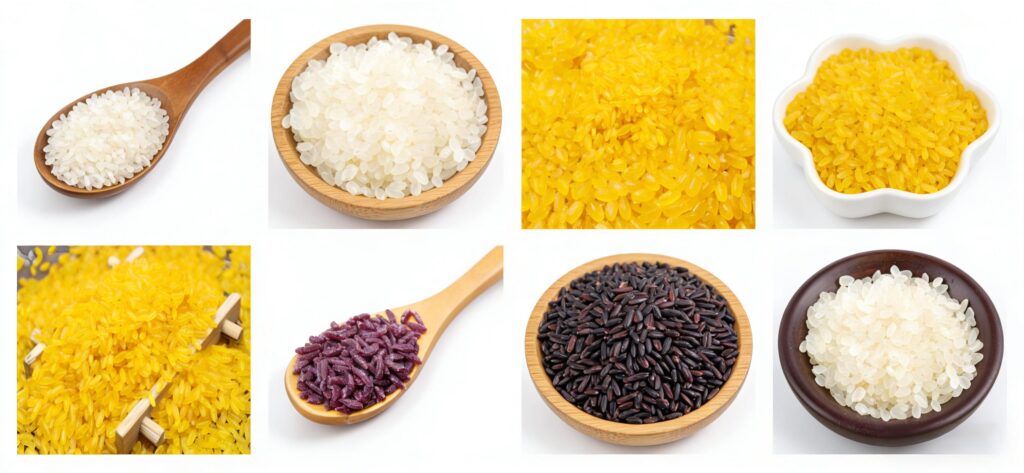
How Is Fortified Rice Made?
There are three main production methods:
| Method | How It Works | Pros | Cons |
|---|---|---|---|
| Coating / spraying | Vitamins and minerals are sprayed onto the surface of rice grains. | Simple and cheap. | Nutrients easily wash off during rinsing or cooking. |
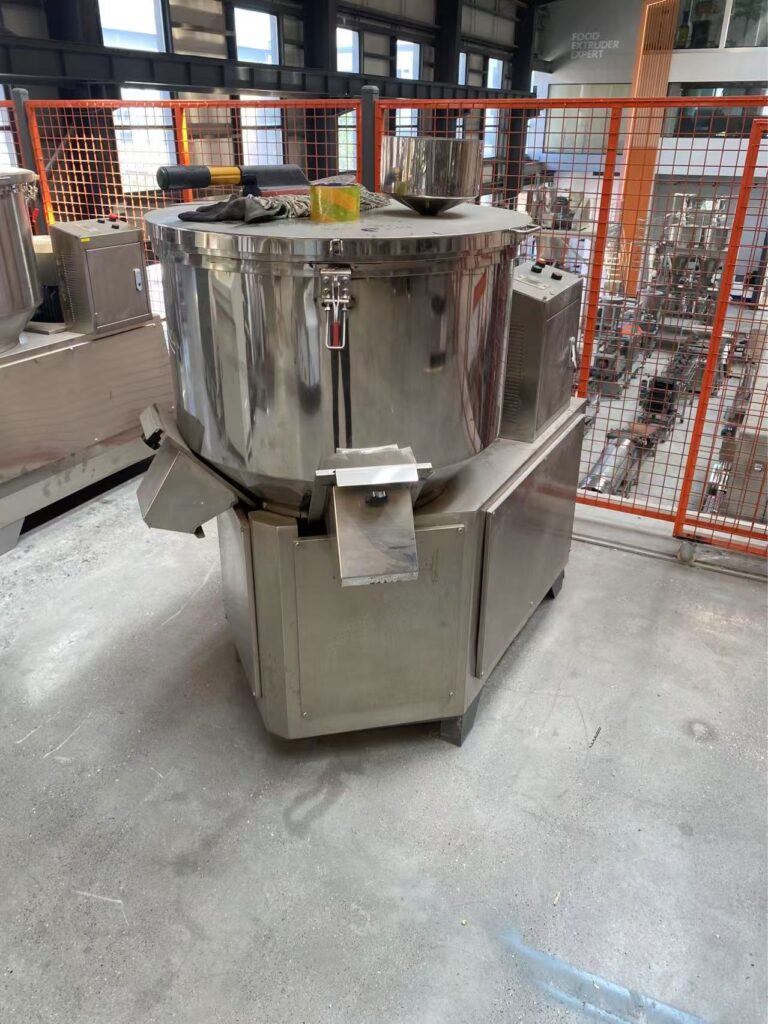
| Extrusion / hot extrusion | Rice flour is mixed with nutrient premix and water, then extruded into grain-like shapes. | Most common and effective; nutrients stay inside the grain. | Requires specialized equipment. |
| Dusting / powdering | Dry nutrient powder is dusted onto sticky wet rice grains. | Very low cost. | Poor uniformity; high nutrient loss. |
Currently, extrusion is the most widely accepted industrial method. The fortified kernels produced through extrusion can withstand rinsing and normal cooking with very little nutrient loss (typically <10–15%).
Fundamental Differences Between Fortified Rice and Regular Rice
The table below summarizes the key distinctions:
| Feature | Regular Rice (White Rice) | Fortified Rice |
|---|---|---|
| Nutrient content | Contains mainly carbohydrates and a small amount of protein. Most vitamins and minerals lost during milling (e.g., up to 80% of thiamine). | Artificially restored or even elevated levels of specific micronutrients (e.g., iron, folic acid, zinc). |
| Source of nutrients | Nutrients are naturally present in the whole grain but removed during polishing. | Nutrients are externally added during manufacturing. |
| Uniformity of nutrition | Varies naturally by rice variety, soil quality, and growing conditions. | Designed to be consistent in nutrient content from batch to batch. |
| Processing requirement | Only needs milling and polishing. | Requires additional steps (mixing with fortified kernels or coating). |
| Taste and texture | Natural rice flavor and texture. | High-quality fortified rice (extrusion type) is nearly identical to regular rice. Low-quality fortified rice may have a slightly different taste or become softer/mushier. |
| Cooking behavior | Rinsing and cooking as usual. | Should be rinsed lightly (if at all) to preserve nutrients. Cooking time may need minor adjustment. |
| Health impact | Provides energy but does not prevent micronutrient deficiencies. | Can effectively reduce iron deficiency anemia, birth defects, and other deficiency diseases when consumed regularly. |
| Regulatory status | Considered a basic food commodity. | Regulated as a fortified food; must comply with national food fortification standards (e.g., China’s GB 14880, India’s FSSAI regulations, or WHO guidelines). |
| Cost | Lower cost. | Slightly higher (typically 5–15% more expensive than regular rice of similar quality), largely due to added nutrients and processing. |
An Analogy to Understand the Difference
Think of regular rice as a plain T-shirt — it covers your basic need for clothing but offers no special features.
Fortified rice is like a T-shirt treated with UV protection — it still looks and feels the same, but it now provides an extra functional benefit (sun protection).
Similarly, fortified rice looks, smells, and tastes almost identical to regular rice, but it delivers additional vitamins and minerals that ordinary rice lacks.

Why Does This Difference Matter?
Globally, more than 2 billion people suffer from micronutrient deficiencies. In many low-income communities where rice is eaten three times a day, fortifying rice is one of the most cost-effective and scalable public health interventions. Unlike taking vitamin pills (which require daily compliance), fortified rice works passively — people continue their normal eating habits and automatically receive extra nutrients.
However, fortified rice is not a medicine or a substitute for a balanced diet. It is simply a smarter version of a common staple food.
Conclusion
The essential difference between fortified rice and regular rice is intentional nutrient enhancement. Regular white rice provides mostly energy, while fortified rice provides energy plus scientifically selected vitamins and minerals to prevent deficiencies.

In practical terms:
- Regular rice = basic fuel for the body.
- Fortified rice = upgraded fuel with essential micronutrients.
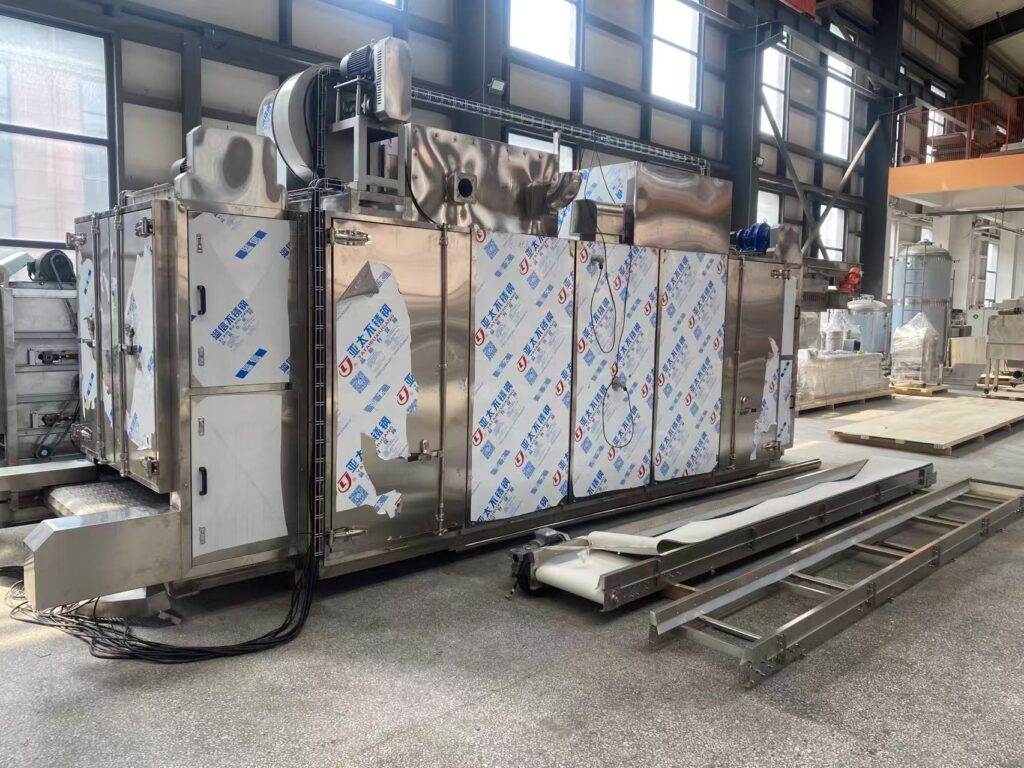
For consumers, the choice depends on nutritional needs, budget, and availability. For public health policymakers, fortified rice represents a proven strategy to fight hidden hunger without changing people’s eating habits. If you are interested in the fortified rice making machine, you can contact me , i will give you good advice and solutions .
1.Will you help us with the installation ?
Yes , We will send engineers to install and debug the equipment, and assist in training your staff.
2.Are you a factory or trading company?
We are a factory.
3.What certificate do you have?
We have ISO and CE certificate.
4.How long is the warranty period?
All of our machines have one year warranty.
5.What’s the main market of your company?
Our customers all over the world.
6.How much production capacity of your company one year?
This depends on your needs.
 Spanish
  English
  Russian
  Italian
  Arabic
  Portuguese
  German
  French
  Japanese
  Moroccan Arabic
  Persian
  Belarusian