
Floating fish feed is produced primarily through a process called extrusion, which transforms a mixture of dry ingredients into expanded, low-density pellets capable of remaining buoyant on the water surface. This manufacturing method has become the industry standard because it improves feed digestibility, reduces waste, and allows farmers to directly observe fish feeding behavior.
Raw Material Preparation
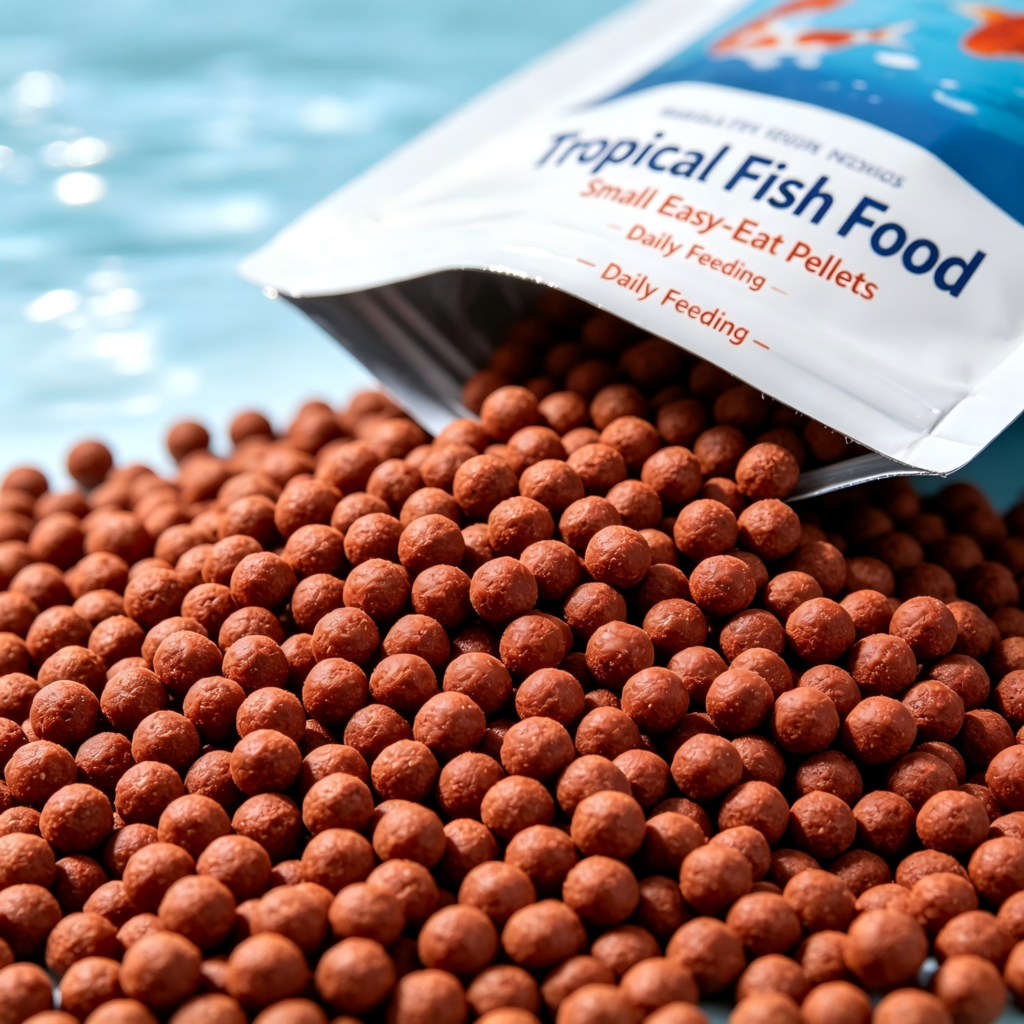
The process begins with the formulation of a nutritionally balanced mixture. Typical ingredients include protein sources such as fish meal and defatted soybean meal, along with farinaceous components like ground corn, wheat, and cassava chips. These dry ingredients are ground to a uniform particle size, typically around 1 mm, which significantly affects the physical quality of the final pellets. The ground materials are then thoroughly blended to ensure consistent nutrient distribution throughout the batch.
Extrusion Processing
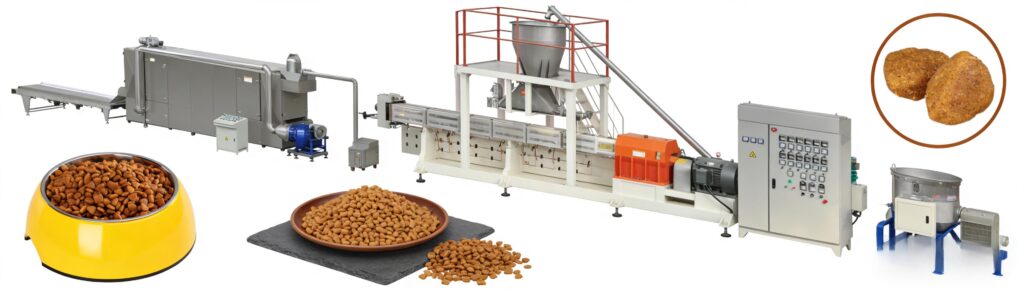
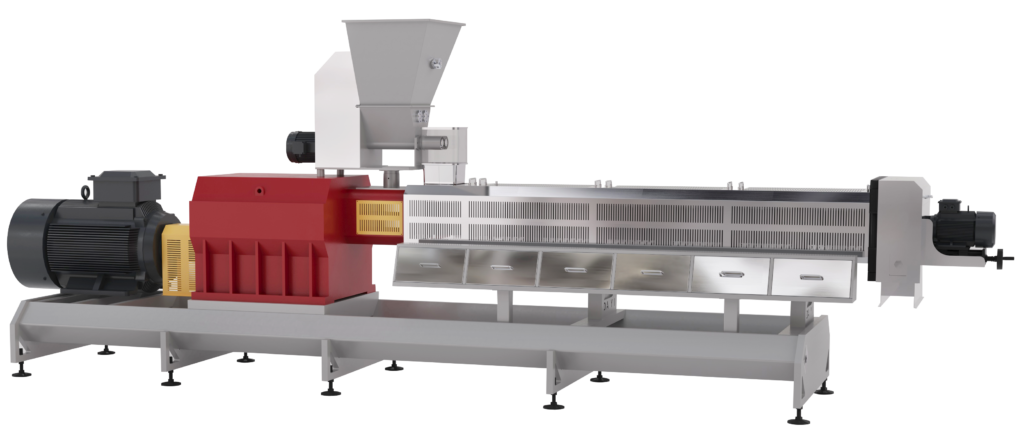
The blended mixture is fed into an extruder, where it undergoes a series of physical and chemical transformations. The material first passes through a preconditioner, where water and steam are added to create an evenly moistened and preheated dough. The moisture content is carefully controlled; research indicates that optimal extrusion for floating pellets occurs at moisture levels between 275 and 300 g/kg.
Inside the extruder barrel, the dough is subjected to increasing levels of shear, temperature, and pressure as it moves through distinct zones. Temperatures typically range from 120°C to 170°C, which cooks the mixture and gelatinizes the starch. This gelatinization is critical: it makes starch digestible for fish and contributes to the structural expansion of the pellet.
Expansion and Puffing
When the heated, pressurized dough is forced through the die at the end of the extruder, a sudden pressure drop occurs. The superheated water within the dough rapidly vaporizes, causing the material to expand or “puff” as it exits. This expansion creates a cellular, low-density structure. As the pellet cools, this structure is preserved, resulting in a product with a density of approximately 0.45 kg/l and floatability rates as high as 94%.
A rotating cutting knife at the die face slices the expanding extrudate into uniform pellets of the desired size.
Drying, Coating, and Cooling
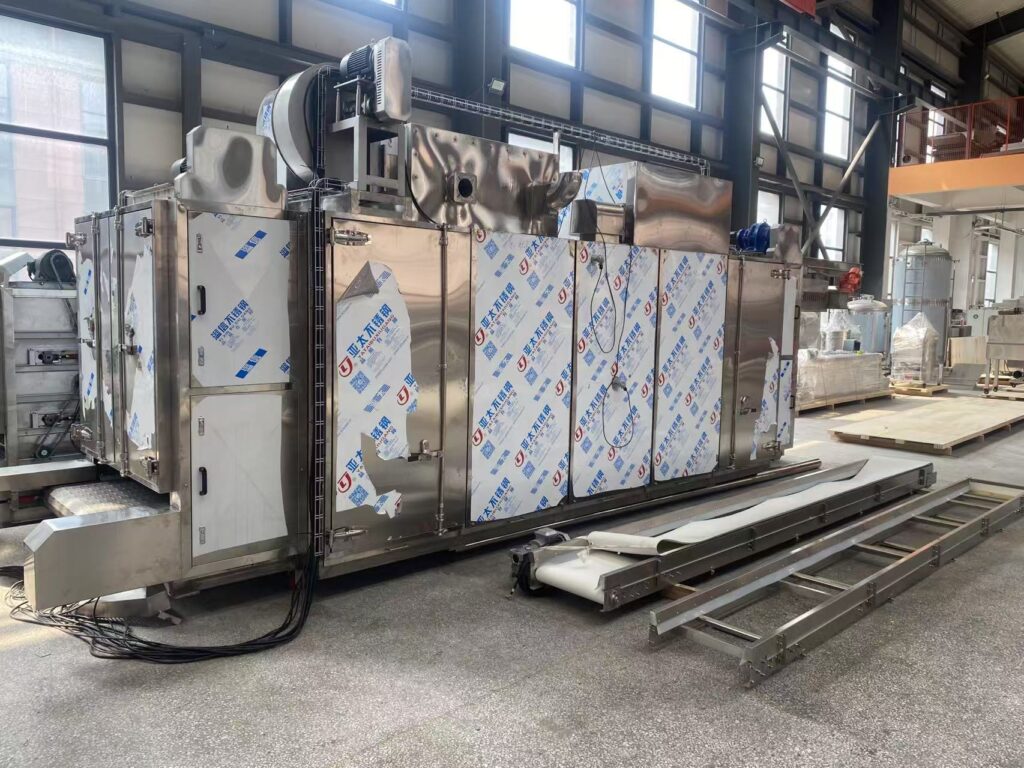
After extrusion, the hot pellets contain excess moisture and must be dried to a moisture content of 12–14% to prevent fungal growth and spoilage. Drying is typically performed using hot air in a continuous dryer.
Oil and fat are usually applied as a surface coating after extrusion rather than being mixed into the dough. This is because adding oil to the initial blend can reduce floatability. The coating provides essential energy and improves palatability.
Quality Control and Packaging
The finished pellets are cooled to ambient temperature and screened to remove fines and undersized particles. Properly processed floating feed should remain buoyant for an extended period. The final product is then weighed, bagged, and sealed for distribution.

By manipulating extrusion parameters—moisture, temperature, and screw speed—manufacturers can control pellet density and floatability, ensuring the feed meets the specific needs of different fish species and farming systems.
 Spanish
 English
 Russian
 Italian
 Arabic
 Portuguese
 German
 French
 Japanese
 Moroccan Arabic
 Persian
 Belarusian