
Puffed snacks—crispy, airy, and explosively flavorful—are a marvel of food science and culinary craft. Whether you’re making cheese balls, rice crisps, or corn puffs, the difference between a mediocre batch and a standout product comes down to eight critical factors. Here’s your blueprint for puffed-perfection.
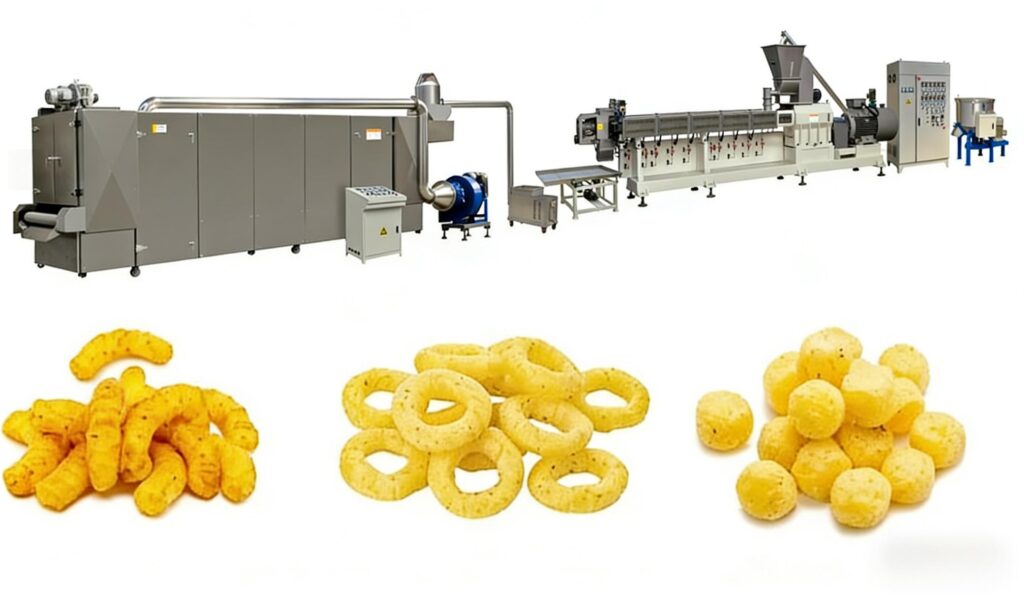
1. The Right Raw Material (Starch & Protein Balance)
Not all flours puff equally. High-starch bases (corn, rice, wheat, or potato) work best, but the protein content matters just as much. Too much protein (above 12%) creates a tough, dense structure; too little (below 6%) yields weak, fragile puffs. Aim for a mid-range protein flour with a fine, uniform particle size—this ensures even hydration and consistent expansion during heating.
2. Optimal Moisture Content (12–14%)
Moisture is the engine of puffing. Inside the extruder or fryer, trapped water turns to superheated steam, expanding the starch matrix. The sweet spot is 12–14% moisture in the dough. Below 12%, steam pressure is insufficient for full expansion; above 14%, the product becomes chewy or soggy after cooling. Use a moisture meter to check every batch before cooking.

3. Precise Temperature Control (150–200°C / 300–390°F)
Heat drives the phase change. For extrusion puffing, barrel temperatures must rise rapidly from 100°C to 180°C in under 30 seconds. For oil-frying, maintain a steady 190°C (375°F). Too low, and the steam develops slowly, creating dense centers; too high, and the exterior burns before the interior cooks. Invest in thermocouple sensors and PID controllers for real-time adjustments.
4. Shear & Pressure (The Mechanical Punch)
In extrusion, the screw configuration determines shear force. High shear breaks down starch granules, releasing amylose and amylopectin for better gelation. Pressure should build to 4–6 MPa before exiting the die. That sudden drop from high pressure to atmospheric pressure is what “explodes” the steam into billions of microscopic air cells. Without that pressure differential, you get hard pellets, not puffs.

5. Die Design (Shape + Hole Geometry)
The die isn’t just a mold—it’s a performance tool. A single 3–5 mm round hole gives classic puffed tubes, while star-shaped or slotted dies create textured surfaces for better oil and seasoning adhesion. Crucially, the land length (the straight section before the exit) must be 2–3 times the hole diameter; too short, and the puff collapses; too long, and it resists expansion.
6. Post-Fry Oil Absorption & Drainage
For fried puffs, oil quality and drainage are non-negotiable. Use high-oleic oils (sunflower, canola) with a smoke point above 220°C. After frying, shake or centrifuge the puffs for 5–10 seconds to remove excess surface oil—this prevents rancidity and improves mouthfeel. The final oil content should land between 25–35% for a crisp, melt-in-your-mouth texture, not a greasy one.

7. Seasoning Adhesion (Oil + Particle Size)
Seasonings fall off if they don’t stick. Apply a light mist of oil (1–2% by weight) immediately after cooking, while the puff is still warm (40–50°C). Then tumble with powdered seasonings ground to <200 microns—fine powders cling to micro-pores, while coarse granules bounce off. For best results, add a flow agent like silicon dioxide (≤0.5%) to prevent caking in the tumbler.
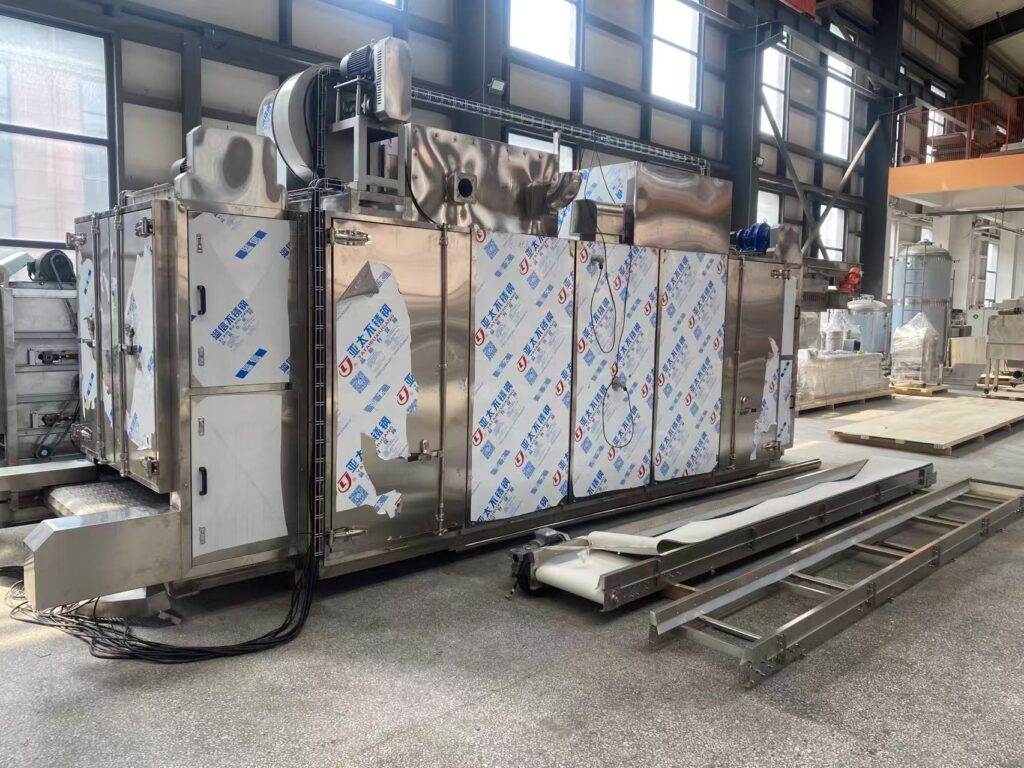
8. Cooling & Packaging (The Final Crunch)
Never package hot puffs. Residual heat creates condensation inside the bag, turning crispness into staleness within hours. Cool them in a perforated conveyor tunnel at ambient air until the core temperature drops below 35°C (95°F). Then package immediately in metallized films with an oxygen scavenger—oxygen and light are the enemies of both texture and flavor. Store at below 60% relative humidity.

Final Thought: Puffing is a symphony of physics and chemistry. Master these eight elements, and you’ll transform simple grains into golden, crunchy clouds that keep consumers reaching for “just one more.” Test each variable systematically, record your data, and tweak one parameter at a time—perfection is a process, not an accident.
 Spanish
  English
  Russian
  Italian
  Arabic
  Portuguese
  German
  French
  Japanese
  Moroccan Arabic
  Persian
  Belarusian