
Abstract
Breakfast cereals, particularly ready-to-eat (RTE) varieties, represent one of the most extensively processed food categories in the modern food industry. Produced primarily from corn, wheat, oats, and rice, these convenient products undergo a series of carefully controlled unit operations that transform raw grains into shelf-stable, crispy, and flavorful foods suitable for direct consumption . This article provides a comprehensive overview of breakfast cereal manufacturing technology, examining the fundamental processing principles, key unit operations, and the diverse production pathways that yield the wide array of cereal forms available today—from flaked and puffed to shredded and extruded products.

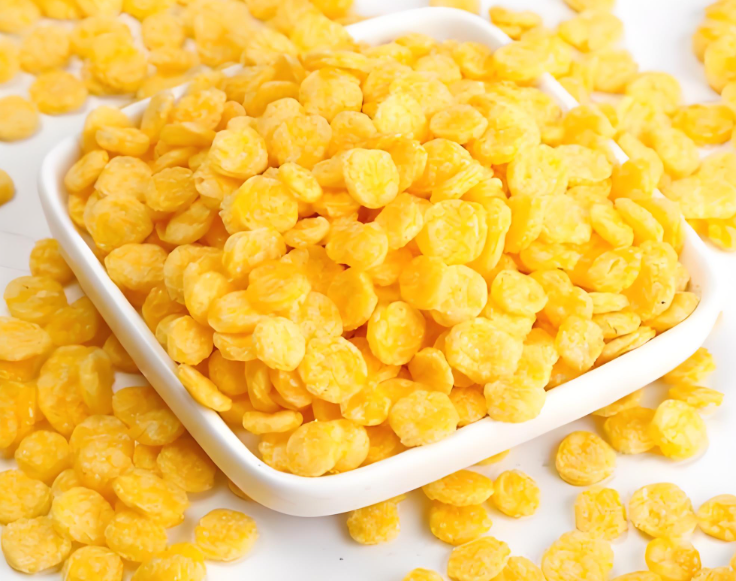
1. Introduction
Ready-to-eat breakfast cereals originated in the United States in the latter part of the nineteenth century, initially developed as healthful vegetarian foods in a clinical context before gaining widespread popularity with the general population . Today, RTE cereals are processed grain formulations that are shelf-stable, lightweight, and convenient to ship and store, requiring no further cooking in the home .
The manufacturing process involves cooking grain with flavor materials and sweeteners, with heat-stable nutritional fortifying agents sometimes added before cooking. Two general cooking methods dominate the industry: direct steam injection in rotating batch vessels and continuous extrusion cooking . The choice of processing pathway determines the final product form, which can be grouped into categories including flaked cereals, gun-puffed whole grains, extruded puffed cereals, shredded whole grains, oven-puffed cereals, and granola .
2. Raw Materials and Formulation
2.1 Primary Cereal Grains
The primary grains used in breakfast cereal production are corn, wheat, oats, and rice, in roughly that order of quantity produced . Each grain contributes distinct functional properties:
- Corn: Provides crisp texture and mild flavor; commonly used for flaked cereals
- Wheat: Offers structural integrity; used in shredded and flaked products
- Oats: Imparts characteristic flavor and texture; primarily used in hot cereals and granola
- Rice: Creates light, crispy textures; used in puffed and flaked cereals
2.2 Additives and Fortificants
Beyond the base grains, cereal formulations typically include sweeteners (sugar, corn syrup), flavorings (malt, cocoa), salt, and nutritional fortificants such as vitamins and minerals. Minor ingredients may include vegetable oils, food additives, and micronutrient premixes .
3. Fundamental Unit Operations
Breakfast cereal manufacturing follows a sequence of unit operations that are common across most product types, with variations depending on the desired final form. The Canadian Food Inspection Agency outlines a generic process flow comprising 15 key steps .

3.1 Receiving and Storage
The process begins with the inspection of incoming grain, grits, or flour. Operators establish purchasing specifications and assess composite samples prior to acceptance. Approved grains are stored in large bins, silos, or polypropylene bags . Other incoming materials—including food additives, micronutrient premixes, packaging materials, and non-food chemicals—are stored in designated areas .
3.2 Raw Material Pretreatment
Before processing, grains undergo preparation steps specific to the cereal type. For corn, this involves dry milling to remove the germ and bran, leaving chunks of endosperm suitable for flaking. Wheat kernels are lightly steamed and passed through rolls to break them open without producing flour or fine material. Rice typically requires no special preprocessing for flake production .
Size reduction is a critical preparatory step for many cereal types. Equipment such as hammer mills and roller mills increase the surface area of the grain and help remove the inedible outer bran layer .
3.3 Batching and Blending
The prepared grain or flour is weighed and blended with other ingredients according to the product formulation. This step may involve the addition of permitted food additives, flavorings, and heat-stable fortifying agents . For granola production, blending operations differ somewhat from those used for other cereal types .
3.4 Cooking
Cooking is one of the most critical operations in cereal manufacturing. During this step, grain starch undergoes gelatinization, transforming from a hard, chalky state to a soft, translucent form . Two primary cooking methods are employed :
Batch Cooking (Rotary Cooking): In this traditional method, grain is cooked in rotating pressure vessels with direct steam injection. The cooker operates until each kernel or kernel part has been fully gelatinized. When cooking is complete, rotation stops, steam is turned off, and vents are opened to reduce pressure and cool the contents . Batch cooking is commonly used for flaked cereals and shredded whole grains .
Extrusion Cooking: An increasingly dominant method, extrusion combines cooking and forming in a continuous process. The extruder barrel performs multiple operations: the first section kneads and mixes ingredients, the middle section applies heat to cook the dough, and the final section extrudes the cooked material through a die . Twin-screw extrusion lines are particularly versatile, capable of handling diverse raw materials (corn, wheat, rice, oats, and vegetable flours) while producing a wide range of shapes and textures .
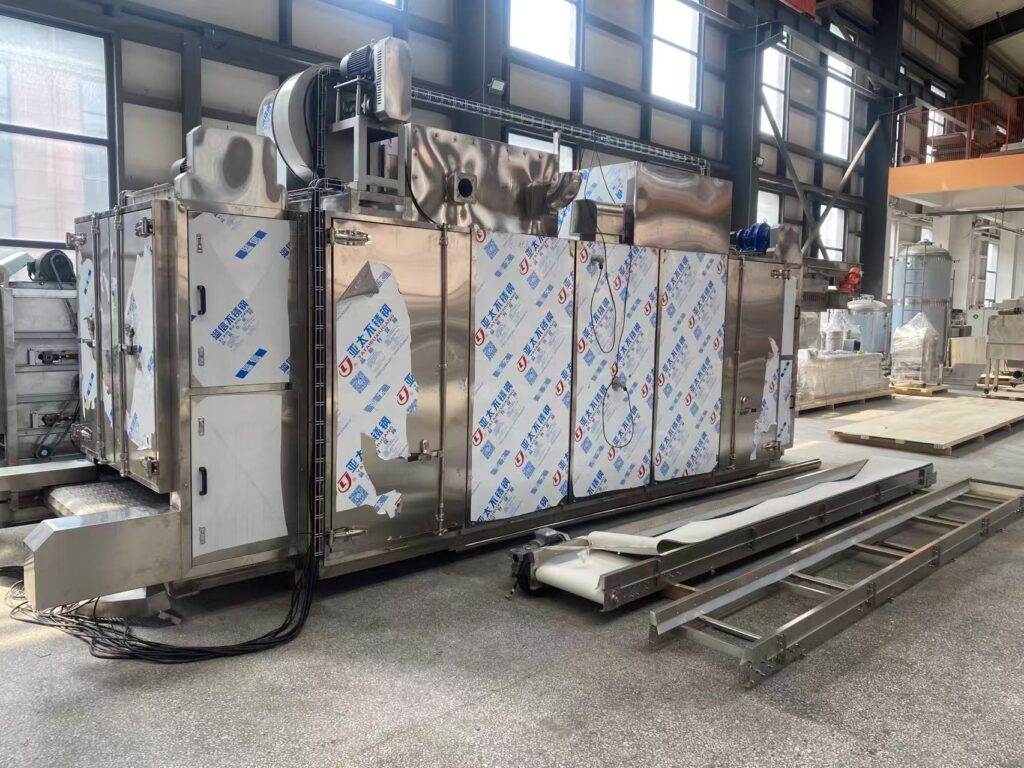
3.5 Primary Drying and Tempering
After cooking, the material undergoes drying to remove excess moisture. For flaked cereals, drying is typically performed at temperatures below 121°C (250°F) under controlled humidity to prevent case hardening of the grit and reduce drying time . The product is then cooled to ambient temperature, often in an unheated section of the dryer .
Tempering follows, where the cooled material is held in large accumulating bins to allow moisture content to equilibrate both between particles and from the center to the surface. This step is crucial for preventing breakage during subsequent forming operations .
3.6 Forming Operations
The method of forming depends on the desired cereal type:
Flaking: For flaked cereals, cooked grits pass between pairs of large metal rolls that press them into thin flakes. This step follows the tempering stage .
Shredding: For shredded whole-grain cereals (primarily wheat), the tempered grains are squeezed between a smooth roll and a grooved roll. A comb positioned against the grooved roll picks the wheat shreds from the grooves, and the shreds fall in layers onto a conveyor to form a web of many layers .
Extrusion Forming: In extrusion-based processes, the dough is forced through die plates and inserts, emerging in the desired shape—whether rings, balls, puffs, or other custom designs. A rotating knife slices the extruded dough into properly sized pellets .
3.7 Toasting
Toasting serves multiple purposes: it enhances crispness, develops flavor, removes final moisture, and extends shelf life. Flaked cereals are toasted by suspending them in a hot air stream rather than baking on a flat surface. The ovens are sloped from feed to discharge and perforated internally to allow proper airflow .
3.8 Coating and Fortification
After toasting, many cereal products undergo coating operations. Flavor solutions, sugar coatings, and vitamins are sprayed onto the cereal pieces. The coating step is critical for both sensory appeal and nutritional enhancement . Seasoning rates can reach up to 20–30% of the final product weight . The final moisture content of finished RTE cereals is typically around 3% .

3.9 Cooling and Quality Control
Following coating, the product undergoes final cooling and drying to remove residual heat and moisture . Quality control measures include:
- Metal Detection: Passing finished product through metal detectors to eliminate contaminants
- Temperature and Moisture Monitoring: Continuous monitoring throughout processing
- Nutritional Verification: Checking vitamin and nutrient levels before packaging
3.10 Packaging and Storage
RTE cereals are typically packaged in moisture-proof materials to preserve crispness and prevent moisture absorption, which can cause the product to become stale or lose texture. Common packaging consists of a plastic bag sealed with heat, often enclosed in a cardboard box . Package labelling includes date and lot coding for traceability . Final products are stored in designated areas before shipping and distribution .
4. Major Cereal Categories and Their Processing Variations
4.1 Flaked Cereals
Flaked cereals (corn flakes, wheat flakes, rice flakes) represent one of the most traditional categories. The process follows the general flow described above: grain preprocessing, cooking, delumping, drying, cooling and tempering, flaking, toasting, and packaging . Extruded flakes differ in that the grit for flaking is formed by extrusion rather than by direct cooking of whole grains .

4.2 Gun-Puffed Whole Grains
Rice and wheat are the primary grains used for gun-puffed cereals. The principle involves cooking the grains, then subjecting them to a sudden large pressure drop. As pressurized steam within the grain seeks to equilibrate with the lower-pressure atmosphere, the grains expand or “puff” rapidly . Puffing can be performed using manual single-shot guns, automatic single-shot guns, or automatic multiple-shot guns. After puffing, the product is screened, dried, and packaged, with careful attention to moisture barrier properties due to the highly porous final texture .
4.3 Extruded Gun-Puffed Cereals
Unlike whole-grain puffing, extruded gun-puffed cereals use flour as the starting ingredient. The dough is cooked in extruders and formed into desired shapes through a die. After extrusion, drying, and tempering, the product undergoes the same puffing and final processing steps as whole-grain gun-puffed cereals .
4.4 Shredded Whole Grains
Primarily using white wheat, shredded cereal production involves grain cleaning, cooking, cooling and tempering, shredding, biscuit formation, biscuit baking, and packaging . The shredded wheat process creates products with distinctive layered textures and is among the oldest cereal manufacturing methods .
4.5 Oven-Puffed Cereals
Made almost exclusively from whole-grain rice or corn, oven-puffed cereals rely on the inherent ability of these grains to puff under high heat with proper moisture content. The grains are mixed with sugar, salt, water, and malt, then pressure-cooked. After cooling, sizing, drying, and tempering, the kernels are passed through flaking rolls for slight flattening, then oven-puffed. The process requires careful balance between kernel moisture and oven temperature .
4.6 Granola
Granola production involves different blending and processing steps compared to other RTE cereals, typically combining oats with sweeteners and oils, then baking to achieve a crunchy, clustered texture .
5. Innovations and Future Trends
The breakfast cereal industry continues to evolve in response to consumer demand for products with whole grains, higher protein, fiber, and reduced sugar content. Modern extrusion technology enables the production of shapes ranging from classic rings to animal figures and custom geometric forms . There is growing interest in:
- Ancient Grains: Incorporating quinoa, sorghum, and other heritage grains
- Protein Enrichment: Adding pea protein, whey protein, and other protein sources
- Nutritional Optimization: Enhancing fiber and micronutrient content while maintaining sensory quality
- Sustainable Manufacturing: Addressing environmental challenges in production
6. Conclusion
Breakfast cereal manufacturing is a sophisticated integration of food science and engineering, transforming raw cereal grains into the diverse array of convenient, shelf-stable products found on supermarket shelves today. The industry employs two primary processing pathways—batch cooking and extrusion—supported by a suite of unit operations including blending, drying, tempering, forming, toasting, and coating. The specific combination of these operations determines the final product form, whether flaked, puffed, shredded, or extruded.
As consumer preferences continue to evolve toward products perceived as more natural, nutritious, and minimally processed, the industry faces ongoing challenges to balance convenience with nutritional quality. Advances in extrusion technology, ingredient science, and process optimization are enabling the development of products that meet these demands while maintaining the crisp texture, flavor, and shelf stability that define breakfast cereals.
 Spanish
  English
  Russian
  Italian
  Arabic
  Portuguese
  German
  French
  Japanese
  Moroccan Arabic
  Persian
  Belarusian