
Introduction
Fortified rice is an innovative food technology designed to combat micronutrient malnutrition. fortified rice machinery Unlike simple coating methods, high-quality fortified rice involves producing Fortified Rice Kernels (FRKs) that mimic natural rice in appearance, texture, taste, and cooking behavior. The gold standard for producing such premium quality is extrusion technology. This article outlines the critical steps and parameters required to manufacture high-quality FRKs.
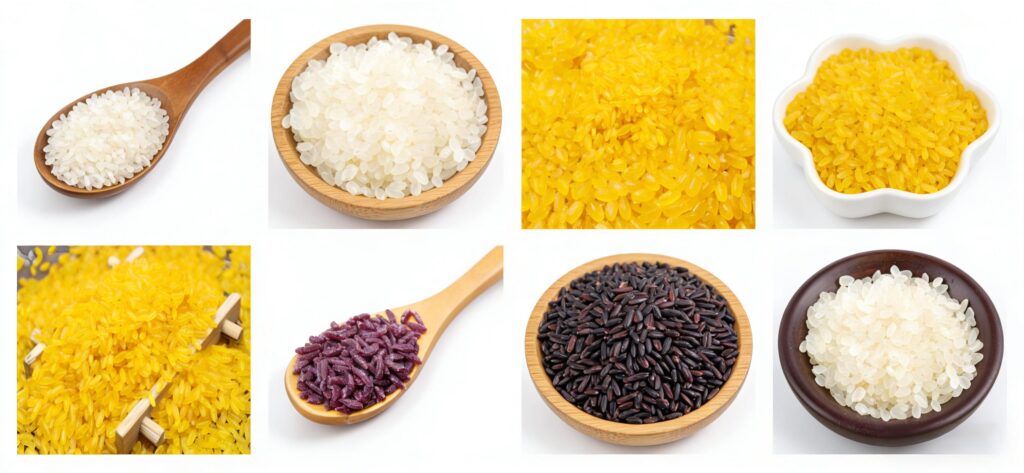
1. Selecting Premium Raw Materials
Quality begins with ingredients.
- Rice Flour Base: Use fresh, non-fermented broken rice (5–15% broken content) from the latest harvest. The flour must pass through a 120–150 mesh sieve. High amylose starch content (20–25%) is ideal because it gels firmly and maintains grain integrity during cooking.
- Premix (Vitamin & Mineral Blend): Use microencapsulated nutrients (e.g., iron coated with hydrogenated vegetable oil or stearin, vitamin A as beadlets). This encapsulation prevents nutrient degradation during extrusion and storage, and prevents off-flavors (e.g., metallic taste from iron).
- Water Quality: Use potable, dechlorinated water. Chlorine can degrade certain vitamins (e.g., thiamine, folic acid).
2. Precise Dosing and Mixing
Inconsistent mixing leads to “streaking” (visible lines of nutrients) or white, unfortified patches.
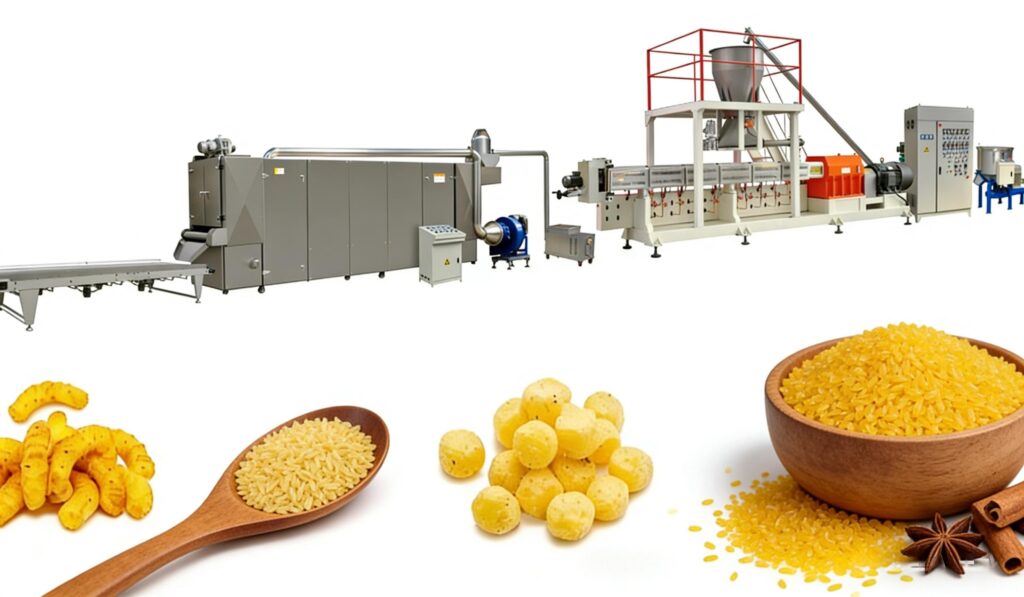
- Technology: Use a gravimetric or volumetric feeder for the rice flour and a micro-doser for the vitamin premix (typical ratio: 1 part premix to 99–199 parts flour).
- Pre-Blending: Mix the micro-ingredients (vitamins, minerals, emulsifiers like GMS – Glycerol Monostearate) with a small portion of rice flour first to ensure even distribution before adding the full flour batch.
- Ribbon or Paddle Mixer: Blend for 8–10 minutes to achieve a Coefficient of Variation (CV) of <5% (excellent homogeneity).
3. Water Conditioning and Tempering
Dry flour does not extrude well. The flour-water mixture must be tempered.
- Target Moisture: Adjust the flour to 30–35% moisture content.
- Temperature: Use warm water (40–50°C) to initiate pre-gelatinization of the surface starch.
- Resting Time: Let the conditioned flour rest for 10–15 minutes. This allows water to penetrate the starch granules evenly, preventing “dead” (uncooked) spots during extrusion.
4. Extrusion: The Heart of the Process
A twin-screw extruder is mandatory for high-quality FRKs. fortified rice machinery Single-screw extruders produce inconsistent textures.

- Barrel Temperature Profile:
- Zone 1 (Feeding): 60–70°C (Mixing only)
- Zone 2 (Cooking): 90–105°C (Gelatinization)
- Zone 3 (Shaping): 80–90°C (Controlled cooling to reduce expansion)
- Screw Speed: 200–300 RPM.
- Die Design: Use a multi-hole die (1.5–2.0 mm diameter). The holes must be polished stainless steel to produce a smooth surface. The die plate is submerged in a cooling water jacket to prevent “puffing” (excessive expansion).
- Cutting: A high-speed rotating knife at the die face cuts the extrudate into 5–8 mm lengths matching raw rice dimensions.
Critical Note for Quality: Minimize expansion. Natural rice is dense (1.3–1.4 g/cm³). Low-quality FRKs are puffed (0.6 g/cm³) and float on water. High-quality FRKs should have a density >1.1 g/cm³, achieved by low barrel temperature (under 100°C) and immediate cooling.
5. Drying and Tempering (The “Curing” Stage)
This is the most fragile step. Rapid drying causes cracking (crazing), which leads to broken grains during cooking.
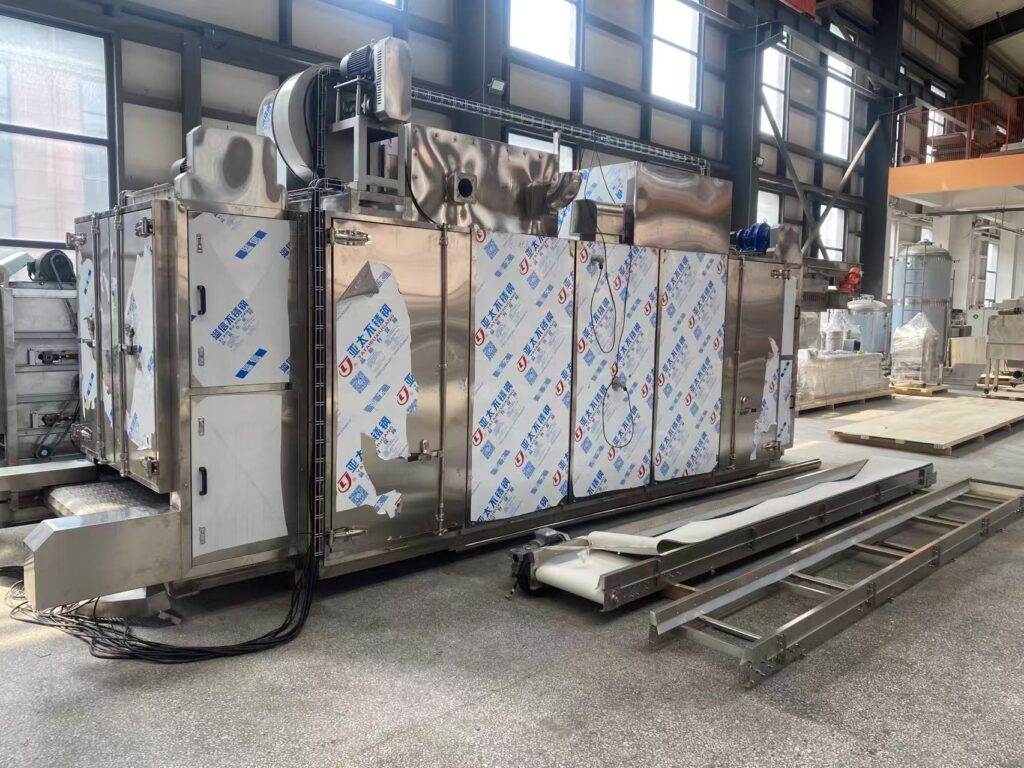
- Step 1 – Surface Drying: Remove surface moisture using a stream of hot air (80–90°C) for 3–5 minutes to prevent sticking.
- Step 2 – Tempering: Transfer the kernels to a holding bin at 40–50°C for 30–60 minutes. This allows internal moisture to migrate outward slowly.
- Step 3 – Final Drying: Use a belt or fluidized bed dryer at 50–60°C until moisture reaches 10–12%. The drying air speed should be moderate (0.5–1.0 m/s) to avoid blowing kernels away.
- Cooling: Cool to room temperature (25–30°C) before packaging.
6. Polishing and Optical Sorting
- Polishing: Lightly brush the dried FRKs in a rice polisher with a small amount (0.1–0.2%) of rice bran oil or vegetable oil. This gives them a translucent, pearly luster identical to polished white rice and reduces starch dust.
- Optical Sorting: High-end production lines use a color sorter. This machine uses cameras and compressed air jets to blow out:
- Discolored kernels (burnt or yellowed).
- Broken half-pieces.
- “Ghost kernels” (extruded without vitamins).
- Foreign material.
7. Blending (Standardization)
Pure FRKs are too concentrated to eat directly. fortified rice machinery They are blended with natural milled rice.

- Standard Ratio: 1 part FRK to 50–200 parts natural rice (typically 1:100).
- Blender Type: Use a gentle drum blender (not a screw auger) to avoid breaking FRKs.
- Uniformity Check: After blending, take 10 random samples. Each should contain 1–2 FRKs per 100 rice grains.
8. Packaging and Storage
Nutrients degrade with oxygen, heat, light, and humidity.
- Packaging Material: Use multi-layer laminated pouches (PET12/Al7/PE70) – aluminum foil blocks 100% of light and oxygen.
- Gas Flushing: Flush the pouch with Nitrogen (N₂) before sealing to remove residual oxygen.
- Sealing: Use a vacuum or impulse sealer. Ensure zero leakage.
- Storage Conditions: Keep at <25°C and <40% relative humidity. Shelf life properly sealed: 12 months (for iron/vitamin B) to 24 months (for encapsulated vitamin A).
9. Quality Assurance Tests (Batch Release)
Before shipping, every batch must pass:
| Test | Method | Acceptance Criterion |
|---|---|---|
| Grain Integrity | Boil 20g FRKs in water for 15 min | <5% broken or disintegrated |
| Color & Appearance | Visual vs. standard rice | No yellowing, same length as natural rice |
| Density | Water displacement method | 1.1 – 1.3 g/cm³ |
| Cooking Time | Parallel test with natural rice | Must be within ±1 minute |
| Iron/Vitamin Content | HPLC / ICP-MS | 95–115% of label claim |
| Rancidity | Peroxide value (PV) | <5 meq/kg |
10. Common Defects and Solutions
| Defect | Cause | Solution |
|---|---|---|
| Kernels puff up (float) | Extruder temperature too high (>110°C) | Reduce barrel temperature; increase cooling at die |
| Cracks after drying | Drying too fast | Add tempering step; reduce drying air speed |
| Metallic aftertaste | Unencapsulated iron | Switch to coated iron (e.g., SunActive Fe) |
| White streaks | Poor mixing | Increase mixing time; clean mixer blades |
| Stick together after cooking | Excess surface starch or gum | Add oil polish; reduce binder (e.g., gum) level |
Conclusion

Producing high-quality fortified rice requires more than simply mixing vitamins with rice flour. It demands precise control of raw materials, fortified rice machinery twin-screw extrusion with minimal expansion, a two-stage drying process with tempering, optical sorting, and nitrogen-flushed barrier packaging. When these parameters are met, the resulting FRK is indistinguishable from natural rice in appearance and cooking, yet delivers life-saving micronutrients with every meal.
 Belarusian
  English
  Russian
  Spanish
  Italian
  Arabic
  Portuguese
  German
  French
  Japanese
  Moroccan Arabic
  Persian