Palatability — the degree to which a dog finds a food appealing — is arguably as important as nutrition. Even the most nutritionally complete dog food will fail if the dog refuses to eat it. Unlike humans, dogs rely heavily on smell (olfaction) and texture, with taste playing a secondary but significant role. This article explores how formulators can strategically combine ingredients to maximize intake, maintain consistency, and avoid palate fatigue.
1. The Sensory Biology of the Dog
Understanding canine sensory priorities is the first step.
Sense
Importance
Key Drivers
Smell
Extremely high (10,000–100,000× more sensitive than humans)
Volatile compounds from meat digests, fats, and Maillard reaction products
Taste
Moderate (≈1,700 taste buds vs. humans’ 9,000)
Umami (amino acids), sweet (simple sugars), salty; bitter and sour are avoided
Key takeaway: A dog decides to eat primarily based on aroma, then mouthfeel, then taste. Ingredient selection must target all three.
2. Protein Sources: The Foundation of Aroma and Umami
Protein provides both the meaty smell and the amino acids that stimulate umami receptors.
High-palatability protein choices:
Fresh or frozen meats (chicken, beef, lamb, fish) – Contain natural enzymes and volatile precursors that generate appealing aromas during extrusion or baking.
Hydrolyzed proteins – Enzymatically broken into small peptides and free amino acids (especially glutamic acid), which greatly enhance umami. Hydrolyzed chicken liver is a powerful palatant.
Meat meals (chicken meal, fish meal) – Concentrated protein, but lower in volatile compounds than fresh meat; often used as base with surface coating for aroma.
Low-palatability pitfalls:
Plant proteins (soy, pea, corn gluten) – Lack meaty aroma and umami; may require heavy flavor coating.
Poorly stored meat meals – Oxidized fats and amines produce off-odors (rancid, fishy, bitter).
Formulation strategy:
Use a blend: fresh meat (10–20%) for aroma + meat meal (20–30%) for protein density + hydrolyzed protein (1–3%) for umami enhancement.
3. Fats and Oils: Aroma Carriers and Mouthfeel Modifiers
Fat is the primary carrier of odor-active compounds and contributes to kibble lubricity (ease of chewing and swallowing).
Palatability-enhancing fats:
Fat Source
Palatability Benefit
Potential Issue
Chicken fat
Familiar, mild poultry aroma
Can become rancid without antioxidants
Beef tallow
Strong grilled/roasted notes
Higher saturated fat, solid at room temperature
Pork lard
Excellent coating, high palatability
Less common in premium formulas
Fish oil
Attractive to many dogs (strong marine odor)
Can oxidize quickly; some dogs reject
Poultry digest (sprayed on after cooking)
Extremely potent aroma; mimics fresh meat juices
Expensive; requires precise application
Application methods:
Internal fat (mixed into dough before extrusion) – Contributes to texture and carries flavor through the kibble.
Post-extrusion coating (sprayed onto dried kibble) – Delivers immediate surface aroma; typically 6–12% of final product.
⚠️ Warning: Rancid fats (high peroxide value) are strongly rejected. Always include mixed tocopherols (vitamin E) or rosemary extract as natural antioxidants.
4. Carbohydrates: Texture, Sweetness, and Binding
While dogs do not crave sweetness as strongly as humans, carbohydrates influence palatability through texture and subtle flavor.
Carbohydrate
Effect on Palatability
Rice (white or brown)
Neutral flavor, light texture; highly accepted
Barley
Slightly nutty, good chew; well accepted
Oats
Mild sweetness, softens in mouth; excellent for seniors
Potato (or sweet potato)
Natural sweetness (dogs have sweet receptors); smooth texture
Corn
Moderate acceptance; some dogs reject if poorly processed
Peas/lentils
Beany flavor (can be off-putting if >20% of formula); bitter notes in raw legumes
Formulation rule:
Use highly digestible, low-beany grains or tubers as the base (30–50% of formula). Limit pulses (peas, lentils, chickpeas) to <15–20% unless heavily flavored.
5. Palatability Enhancers (Digests and Yeast Extracts)
These are concentrated flavor systems added in small amounts (0.5–5% of formula) to dramatically boost intake.
Common palatability enhancers:
Ingredient
How It Works
Typical Inclusion
Poultry digest (liquid or powder)
Enzymatic breakdown of chicken/turkey liver; rich in free amino acids, peptides, and nucleotides
1–3%
Beef digest
Similar to poultry, but with stronger “roasted” notes
1–3%
Yeast extract
Contains 5′-nucleotides (inosinate, guanylate) that synergize with glutamates for umami
0.5–2%
Hydrolyzed vegetable protein
Plant-based umami; less potent than animal digests
1–3%
Cheese powder
Appeals to some dogs; adds creamy note
0.5–2%
📌 Industry note: Commercial palatants (e.g., from AFB, Diana Pet Food) are often proprietary blends of digests, yeasts, and organic acids. They can increase intake by 50–200% in preference tests.
6. Texture Engineering: Beyond Taste
Texture affects how a dog interacts with the kibble — from first bite to swallowing.
Texture Parameter
Desirable Range
Palatability Impact
Hardness
3–6 kgf (for dry kibble)
Too hard → difficult for small/senior dogs; too soft → no crunch, rejected
Porosity
20–35% air voids
High porosity absorbs surface fats better, releasing aroma quickly
Density
350–450 g/L
Heavier kibbles feel more substantial; lighter kibbles may be ignored
Surface roughness
Slightly textured (not smooth)
Holds coating oils; smooth kibbles have poor flavor retention
Size & shape
6–15 mm diameter
Small breeds need smaller kibble; large breeds prefer larger bites
Process adjustments for texture:
Extrusion temperature (120–150°C) and moisture (22–28%) control expansion and hardness.
Post-drying cooling rate affects brittleness.
Coating sequence: Oil first (to carry fat-soluble aromas), then digest (water-soluble), then dry palatant (powdered).
7. Avoiding Palatability Killers
Certain ingredient choices or processing errors make food unacceptable.
Problem
Cause
Solution
Bitter off-notes
Oxidized fats, burnt starch, or alkaline (high pH) dough
Add antioxidants, control dryer temperature, adjust pH to 5.5–6.5
Sour/fermented smell
Microbial growth in wet ingredients
Use fresh raw materials; add mold inhibitors (propionic acid)
Fishy odor
Poor quality fish meal or high fish oil oxidation
Use stabilized fish oil; store under nitrogen
Metallic taste
Mineral over-supplementation (especially iron, zinc)
Chelate minerals or reduce inclusion
Hard, dusty kibble
Over-drying or excessive fines
Control drying time; remove fines with sifter
Stale aroma
Long storage (6+ months)
Reduce shelf life; use oxygen absorbers in packaging
Strategic carbohydrate selection (avoiding beany or bitter pulses)
Proven palatability enhancers (yeast extracts, digests) at low inclusion rates
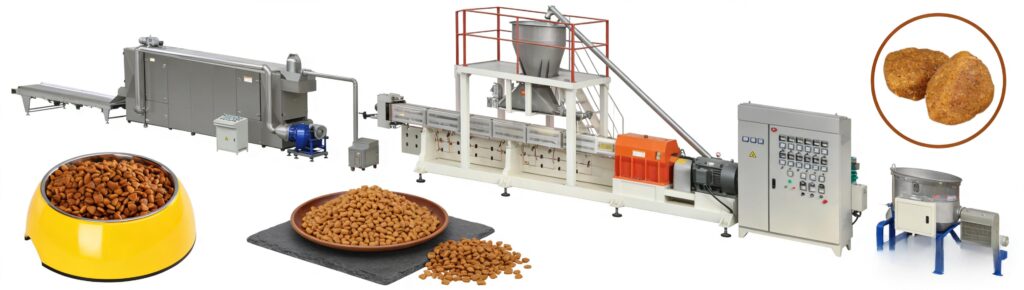
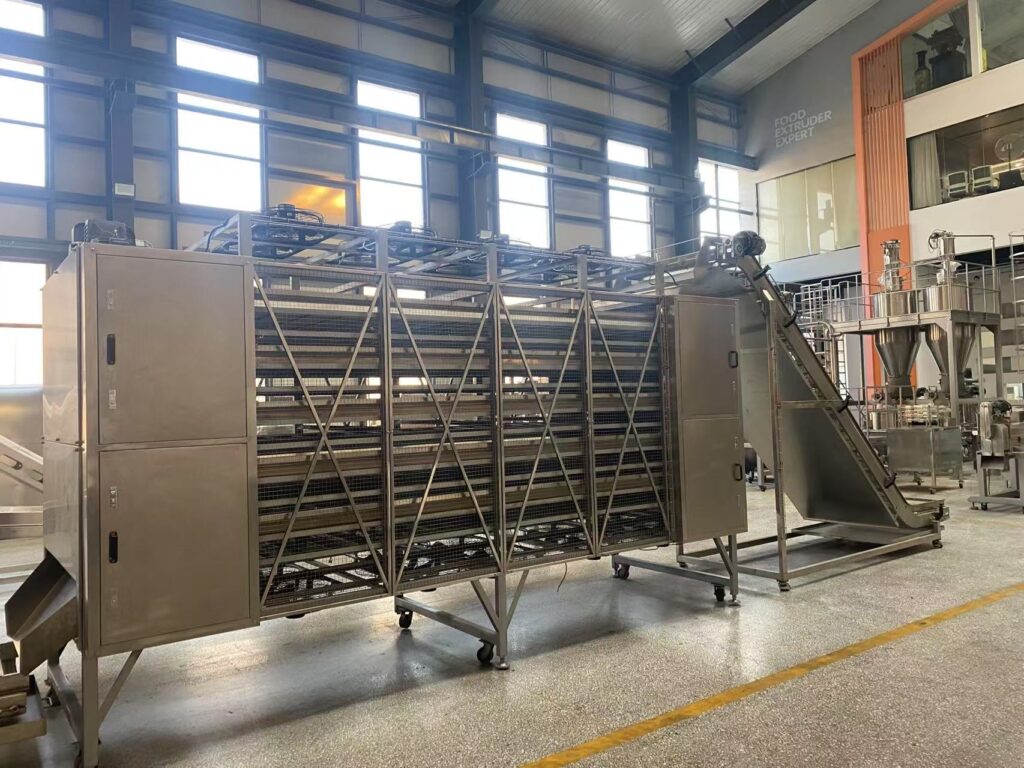
By carefully balancing these factors, formulators can create a food that dogs not only eat eagerly on day one but continue to prefer over weeks and months. The final test is always the bowl — and a wagging tail. If you are interested in the dog food extruder, you can contact me , i will give you good advice and solutions .
1.Will you help us with the installation ?
Yes , We will send engineers to install and debug the equipment, and assist in training your staff.
2.Are you a factory or trading company?
We are a factory.
3.What certificate do you have?
We have ISO and CE certificate.
4.How long is the warranty period?
All of our machines have one year warranty.
5.What’s the main market of your company?
Our customers all over the world.
6.How much production capacity of your company one year?




 Belarusian
  English
  Russian
  Spanish
  Italian
  Arabic
  Portuguese
  German
  French
  Japanese
  Moroccan Arabic
  Persian