
Introduction
Fried snack foods represent one of the largest and most dynamic segments of the global snack industry. From potato chips and corn chips to battered vegetables, extruded puffs, and fried fruit chips, these products share a common processing foundation while exhibiting remarkable diversity in raw materials, formulations, and final product characteristics. The appeal of fried snacks lies in their distinctive texture—crispy, crunchy, and satisfying—combined with the rich flavors developed through the Maillard reaction and lipid interactions during frying.
This guide provides a systematic overview of fried snack food production, covering fundamental principles, process technologies, quality control systems, and safety considerations. Drawing on established industry practices and technical literature, it is intended for food manufacturers, production managers, and technical professionals seeking to establish or optimize fried snack production operations.
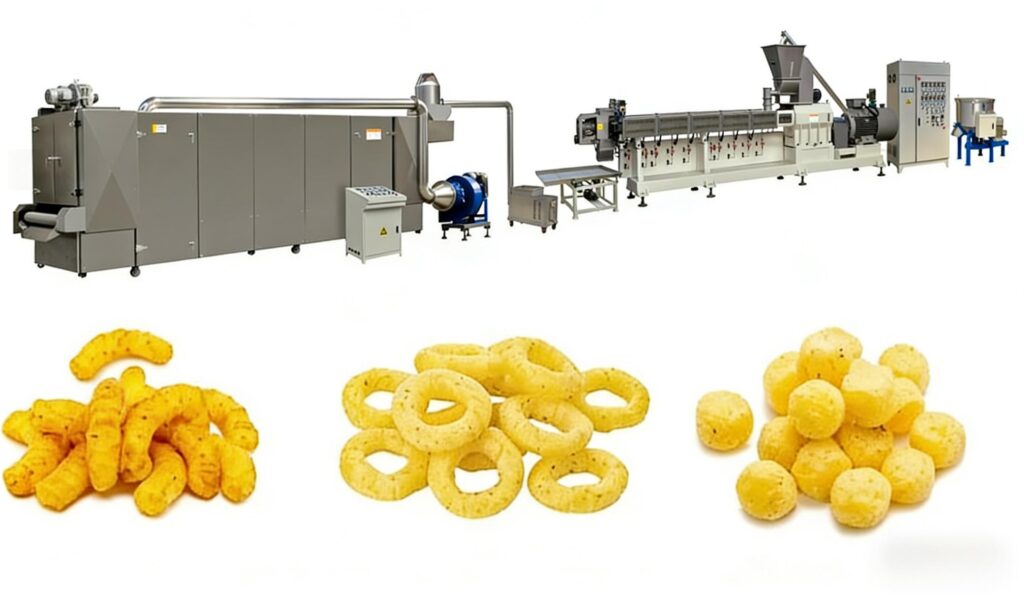
1. Core Principles of Fried Snack Production
1.1 The Science of Frying
Frying is fundamentally a dehydration process in which hot oil serves as the heat transfer medium. When a food piece is immersed in hot oil (typically 130-190°C, depending on the product and technology), several simultaneous phenomena occur:
Heat Transfer: Thermal energy from the oil rapidly transfers to the food surface and propagates inward. The rate of heat transfer is significantly faster than in hot air drying due to the higher thermal conductivity of oil.
Moisture Evaporation: Water within the food reaches boiling temperature and vaporizes. This steam generation creates the characteristic porous structure of fried snacks. As the vapor escapes, it also prevents oil from penetrating the food’s interior—the outward flow of steam acts as a barrier to oil ingress.
Starch Gelatinization and Protein Denaturation: Heat transforms the starch and protein matrix, creating the structural framework of the final product. Starch gelatinization is essential for developing the characteristic crisp texture.
Maillard Reaction and Flavor Development: The reaction between reducing sugars and amino acids at elevated temperatures generates hundreds of volatile compounds that contribute to the desirable color, aroma, and taste of fried foods.
Oil Uptake: Oil is absorbed onto the food surface and into the porous structure. The extent of oil uptake depends on factors including initial moisture content, frying temperature, product geometry, and surface characteristics.
1.2 Product Classification and Technology Selection
Fried snack foods can be classified by the raw material base and processing approach, which in turn determines the appropriate frying technology:
Atmospheric (Conventional) Frying:
- Processing temperature: Typically 160-190°C
- Pressure: Ambient atmospheric pressure
- Suitable applications: Cereal-based products (puffed snacks, instant noodles), battered vegetables, traditional fried snacks
- Advantages: Well-established technology, relatively low capital investment
- Considerations: Higher oil content, potential nutrient degradation, color changes, oxidation issues with repeated oil use
Vacuum Frying:
- Processing temperature: 65-120°C under vacuum
- Vacuum degree: -0.080 to -0.098 MPa
- Suitable applications: Fruit and vegetable chips, seafood snacks, products requiring color and nutrient preservation
- Advantages: Lower oil content, better color retention, preserved natural flavors, reduced oil oxidation due to low oxygen environment
- Considerations: Higher capital cost, more complex equipment, higher energy consumption
High-Pressure Frying:
- Processing temperature: Above atmospheric boiling point
- Suitable applications: Meat products requiring thorough cooking (fried chicken, steak)
- Advantages: “Crispy exterior, tender interior” texture
- Considerations: Limited application range, higher equipment cost
2. The Complete Manufacturing Process
2.1 Raw Material Selection and Quality Control
The foundation of high-quality fried snacks begins with raw material selection. Regulatory standards emphasize that “raw material control is the first line of defense” for product quality and safety. Key considerations include:

Primary Ingredients:
- Cereal grains (corn, wheat, rice) for extruded or sheeted snacks
- Potatoes and other tubers for chips and crisps
- Starchy fruits (banana, breadfruit, jakfruit) for specialty products
- Legumes and pulses for direct-fried products
Functional Ingredients:
- Starches and flours modify texture and binding properties
- Emulsifiers improve dough handling and product characteristics
- Leavening agents create desired porosity
Quality Specifications:
- All raw materials must be free from contaminants, mold, and insect infestation
- Suppliers should be audited for Good Agricultural Practices
- Magnetic separators should remove ferrous contaminants from incoming ingredients
2.2 Ingredient Preparation and Dough Formation
The preparation phase varies significantly depending on the product type. For grain-based fried snacks, a dough is typically prepared and formed before frying.
Grinding and Particle Size Reduction:
For products made from whole grain ingredients, consistent grinding is critical. A process developed by Willard demonstrates the principle: cereal grain kernels are ground such that a major portion passes through a U.S. No. 20 mesh screen and is retained on a U.S. No. 100 mesh screen. This particle size range ensures uniform hydration and gelatinization during subsequent steps.
Hydration and Gelatinization:
Uniform hydration of ground grains is essential for achieving consistent starch gelatinization. The grain-water slurry should have a moisture content of 40-70% water, and the hydration temperature is typically maintained at 120-160°F (49-71°C). Cooking the slurry to temperatures above the starch gelatinization point (approximately 165-170°F / 74-77°C for corn starch) ensures a significant portion of the starch is at least partially gelatinized.
For products such as potato-based fried snacks, the dough formulation may include 75% fresh potato mash combined with starches, flour, sugar, salt, and seasonings. The wet dough is then subjected to controlled gelatinization by steaming at 58-65°C for 20 minutes.
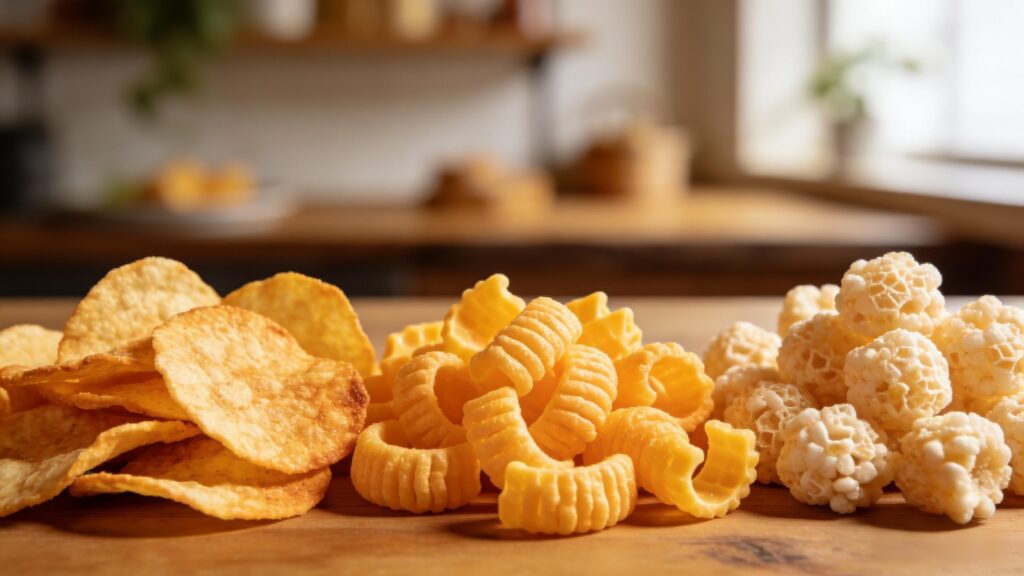
Cooling and Aging (Setback):
After gelatinization, the gel should be cooled so that a major portion of the gelatinized starch is “set back” (retrograded). This cooling step is critical for achieving the proper texture and machinability of the dough. For products formed into logs or cylinders before slicing, refrigeration at 4-6°C for 5-11 hours allows proper aging of the dough.
Sheeting and Forming:
The prepared dough is formed into the desired shape. Common forming methods include:
- Sheeting between rollers to create a continuous sheet for cutting into individual pieces
- Extrusion through a die to create ropes or shaped pieces
- Molding or stamping for specialty shapes
For sheeted products, “dockering” (piercing holes in the dough sheet) may be employed to prevent excessive puffing during frying. The sheet thickness for products like fried potato-based snacks is typically controlled to approximately 0.05 cm (0.02 in), with roller temperatures managed for optimal dough handling (front roller approximately 135°F / 57°C, back roller approximately 90°F / 32°C).
2.3 Pre-Frying Treatments
Pre-Treatment for Fruit and Vegetable Products:
Specialty fried fruit and vegetable products require specific pre-treatments to maintain quality:
- Blanching: Fresh potatoes, fruits, or vegetables destined for frying are typically blanched in boiling water (approximately 100°C) for 4-6 minutes. This inactivates enzymes that would otherwise cause browning and flavor degradation. After blanching, immediate cooling in cold water is required.
- Color Preservation: For products like potato chips, soaking in a color-preserving solution (0.5% citric acid or 0.6% salt water) for 3-10 minutes prevents enzymatic browning and maintains attractive product color.
- Freezing and Thawing (Vacuum Frying Applications): For vacuum-fried products, the blanched pieces are frozen at -18°C and then thawed with warm air at 50-60°C. This freeze-thaw cycle disrupts cell structure, facilitating more uniform dehydration and improving final texture.
Predrying:
For many fried snack products, particularly those made from starchy fruits and vegetables, predrying before frying reduces the moisture content to approximately 4-9%. This step reduces the energy required for frying and improves the final product texture. Drying is typically conducted at 45-50°C for 4-5 hours.
Dough Conditioning (For Formed Products):
After forming, some products are air-dried to a stable moisture content of approximately 10%, creating a “half-product” or pellet that can be stored for later frying.

2.4 The Frying Process
Frying Equipment:
Frying equipment selection depends on production scale and product type:
- Batch fryers for small-scale or specialty production
- Continuous fryers for large-scale manufacturing
- Vacuum fryers for premium fruit and vegetable products
Temperature Control:
Temperature management is critical for both safety and quality. FAO guidance emphasizes that “care is needed to control the temperature of the oil used for frying, not only for safety reasons, as very hot oil can splash onto operators when wet fruit is immersed, but also because of financial and quality considerations”.
When oil is heated beyond its smoke point (the temperature at which visible blue haze appears above the oil), it undergoes chemical breakdown, leading to:
- Increased viscosity
- Development of unpleasant flavors (which transfer to the product)
- Higher oil retention on the product (increasing costs)
- Reduced product shelf life
Typical Frying Conditions:
| Product Type | Frying Temperature | Frying Time | Oil Type |
|---|---|---|---|
| Corn-based chips (sheeted) | ~204°C (400°F) | ~8 seconds | 50/50 cottonseed/corn oil blend |
| Potato chips | 180-190°C | 2-3 minutes | Palm oil or vegetable oil |
| Vacuum-fried fruit chips | 65-120°C | 0.5-2 hours | Palm oil, coconut oil, or other vegetable oil |
| Fried instant noodles | 130-160°C | As required | Palm oil |
| Batter-coated snacks | 160-180°C | 30 seconds – 2 minutes | Specialty frying oils |
Oil Selection:
The choice of frying oil significantly affects product quality, shelf life, and cost. Common frying oils include:
- Palm oil (widely used for its stability and melting profile)
- Cottonseed oil
- Corn oil
- Soybean oil
- Specialized high-oleic oils for improved stability
The most important criteria for frying oil selection are oxidative stability, smoke point, and cost. Palm oil is particularly favored because it “melts at mouth temperature, releasing flavor components upon consumption” while providing good oxidative stability.
2.5 Post-Frying Processing
Oil Removal (De-oiling):
After frying, excess surface oil should be removed. For vacuum frying, this is accomplished in a “closed de-oiling tank under vacuum for 5-30 minutes”. For conventional frying, mechanical de-oiling (centrifugal or belt-type) removes surface oil before cooling.
Seasoning and Coating:
After de-oiling, the product is flavored. Common seasoning methods include:
- Powder seasoning application in tumblers
- Spraying with liquid flavor solutions
- Coating with sugar syrups for sweet products (e.g., caramelized chips)
Seasoning rates vary by product, with 20-30% coating by weight being common for many extruded and fried snacks.
Cooling:
The fried product must be cooled to ambient temperature before packaging. Rapid cooling is preferred to:
- Stop any continued oil absorption
- Set the texture
- Prevent moisture condensation (which would cause loss of crispness)
2.6 Packaging
The primary concerns for fried snack packaging are moisture barrier and oxygen barrier. Fried products are hygroscopic and will rapidly lose crispness if exposed to humidity. Additionally, the high fat content makes oxidative rancidity a significant concern.
Packaging Solutions:
- Metalized films or foil-lined pouches provide excellent moisture and oxygen barriers
- Nitrogen flushing displaces oxygen, extending oxidative shelf life
- Some products use controlled atmosphere packaging for maximum shelf life extension
Typical Shelf Life Expectations:
- Conventional fried snacks: 6-12 months under proper packaging and storage conditions
- Vacuum-fried products: Up to 12 months with appropriate packaging (example from potato chip patent indicates 12 months shelf life)
3. Quality Assurance and Safety
3.1 Sensory Quality Attributes
Quality fried snacks must meet the following sensory characteristics:
- Appearance: Characteristic color, free from scorching, uniform
- Texture: Crispy, crisp, tender—depending on product type
- Flavor: Characteristic, free from rancidity, mustiness, or off-tastes
- Freedom from contaminants: No visible foreign matter, insects, or debris
3.2 Physical and Chemical Quality Parameters
Oil Quality Indicators:
The condition of frying oil is perhaps the most critical quality control point. Key indicators include:
- Acid value (AV): Measures free fatty acids; should be ≤ 3.0 mg KOH/g fat
- Peroxide value (PV): Measures primary oxidation; should be ≤ 0.25 g/100g fat
- Carbonyl value: ≤ 20 meq/kg fat
- Polar compounds: Indicates polymerized or degraded oil; maximum typically 27% for frying oil discard
Moisture Content:
Final moisture content is critical for texture. Most fried snacks should have moisture content:
- ≤ 7.5% for general fried snacks
- ≤ 3% for optimum crispness maintenance
Contaminant Limits:
Regulatory standards specify maximum limits for contaminants:
- Lead (Pb): ≤ 0.18 mg/kg
- Total arsenic: ≤ 0.2 mg/kg
- Aflatoxin B1: ≤ 5.0 μg/kg
3.3 Microbiological Quality
Fried snacks must meet stringent microbiological standards:
| Parameter | Limit |
|---|---|
| Total plate count | ≤ 1,000 CFU/g |
| Coliforms | ≤ 30 MPN/100g |
| Salmonella | Absent in 25g |
| Staphylococcus aureus | ≤ 100 CFU/g |
3.4 Acrylamide Mitigation
Acrylamide is a process contaminant formed during high-temperature cooking of carbohydrate-rich foods. Mitigation strategies include:
Raw Material Control:
- Choose varieties with lower reducing sugar content (particularly important for potato chips)
- Control storage conditions for potatoes to minimize sugar accumulation
- Asparaginase treatment may reduce acrylamide formation potential
Process Control:
- Optimize frying temperature-time combinations
- Avoid excessive browning or burning
- Monitor product color as a process indicator
Rework Management:
“Reworking product back through the process has the potential to generate higher acrylamide levels through repeated exposure to the heat-treatment steps.” Therefore, “assessment of rework impact and its reduction or elimination” is recommended.
3.5 HACCP and GMP Implementation
Regulatory authorities increasingly expect systematic food safety management. As noted in recent inspection guidance, manufacturers must “comprehensively inspect production environment, processes, equipment cleanliness, personnel health and operating practices,” establishing controls for “critical control points including frying temperature control, seasoning proportions, and packaging sanitation”.
Key elements include:
- Supplier verification (ingredient traceability)
- Process control documentation
- Finished product testing
- Product retention sample programs
- Labeling compliance
4. Advanced Technologies and Trends
4.1 Vacuum Frying
Vacuum frying technology has gained significant traction for premium fruit and vegetable chip production. The process takes place under reduced pressure, typically at vacuum of -0.080 to -0.098 MPa. This technology offers several advantages:
- Low-temperature processing: Frying temperatures of 65-120°C preserve nutrients and natural colors
- Reduced oil uptake: Products typically contain 20-30% less oil than conventionally fried equivalents
- Superior color and flavor retention: Low oxygen environment minimizes browning and oxidation
- Better texture: The expansion effect under vacuum creates unique crispy-yet-light textures
Products commonly produced by vacuum frying include fruit chips (apple, banana, mango), vegetable chips (potato, carrot, green bean, taro), and seafood snacks.
4.2 Ingredient Innovation
The market trend toward “better-for-you” fried snacks has driven ingredient innovation:
- Use of whole grains and legumes for improved nutritional profiles
- Development of high-amylose starch varieties for lower oil uptake
- Integration of dietary fiber and protein enrichment
4.3 Oil Management Systems
Modern frying operations increasingly employ oil management technologies:
- Continuous oil filtration systems to remove particulate matter
- Oil quality monitoring sensors (automatically detecting acid value and polar compounds)
- Automated oil replenishment systems to maintain oil quality and consistency
4.4 Coating and Battering Innovations
Battered and coated fried snacks require specialized processing equipment and careful control of coating thickness. The coating serves several functions:
- Provides texture contrast (crispy outer shell with tender interior)
- Enables flavor loading in the coating layer
- Can reduce oil uptake by creating a barrier
5. Conclusion

Fried snack food production is a multifaceted operation requiring careful attention to raw material selection, process control, quality assurance, and food safety. The basic principles—starch gelatinization, moisture management, temperature control, and oil quality maintenance—are common to nearly all products, whether simple potato chips or sophisticated vacuum-fried fruit crisps.
Key lessons for manufacturers include:
- Temperature control is paramount. Exceeding oil smoke points leads to degraded oil quality, off-flavors, higher costs, and reduced shelf life.
- Raw material and process consistency determines product quality. Uniform grinding, hydration, and gelatinization are essential for achieving the desired texture and appearance.
- Oil quality management is a continuous process. Monitoring acid value, peroxide value, and polar compounds ensures consistent product quality and protects shelf life.
- Food safety systems are not optional. Regulatory compliance requires HACCP implementation, documented procedures, and finished product testing for microbiological and chemical safety.
- Technology selection must match product goals. Vacuum frying offers superior quality for fruit and vegetable products, while conventional frying is more economical for grain-based snacks.
By mastering these fundamentals and implementing rigorous quality systems, manufacturers can produce fried snack foods that consistently meet consumer expectations for taste, texture, and safety.
 Belarusian
  English
  Russian
  Spanish
  Italian
  Arabic
  Portuguese
  German
  French
  Japanese
  Moroccan Arabic
  Persian