
Cheetos, the iconic cheese-flavored corn snack, comes in two primary varieties: the classic Crunchy (Fried) and the Baked version. While they share similar ingredients, the manufacturing processes diverge significantly at the extrusion stage. The fundamental difference lies in the expansion method and thermal processing—one relies on high-temperature oil immersion, while the other uses hot air convection. Here is a detailed comparison of the two production pathways.

1. The Common Starting Point: Extrusion
Before frying or baking, both products begin with the same raw materials and initial processing. The base formula consists of corn grits (or cornmeal) mixed with water . This mixture is fed into a specialized extruder. Unlike simple puffing extruders, the Cheetos extruder uses a unique rotating plate system (rather than just a screw) to knead the dough . Under high pressure and heat (typically around 150°C), the moisture in the dough becomes superheated. As the dough is forced through the die, the sudden pressure drop causes the water to flash into steam, creating the initial “puffed” structure . At this stage, the semi-finished product is often referred to as “colettes” —the raw, unseasoned, and uncooked base for both versions .
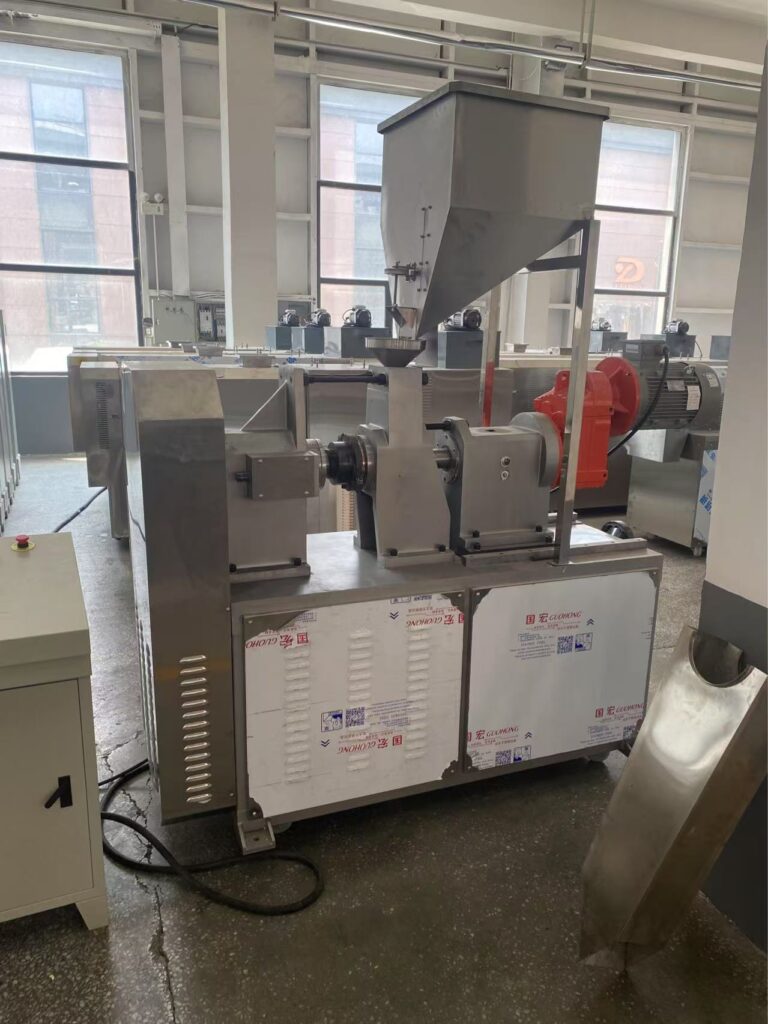
2. The Diverging Paths: Baking vs. Frying
After extrusion and cutting, the production lines split based on the desired final texture and health profile.
The Fried Process (Crunchy Cheetos)
For traditional Crunchy Cheetos, the extruded colletes are conveyed directly into a continuous belt fryer filled with hot vegetable oil . The oil temperature is maintained high enough to rapidly drive out remaining moisture. This process serves three critical functions:
- Texture Creation: The rapid dehydration creates a dense, rigid crunch and a signature “fried crust” .
- Flavor Development: The Maillard reaction and caramelization occur rapidly in the oil, creating a rich, savory base note that supports the cheese seasoning .
- Structure Setting: The intense heat fixes the starch matrix permanently.
After frying, the snacks pass through a vibrating de-oiler to remove excess surface oil, ensuring the product isn’t greasy .
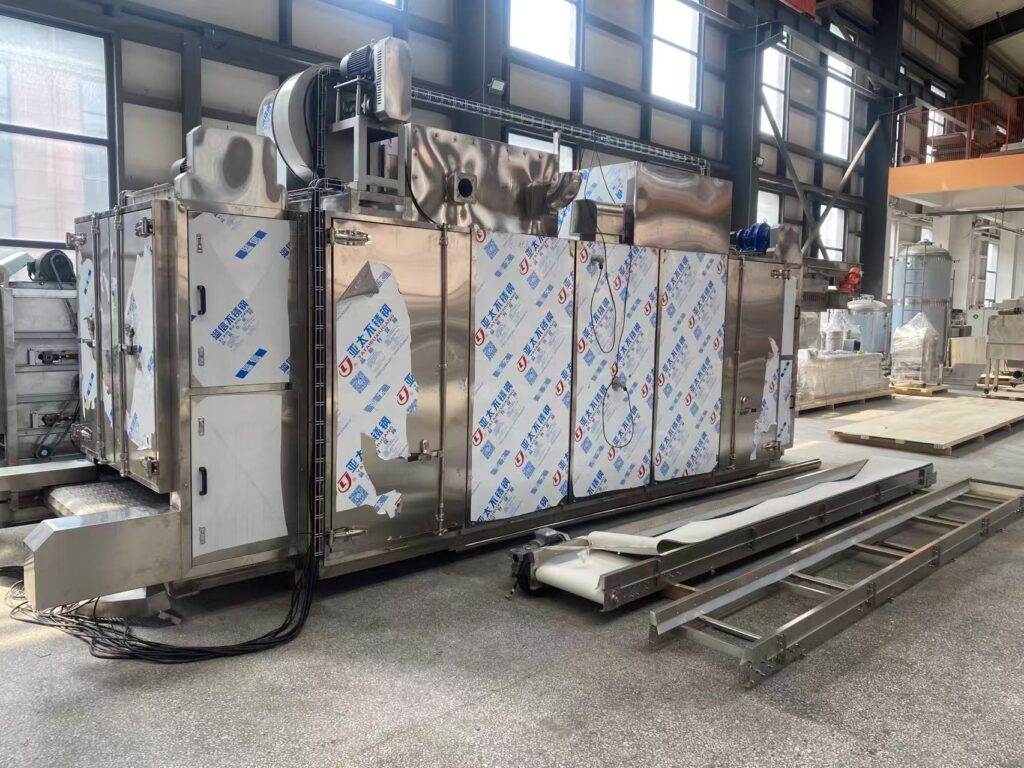
The Baked Process (Baked Cheetos)
Baked Cheetos skip the fryer entirely. Instead, the extruded colletes are fed into a multi-layer convection oven or hot air dryer . kurkure making machine Inside the oven, circulating hot air gradually removes moisture and sets the structure.
- Processing Time: Baking takes significantly longer than frying. While frying takes seconds, baking may take several minutes to ensure the center is dried without burning the exterior .
- Texture Result: Because the product is not submerged in oil, it does not develop the same dense “crust” as fried Cheetos. Instead, it results in a lighter, airier crunch that some consumers find “slightly crunchier” than the original, though less rich .
3. Comparison Table: Fried vs. Baked
| Feature | Fried Cheetos (Crunchy) | Baked Cheetos |
|---|---|---|
| Primary Equipment | Deep Fryer (Oil immersion) | Convection Oven / Hot Air Dryer |
| Processing Speed | Fast (Seconds) | Slow (Minutes) |
| Fat Content | High (Oil is absorbed) | Low (Up to 70% less fat) |
| Texture | Dense, hard crunch; “Rich” mouthfeel | Light, airy crispness |
| Flavor Profile | Savory, roasted, intense | Lighter, more dependent on added seasoning |
| Caloric Density | Higher | Lower |
4. Post-Processing: Flavoring and Packaging
Interestingly, the final steps are almost identical. After either frying or baking, both types of Cheetos enter a rotating flavor drum. Here, a spray system applies a precise amount of oil (to act as an adhesive), followed immediately by the famous cheese seasoning powder . The flavored snacks then pass through a cooling conveyor before being weighed and sealed into bags by vertical form-fill-seal machines .

5. The Health and Market Trade-off
The choice between baking and frying represents a direct trade-off between sensory indulgence and health marketing. Fried Cheetos offer the “craveable” texture and taste that defined the brand for decades, relying on fat to carry flavor and create crunch . kurkure making machine Baked Cheetos cater to the health-conscious consumer. By using hot air instead of oil baths, manufacturers significantly reduce fat content (up to 70% less) and calories, while still providing a satisfying cheese snack .
In summary, while both snacks start as the same wet corn mixture exiting the same extruder die, their final identity is determined entirely by what happens next: a flash fry in hot oil or a slow bake in a dry oven.
 Belarusian
  English
  Russian
  Spanish
  Italian
  Arabic
  Portuguese
  German
  French
  Japanese
  Moroccan Arabic
  Persian