
Baking temperature is the most critical variable in producing high-quality corn chips. Too low, and the chips turn out tough and chewy; too high, and they burn on the edges while remaining soft in the center. Proper temperature control ensures uniform crispness, attractive color, and a pleasant toasted corn flavor. This article outlines practical methods to manage and stabilize baking temperatures throughout the process.

1. Preheat the Oven Thoroughly
Never place corn chips into a cold oven. Preheating establishes a stable thermal environment from the start. For most corn chip recipes, preheat the oven to the target temperature (typically 160–180°C / 320–355°F) for at least 15–20 minutes. Use an independent oven thermometer to verify the set temperature, as built-in oven dials are often inaccurate by 10–30°C (15–50°F). A preheated oven ensures that surface moisture evaporates immediately, locking in the desired crisp texture.

2. Use an Oven Thermometer for Real-Time Monitoring
Oven temperatures fluctuate cyclically as heating elements turn on and off. An oven thermometer placed near the center of the baking rack provides accurate, real-time readings. Check it every 5–10 minutes during baking. If the temperature drifts above or below the target range, adjust the oven dial accordingly. For electric ovens, avoid opening the door frequently, as this causes rapid heat loss; for gas ovens, be aware that temperatures may swing more widely.
3. Optimize Oven Settings: Convection vs. Conventional
- Convection ovens use a fan to circulate hot air, providing even heat distribution and faster moisture removal. Set the temperature 10–15°C (15–25°F) lower than a conventional oven recipe calls for. The moving air helps prevent hot spots, but check chips earlier to avoid over-browning.
- Conventional (still-air) ovens have more temperature variation between top and bottom racks. Rotate baking sheets 180 degrees and swap rack positions halfway through baking to compensate.
4. Control Temperature Through Tray Positioning
The distance between the corn chips and the heat source significantly affects baking rate. For even browning, place the baking sheet on the middle rack. The top rack exposes chips to intense radiant heat, easily burning thin edges. The bottom rack concentrates heat on the underside, which may be appropriate if only the bottom needs extra crispness, but it often leads to uneven results. Always leave at least 5 cm (2 inches) of space between baking sheets to allow air circulation.

5. Manage Batch Size and Oven Load
Adding a large batch of cold, moist corn chip dough immediately lowers the oven temperature. To minimize this drop:
- Do not overcrowd the baking sheet. Leave 1–2 cm between individual chips for hot air to flow around each piece.
- Bake in small batches rather than filling all racks at once. If using multiple trays, rotate them every 5 minutes.
- Allow the oven to recover its set temperature between batches. Wait 3–5 minutes after removing one batch before inserting the next.
6. Adjust Temperature for Chip Thickness
Different cutting methods produce different chip thicknesses, requiring temperature adjustments:
- Thick chips (3–5 mm) : Bake at the lower end of the range (160°C / 320°F) for a longer time (15–20 minutes) to allow heat to penetrate the center without burning the surface.
- Thin chips (1–2 mm) : Use higher heat (180°C / 355°F) for a shorter time (8–12 minutes) to achieve rapid moisture evaporation and a shattering crispness.
7. Use a Two-Stage Baking Technique
For superior control, employ a two-stage temperature profile:

- Stage 1 (Drying) : Bake at 150°C (300°F) for 10 minutes. This gentle heat drives out internal moisture without browning the exterior.
- Stage 2 (Crisping and Browning) : Increase the temperature to 190°C (375°F) for the final 3–5 minutes. The sudden heat surge creates Maillard browning and adds crunch without burning.
This method is especially useful for homemade corn chips, where moisture content can vary.
8. Observe Visual and Auditory Cues
Temperature control is not just about numbers. Learn to read the chips:
- Color : Properly baked chips should be golden yellow to light brown. Dark brown edges indicate the temperature was too high or baking too long.
- Sound : When done, chips should produce a clear, sharp crack when broken. A dull, soft sound means they are underbaked and still moist inside.
- Surface bubbles : Small, uniform bubbles on the surface indicate even heat distribution. Large, dark blisters mean local overheating.
9. Cool Properly to Complete the Process

Temperature control does not end when the chips leave the oven. Residual heat continues cooking the chips on the tray. Immediately transfer baked chips to a wire cooling rack to allow air circulation on all sides. Do not let them cool on the hot baking sheet, as trapped steam will soften the crisp texture. Cooling should take 10–15 minutes at room temperature before storage.
Conclusion

Controlling baking temperature for corn chips requires attention to preheating, oven calibration, rack placement, batch management, and chip thickness. Using an oven thermometer, adjusting for convection vs. conventional ovens, and applying a two-stage baking technique provide the highest level of control. By monitoring visual cues and cooling properly, you can consistently produce corn chips that are evenly crisp, golden, and full of roasted corn flavor.
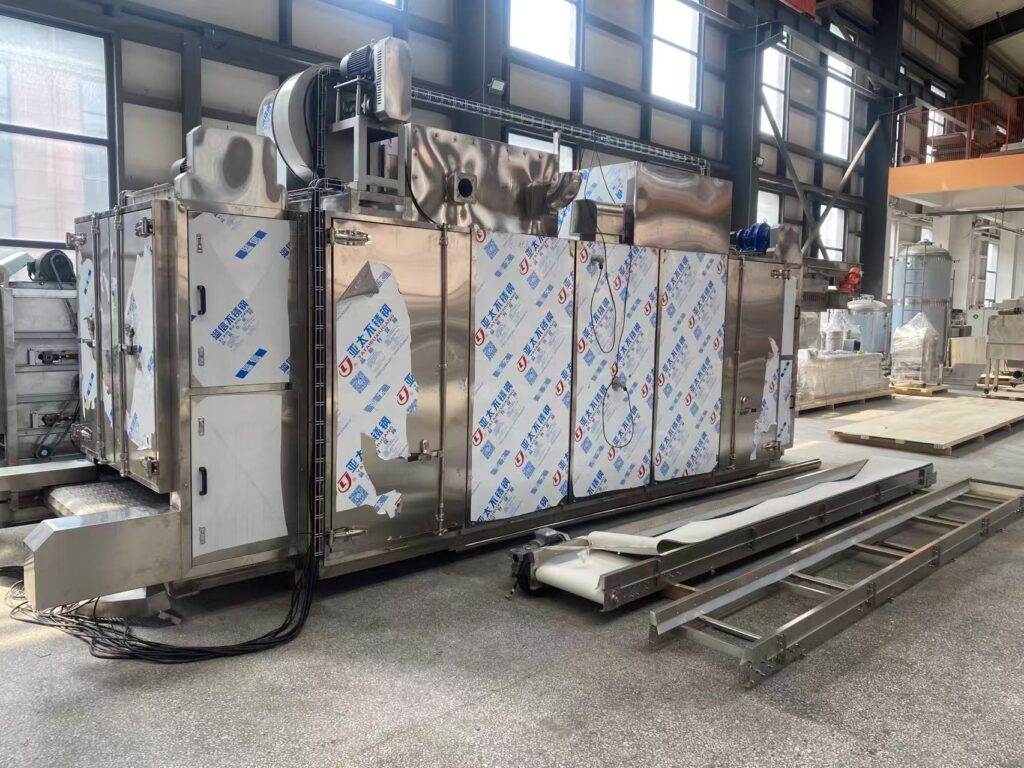
If you are interested in the corn flakes making machine you can contact me , i will give you good advice and solutions .
1.Will you help us with the installation ?
Yes , We will send engineers to install and debug the equipment, and assist in training your staff.
2.Are you a factory or trading company?
We are a factory.
3.What certificate do you have?
We have ISO and CE certificate.
4.How long is the warranty period?
All of our machines have one year warranty.
5.What’s the main market of your company?
Our customers all over the world.
6.How much production capacity of your company one year?
This depends on your needs.
 Moroccan Arabic
  English
  Russian
  Spanish
  Italian
  Arabic
  Portuguese
  German
  French
  Japanese
  Persian
  Belarusian