
1. Introduction
Choosing the correct corn puffing machine (extruder) is the most critical decision for any snack food business, corn puffs extruder whether you are a startup or an established manufacturer looking to expand. The wrong choice can lead to poor product quality, high operational costs, and frequent breakdowns. This guide outlines the key factors to consider when selecting an extruder specifically for corn-based puffed snacks.

2. Understanding the Two Main Types of Corn Puffing Machines
Before diving into specifications, you must distinguish between the two primary technologies:
| Feature | Single-Screw Extruder | Twin-Screw Extruder |
|---|---|---|
| Mechanism | One rotating screw inside a barrel | Two intermeshing, co-rotating screws |
| Mixing capability | Moderate | Excellent (self-wiping) |
| Moisture & fat tolerance | Low (needs exact formulation) | High (handles 12–20% moisture well) |
| Product range | Limited (simple puffs, collets) | Wide (filled snacks, co-extruded, high-fat recipes) |
| Cost | Low to moderate | Moderate to high |
| Best for | Small-scale, simple corn curls/wands | Medium to large lines, complex shapes, flavors |
Recommendation: If you plan to make simple corn puffs (e.g., cheese balls, plain rings) on a budget, a single-screw machine may suffice. For versatility, better consistency, and higher output, choose a twin-screw extruder.
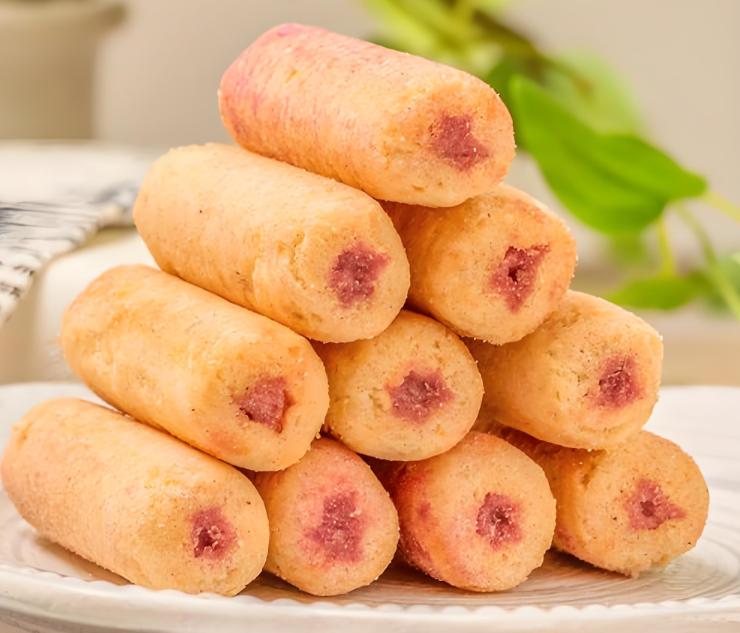
3. Key Selection Criteria
A. Production Capacity (kg/h)
Match the machine’s throughput to your target output. Common sizes:
- Small / Lab scale: 20–80 kg/h – Ideal for startups, R&D, or small shops.
- Medium scale: 100–500 kg/h – Suitable for regional snack brands.
- Large / Industrial scale: 600–2000+ kg/h – For national or export-oriented factories.
Tip: Always choose a machine with 15–20% more capacity than your current need to allow for future growth.
B. Screw Diameter and Length-to-Diameter (L/D) Ratio
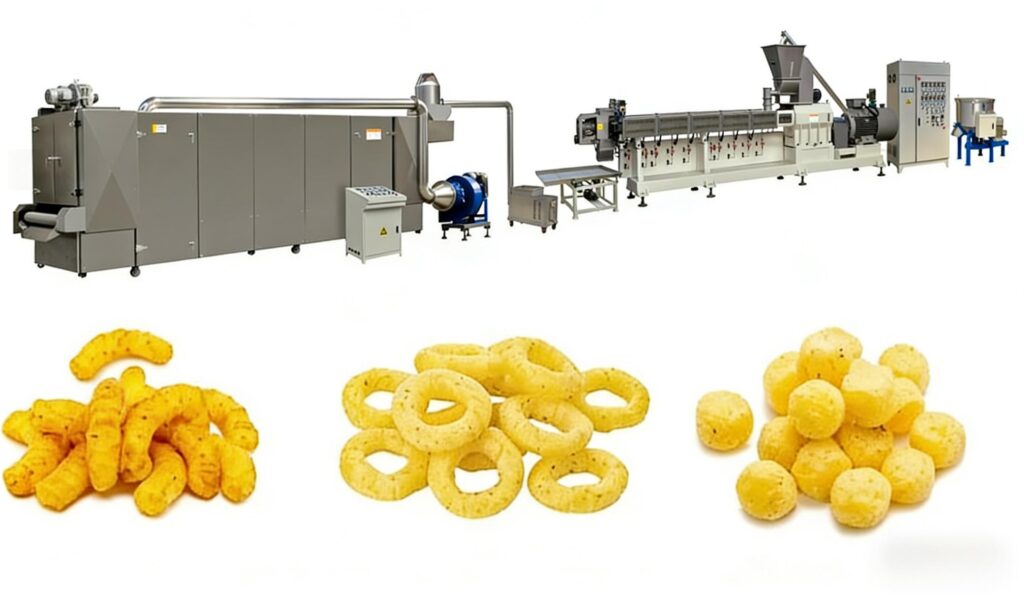
- Screw diameter (φ): Larger diameter generally means higher throughput. For corn, common diameters range from 50 mm to 150 mm.
- L/D ratio: A higher ratio (e.g., 20:1 or 25:1) gives longer product residence time, better cooking, and more uniform expansion. For corn puffs, an L/D of 16:1 to 24:1 is recommended.
C. Material and Build Quality
- Barrel material: Should be abrasion-resistant (e.g., bimetallic cylinder) because corn grits are abrasive.
- Screw material: Hardened alloy steel or nitrided steel with wear-resistant coating.
- Heating/Cooling system: Electric heating with water/air cooling allows precise temperature control (critical for puffing).
D. Power and Energy Efficiency
Check the specific energy consumption (kWh per kg of product). corn puffs extruder Modern twin-screw machines with energy-optimized motors can reduce electricity bills by 20-30% compared to older models.
E. Flexibility and Die Options
The machine should accept interchangeable die plates to produce different shapes:
- Rods (solid or hollow)
- Rings
- Curls
- Stars, tubes, or custom shapes
Ask the supplier how quickly dies can be swapped (tool-less change systems save hours of downtime).
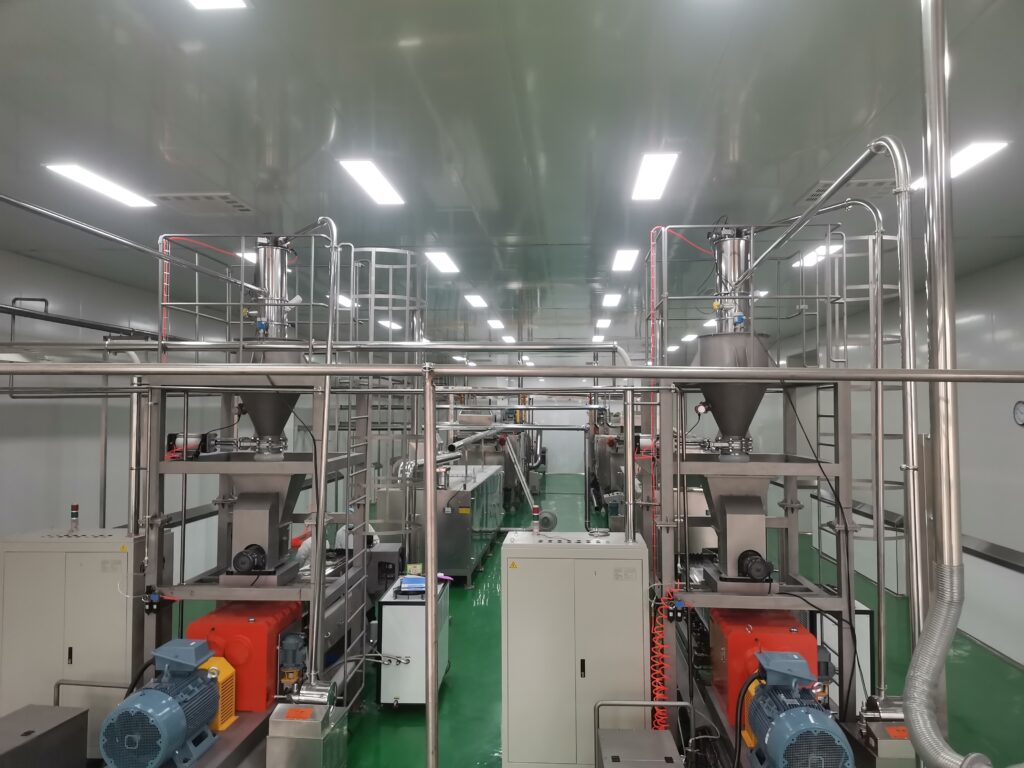
F. Preconditioner (Highly Recommended)
A preconditioner is a cylinder before the extruder that adds steam, water, and initial mixing. It:
- Increases capacity by 20–40%
- Reduces screw wear
- Improves gelatinization and final puffing quality
If your budget allows, always buy an extruder with a preconditioner.
4. Auxiliary Equipment Considerations
A puffing extruder does not work alone. corn puffs extruder Ensure your supplier can also provide compatible downstream equipment:
| Component | Function |
|---|---|
| Pneumatic conveyor | Moves wet puffs to the dryer without breaking |
| Multi-layer dryer | Reduces moisture from ~10% to 2-4% |
| Flavoring drum | Applies oil and powder flavors evenly |
| Packaging machine | Seals product in nitrogen-flushed bags |
Buying a complete production line from one supplier often saves integration headaches and ensures technical support.
5. Supplier Evaluation Checklist
Before finalizing your purchase, evaluate potential suppliers on these points:
- [ ] Experience: How many corn puffing lines have they installed? Request references.
- [ ] Local support: Do they have technicians or agents in your region for installation and training?
- [ ] Spare parts availability: Can they supply screws, dies, liners quickly? Lead time should be <2 weeks.
- [ ] Test facility: Do they allow you to run your own corn recipe on their machine before purchase?
- [ ] Compliance: Does the machine meet local electrical safety and food-grade material standards (e.g., stainless steel for food contact parts)?
6. Common Mistakes to Avoid
- Buying based on price alone: The cheapest machine often has poor temperature control, leading to uneven puffing and high waste.
- Ignoring moisture control: A machine without proper barrel temperature zoning cannot produce consistent expansion.
- Overlooking cleaning accessibility: Corn residue can burn inside the barrel. Ensure the barrel opens easily for cleaning (split-barrel design is preferred).
- Forgetting about voltage/frequency: Imported machines may require transformers or different electrical configurations.
7. Cost Breakdown (Typical for a Medium-Capacity Line)
| Item | Approximate % of Total Budget |
|---|---|
| Extruder (with preconditioner & die set) | 40-50% |
| Dryer (belt type, 3-5 zones) | 20-25% |
| Flavoring system (drum + spray) | 10-15% |
| Conveying & ancillary equipment | 10-15% |
| Installation & training | 5-10% |
8. Conclusion

Selecting the right corn puffing machine requires balancing your production volume, product variety, budget, and after-sales support. corn puffs extruder Start by deciding between single- or twin-screw, then verify capacity, build quality, and energy efficiency. Always request a live test run with your own corn recipe, and prioritize a supplier who can deliver a complete integrated line. A well-chosen extruder will operate reliably for 8–10 years, producing crispy, uniformly puffed corn snacks batch after batch.
 Moroccan Arabic
  English
  Russian
  Spanish
  Italian
  Arabic
  Portuguese
  German
  French
  Japanese
  Persian
  Belarusian