
In the world of puffed snacks—from light rice cakes to crunchy corn puffs—one factor stands out as the primary driver of expansion: starch. The amount, type, and structure of starch in a raw material directly determine how much it will puff. Simply put, the higher and more suitable the starch content, the greater the potential for a light, airy, porous structure. This article explores the science behind why starch is so critical to puffing.
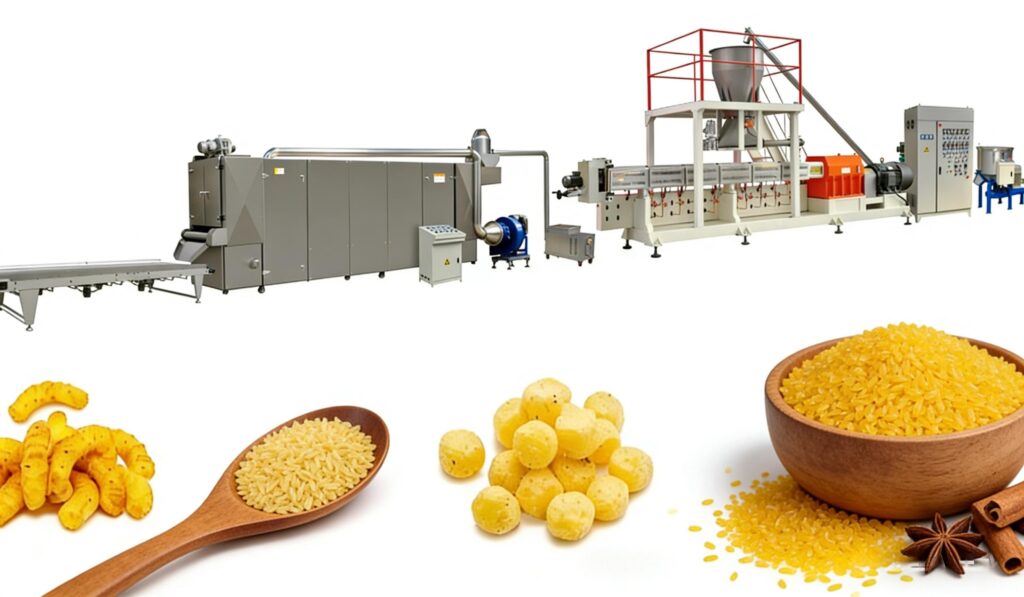
1. Starch: The Engine of Expansion
Starch is a polysaccharide made up of long chains of glucose. It exists in two main forms: amylose (linear chains) and amylopectin (highly branched chains). When a starch-rich grain or tuber is heated with moisture under pressure, three key events occur:
- Gelatinization: Starch granules absorb water, swell, and lose their crystalline structure, forming a molten, viscous mass.
- Decompression/Steam Flash: When the pressure is suddenly released, superheated water inside the mass turns into steam, creating gas bubbles.
- Solidification: As the material cools, the starch recrystallizes (retrogrades) into a rigid, glassy matrix that traps the bubbles.
Without sufficient starch, this process fails. The molten mass cannot stretch to form bubbles, or it collapses before solidifying.
2. Total Starch Content: The Baseline
Generally, the higher the total starch content, the better the puffing result. Starches have an exceptional ability to hold water and form a viscoelastic (stretchy and viscous) dough when gelatinized. This dough acts like a balloon: it can expand with steam pressure and then set in place.
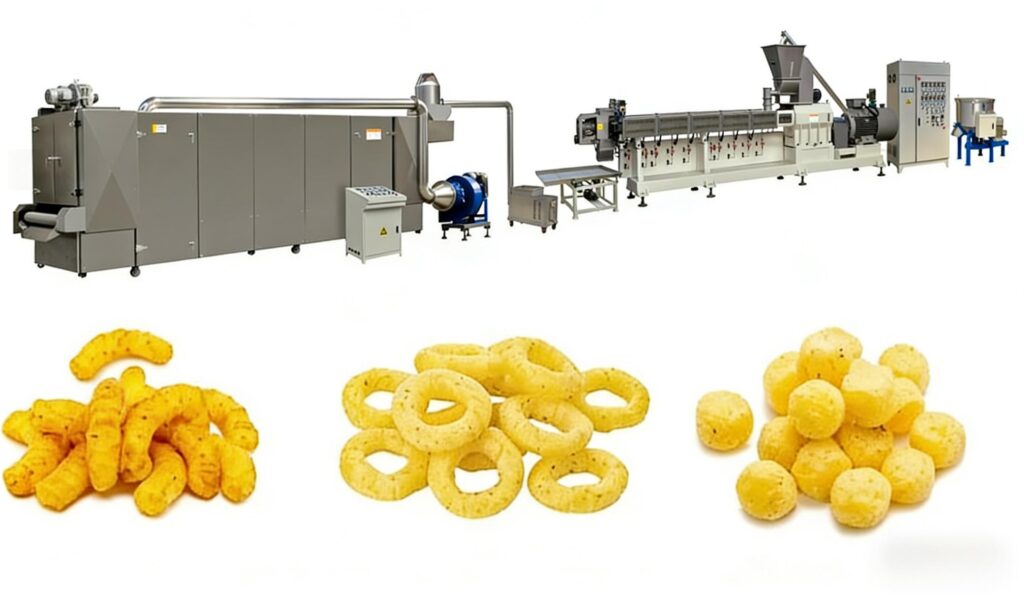
| Ingredient | Approximate Starch Content | Puffing Potential |
|---|---|---|
| Rice flour | 80-85% | Excellent |
| Corn flour | 75-80% | Excellent |
| Wheat flour | 65-70% | Good |
| Potato starch (pure) | 85-90% | Excellent |
| Oat flour | 60-65% | Poor |
| Legume flour (e.g., chickpea) | 50-55% | Very poor |
Observation: Pure starches (like potato or tapioca starch) puff extremely well, often creating very large, fragile bubbles. Conversely, protein-rich ingredients (legumes, soy) or fat-rich ingredients (oats, nuts) have lower starch percentages and puff poorly because proteins and fats interfere with the gelatinization and bubble-holding process.

3. The Crucial Ratio: Amylose vs. Amylopectin
Total starch content is only half the story. The amylose-to-amylopectin ratio profoundly affects the final puffing degree and texture.
- High Amylopectin (Waxy Starches): Amylopectin is highly branched and holds water very well. It gelatinizes easily and forms a soft, extensible, elastic gel that can stretch dramatically without tearing. This leads to maximum expansion but also produces a fragile, tender, and sometimes greasy-feeling puff that may collapse easily. Examples: glutinous rice, waxy corn, waxy potato starch.
- High Amylose (Regular Starches): Amylose is linear and tends to re-associate (retrograde) quickly upon cooling. It forms a firmer, less extensible gel. Puffed products made with high-amylose starches have lower expansion but are crispier, harder, and more structurally stable. They do not collapse as easily. Examples: regular long-grain rice, high-amylose corn.
The sweet spot for most commercial puffed snacks is a balance: moderate amylopectin for good expansion and enough amylose to provide a crisp, non-greasy texture that holds its shape.
4. The Mechanism: Why More Starch = More Puffing
Imagine the molten dough inside an extruder or puffing gun as a continuous, bubble-forming matrix. Here is what happens with high vs. low starch:
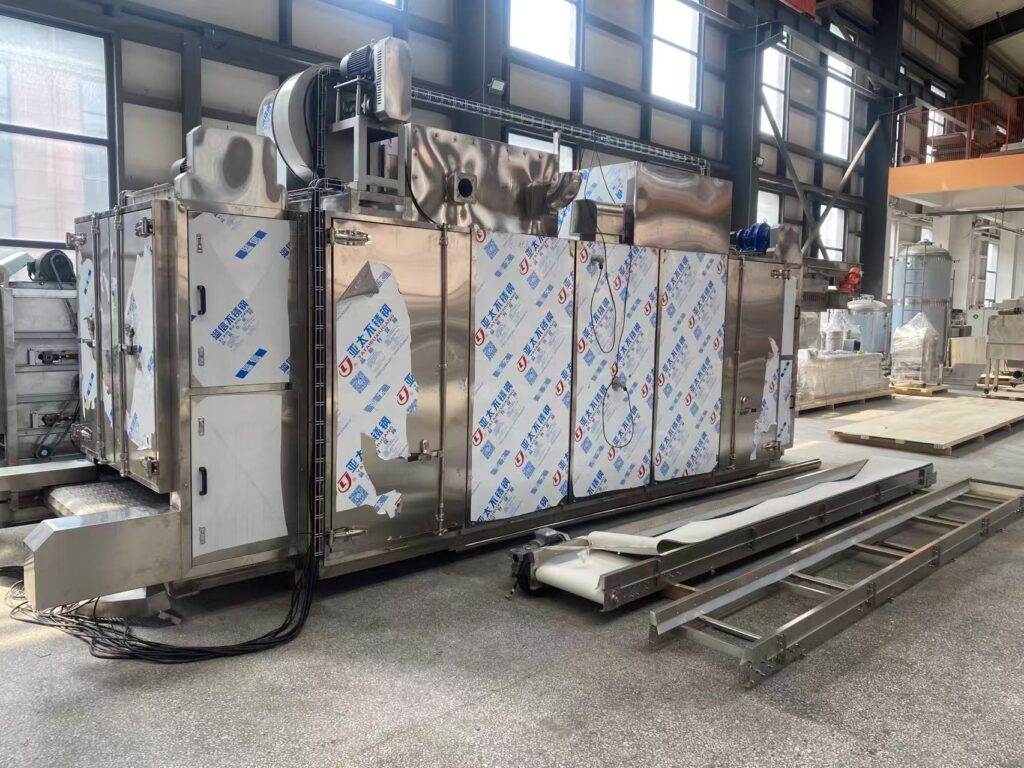
- High Starch ( > 75% ): The matrix is continuous, homogenous, and highly elastic. When steam expands, it creates many small, uniform bubbles that stretch the matrix thin. Upon cooling, the matrix hardens into a foam with low density (high puffing degree).
- Low Starch ( < 60% ): The matrix is disrupted by protein and fat particles. These act as “defect points” where the bubble wall is weaker. When steam expands, the bubbles coalesce (merge) or rupture, leading to uneven, large holes or a collapsed, dense structure. The final product has low expansion and a hard, tough texture.
5. Practical Examples
- Example A: Puffed rice cake (high starch, waxy rice)
Starch content: ~85%, mostly amylopectin.
Result: Extremely high puffing degree (low density), very light, melts in mouth, but fragile. - Example B: Puffed wheat cereal (moderate starch, with gluten protein)
Starch content: ~68%, balanced amylose/amylopectin, plus ~12% protein.
Result: Moderate puffing degree. The gluten adds strength but reduces maximum expansion. Texture is chewy and dense compared to rice. - Example C: Puffed chickpea snack (low starch, high protein)
Starch content: ~55%.
Result: Poor puffing degree. The snack is small, hard, and dense. Manufacturers often blend chickpea flour with pure starch (e.g., potato or tapioca) to improve expansion.
6. Practical Implications for Food Manufacturers
If you want a highly puffed, low-density product:
- Choose ingredients with >75% total starch.
- Use waxy (high-amylopectin) starches for maximum expansion.
- Avoid adding too much protein, fat, or fiber (each dilutes starch content and disrupts bubble formation).
If you want a moderately puffed but crisp and stable product:
- Use a blend of high-amylose and high-amylopectin starches (e.g., 70% regular corn starch + 30% waxy corn starch).
- Keep total starch above 65% .
Conclusion
Starch content is the single most important determinant of puffing degree in expanded snacks. High starch levels (above 75%) provide a continuous, elastic matrix that traps expanding steam, leading to low density and high volume. However, the type of starch matters just as much: high-amylopectin starches produce the greatest expansion but yield fragile puffs, while a balance of amylose and amylopectin creates a crisp, stable structure. For anyone developing puffed products, the rule is clear: more starch, better starch, and the right starch ratio equals superior puffing.
 Moroccan Arabic
  English
  Russian
  Spanish
  Italian
  Arabic
  Portuguese
  German
  French
  Japanese
  Persian
  Belarusian