
While the manufacturing process for Kurkure is highly automated and efficient, several issues must be meticulously monitored to ensure product consistency, food safety, and consumer appeal. kurkure machine price Failure to control these parameters can lead to significant quality defects, from poor texture to rancid flavors. This article highlights the major issues that production teams must address at each stage of the process.
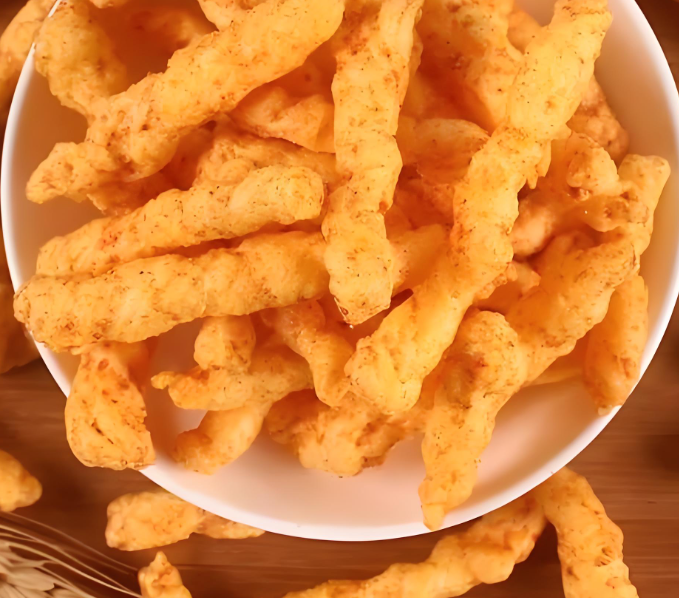
1. Raw Material Quality and Moisture Control
The foundation of a good product lies in its raw materials. The primary ingredient, corn grits, must be of consistent particle size and free from mycotoxins (fungal toxins).
- Issue: Inconsistent Grit Size. If the corn grits are too coarse, they will not hydrate or cook uniformly, leading to hard, gritty spots in the final snack. If too fine, the dough may become pasty and clog the extruder die.
- Issue: Variable Moisture Content. The initial moisture level of the raw material blend directly impacts expansion. Too much water creates a dense, non-puffy product. Too little water results in poor starch gelatinization, causing a brittle, easily shattered snack. Critical Control: Continuous moisture analyzers must be used to maintain the mix within a strict 12-15% range.
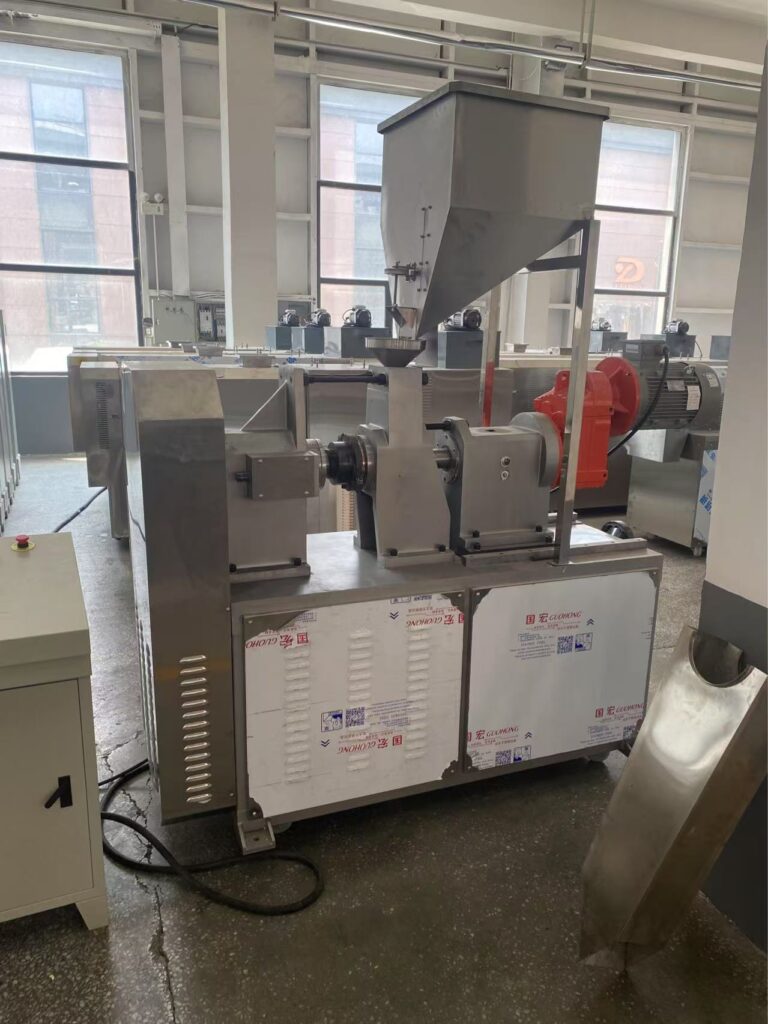
2. Extrusion Parameters: Temperature, Pressure, and Die Design
Extrusion is the most sensitive stage of the line. Several specific issues can arise here.

- Issue: Incomplete Gelatinization. If the extrusion temperature falls below the required 150-180°C range due to low friction or mechanical wear, the starch will not fully cook. The resulting snack will have a chalky, raw taste and poor expansion.
- Issue: Burned Product. Conversely, if the temperature is too high or the machine is run without sufficient feed, the material can scorch. kurkure machine price This produces dark, brown specks and a bitter, burnt flavor.
- Issue: Irregular Shape. The rotary cutter speed must be perfectly synchronized with the extrusion rate. If the cutter is too fast, it produces very short “dust” pieces. If too slow, it yields long, twisted ropes that break incorrectly. Worn or damaged dies will also produce misshapen curls.
- Issue: Surging. Inconsistent feeding of the dough into the extruder causes pressure surging, leading to alternating thick and thin sections in the product.
3. Frying: Oil Quality and Temperature Management
Frying gives Kurkure its crunch, but it is also the primary source of quality degradation and safety risks.
- Issue: Low Oil Temperature. If the oil is below 170°C, the product will absorb excessive oil, becoming greasy and heavy instead of light and crispy. It will also fail to drive out enough moisture, leading to a soft, stale texture within days.
- Issue: High Oil Temperature (Thermal Degradation). Overheating the oil above 190°C accelerates oxidation and polymerization. This produces harmful compounds (e.g., acrylamides, aldehydes), darkens the oil, and creates off-flavors and smoke.
- Issue: Oil Rancidity. The frying oil (typically palm olein) is prone to oxidative rancidity. Exposure to light, air, and high heat breaks down the oil. Rancid oil gives the snack a distinct unpleasant “painty” or “cardboard” smell. Critical Control: Regularly test the oil’s Total Polar Materials (TPM) . Most regulations mandate changing the oil when TPM exceeds 24-25%.
- Issue: Carry-Over Moisture. If the fryer residence time is too short, the final product moisture will exceed the critical 2% threshold. This remaining water activates enzymes and allows mold growth, drastically shortening shelf life.
4. Flavor Application: Uniformity and Adhesion
Applying the spicy, tangy powder evenly across the complex curved surface of Kurkure is challenging.
- Issue: Non-Uniform Coating. If the tumbling speed in the flavoring drum is too high, the snacks will be thrown to the outside, missing the powder spray. If too low, they will clump. Uneven coating results in some pieces being bland while others are over-spiced.
- Issue: Poor Adhesion. The flavor powder must stick to the product. This usually requires a fine oil mist before the powder application. If the base oil spray is inconsistent, the powder will fall off and collect as waste at the bottom of the drum, leading to a bland product and material loss.
5. Moisture and Oxygen Barrier in Packaging
The crispy, fried nature of Kurkure makes it extremely sensitive to its environment. Packaging is the final line of defense.

- Issue: Inadequate Seal Integrity. If the heat-seal on the metalized film pouch is weak or has pinholes, humid air will gradually enter the pack. This causes the snack to absorb moisture and become soggy or chewy—the most common consumer complaint.
- Issue: Residual Oxygen. The oil in the snack will oxidize (go rancid) in the presence of oxygen. Critical Control: The nitrogen flushing system must purge enough oxygen from the pack before sealing. Residual oxygen levels should be kept below 2-3% to prevent rancidity and preserve the spicy flavor profile.
6. Hygiene and Allergen Management
As a ready-to-eat (RTE) snack, Kurkure has no “kill step” after packaging.
- Issue: Cross-Contamination. The production line must be thoroughly cleaned between batches, especially if different flavor variants (e.g., Masala vs. Cheese) are run on the same equipment. Cross-contamination changes the taste and can trigger undeclared allergen issues (e.g., milk proteins in cheese flavor).
- Issue: Foreign Material. Broken screws, metal flakes from worn cutters, or charred bits from the fryer can contaminate the product. kurkure machine price Critical Control: Metal detectors and X-ray inspection systems must be installed immediately before the packaging unit to reject any contaminated packs.
Summary Table of Key Issues

| Process Stage | Key Issue | Consequence |
|---|---|---|
| Mixing | Incorrect moisture | Poor expansion or dense product |
| Extrusion | Temperature fluctuation | Raw taste (cold) or burnt specks (hot) |
| Frying | Oil degradation / High TPM | Rancid flavor, harmful chemicals, dark color |
| Frying | High residual moisture (>2%) | Soft texture, mold growth |
| Flavoring | Poor adhesion | Flavor powder loss, bland taste |
| Packaging | Poor seal / High oxygen | Sogginess, rancidity, short shelf life |
Conclusion

Producing a consistent, high-quality batch of Kurkure requires vigilant monitoring of a complex chain of physical and chemical processes. kurkure machine price The primary issues to watch are moisture control (too little or too much at any stage), oil management (temperature and degradation), and package integrity. By strictly controlling these critical parameters, a manufacturer can avoid the common pitfalls of sogginess, rancidity, and uneven flavoring, ensuring the final product delivers the expected “crunch” and taste every time.
 Arabic
  English
  Russian
  Spanish
  Italian
  Portuguese
  German
  French
  Japanese
  Moroccan Arabic
  Persian
  Belarusian