
Abstract
Japanese panko bread crumbs differ fundamentally from extrusion-puffed bread crumbs in both processing route and product morphology. Panko is produced from bread baked without a crust, typically via electrical baking, followed by controlled crushing into elongated, needle-like flakes. The resulting product exhibits a distinctly airy, flaky texture and low bulk density, making it highly prized as a coating for fried foods such as tonkatsu. This article describes the conventional manufacturing workflow for Japanese panko, from dough preparation through electrical baking, cooling, crushing, drying, and packaging, with attention to the process parameters that govern product quality.

1. Introduction
Panko is a variety of flaky bread crumb used in Japanese cuisine as a crunchy coating for fried foods. Unlike standard Western bread crumbs, which are typically ground from conventionally baked bread with a crust, panko is made from bread baked by passing an electric current through the dough, yielding a crustless loaf with a distinctly white interior. This crustless bread, when crushed, produces light, elongated flakes with a porous structure that delivers superior crispness and reduced oil absorption during frying.
The production of panko is a multi-stage process rooted in bakery technology rather than extrusion. While extrusion-based puffed bread crumbs offer a continuous, fermentation-free alternative, conventional panko manufacture retains a fermentation and baking sequence that imparts specific textural attributes difficult to replicate through extrusion alone. This article outlines the conventional panko processing route, emphasizing the electrical baking step and the crushing operation that together define the product‘s distinctive character.

2. Raw Materials and Dough Formulation
Panko dough is prepared from wheat flour, yeast, water, salt, and small amounts of sugar and oil. The formulation differs from standard bread in several important respects. Sugar content is deliberately kept low, because excessive sugar would cause the panko to brown or burn too rapidly during frying. Salt content is also reduced when electrical baking is employed, as dissolved salts increase the conductivity of the dough and can cause short-circuiting or uneven heating during the passage of electric current.
A representative dough formulation for panko includes wheat flour as the principal ingredient, yeast for fermentation, water, salt at a reduced level, and minor quantities of sugar and fat. The dough is mixed to develop the gluten network sufficiently to retain gas during fermentation, but the mixing regime is adjusted according to the intended baking method. For electrical baking, the dough is typically mixed for approximately 8 to 12 minutes to achieve a smooth, extensible consistency.
3. Processing Workflow
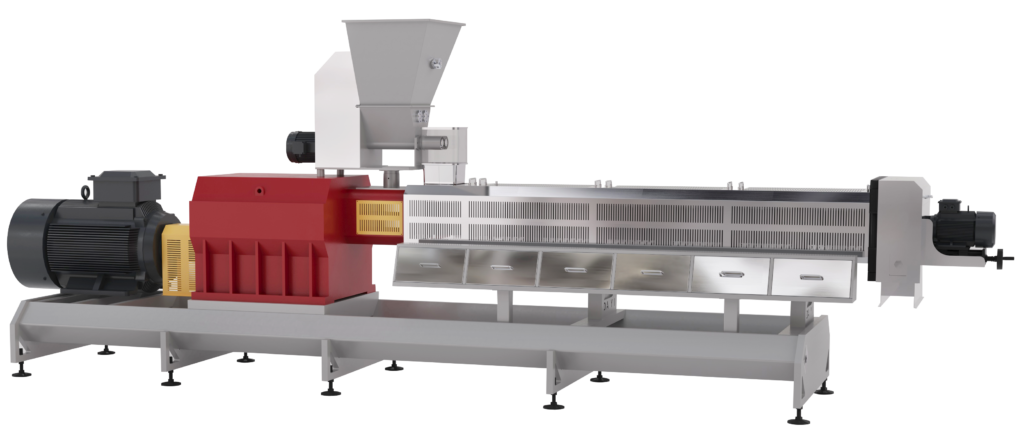
The conventional production of Japanese panko follows the sequence: dough mixing → fermentation → dividing and shaping → proofing → baking (thermal or electrical) → cooling → crushing → drying → sieving → packaging. Each stage is described below.
3.1 Mixing and Fermentation
Dry ingredients are blended, and water is added to form a dough. The dough undergoes bulk fermentation, during which yeast activity generates carbon dioxide that expands the gluten network. Fermentation conditions—time and temperature—are controlled to achieve adequate gas production without excessive acid development. The fermented dough is then divided into pieces of appropriate size for the subsequent shaping and baking operations.
3.2 Shaping and Proofing
Divided dough pieces are rounded, rested, and shaped into forms suitable for baking. For electrical baking, the dough is typically placed between steel plates or forms that serve as electrodes. The shaped dough undergoes a final proofing period to allow additional gas production and relaxation of the gluten structure before baking.
3.3 Electrical Baking
The defining step in conventional panko manufacture is electrical baking, in which an electric current is passed directly through the dough. The dough is positioned between two steel plates that act as electrodes, and the resistance of the dough to the current generates heat internally. Because heating occurs volumetrically rather than through surface contact with hot air, the bread bakes without forming a crust. The result is a completely white loaf with a uniform, dense crumb structure and no browned exterior.
Electrical baking has been used in Japan since before World War II, originating from military field kitchen technology and subsequently adapted for civilian panko production. The method offers a significant advantage for panko: the absence of a crust eliminates the need for trimming and ensures that the entire loaf can be converted into white crumbs. Compared with thermal baking, electrically baked bread is denser, which yields panko that remains firmer and crispier for longer periods after frying—an attribute valued for take-out foods.

Some manufacturers employ thermal baking for certain panko grades. Thermally baked panko, produced from thoroughly fermented dough, yields a fluffier, more bread-like crumb that becomes exceptionally crispy when fried, a texture preferred by many tonkatsu restaurants. The choice between electrical and thermal baking therefore depends on the intended end-use and the desired textural profile.
3.4 Cooling
After baking, the loaves are cooled to ambient temperature. Cooling allows the crumb structure to set and facilitates subsequent handling. In some processes, the baked bread is allowed to rest for an extended period—for example, 2 hours—before crushing, allowing moisture to equilibrate within the loaf and the crumb to firm sufficiently for clean fracture during crushing.
3.5 Crushing
The cooled, crustless loaves are broken apart and crushed to produce the characteristic panko flakes. The crushing operation is critical to product quality. Properly baked bread yields flakes that are elongated, sharp, and needle-like, typically 1 to 2 cm in length. These elongated flakes are the visual signature of fresh panko. If the bread is underbaked or has an uneven density, the crushed product will be irregular and may contain excessive fine powder, which performs poorly as a coating because it fails to cover the food surface uniformly.
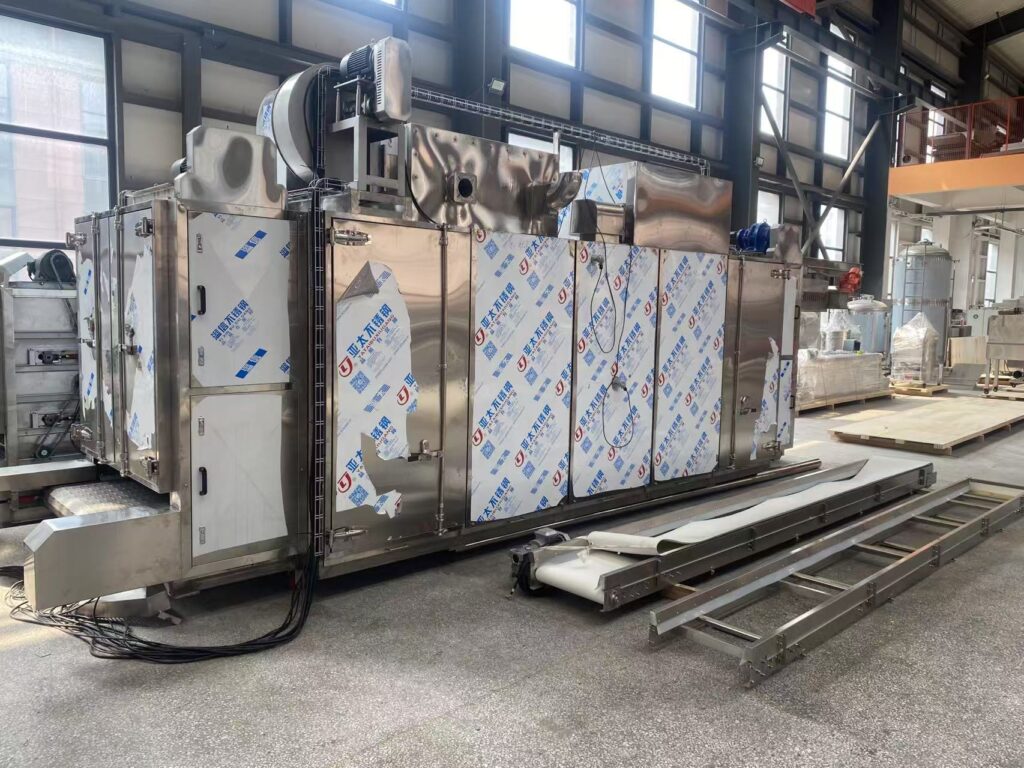
The crushing process is typically performed at controlled temperatures, often around 2°C to 10°C, to ensure clean fracture and prevent the crumb from smearing or compacting. The target particle size distribution generally favors a high proportion of coarse flakes—at least 50% of the total—with the remainder comprising finer particles. Bulk density is a key quality indicator: Japanese-style panko typically exhibits a bulk density of approximately 200 to 300 g/L, reflecting its high porosity and lightness.
3.6 Drying and Packaging
Crushed panko may be sold in a fresh, high-moisture state or dried for extended shelf life. Fresh panko has a moisture content of approximately 40% to 50%. Dried panko is produced by dehydrating the crushed crumbs to a lower moisture level, which alters handling characteristics and extends distribution range. Dried panko absorbs moisture readily, expanding its usage beyond deep-frying applications.
The dried product is sieved to classify particle sizes, with oversized and undersized fractions separated. The classified crumbs are packaged, often with a metal detection step to ensure freedom from metallic contaminants. Packaging materials should provide adequate moisture barrier to maintain crispness during storage.
4. Critical Process Parameters
The quality of Japanese panko is governed by several interrelated parameters:
| Parameter | Typical Condition | Effect on Product |
|---|---|---|
| Dough salt content | Reduced for electrical baking | Prevents short-circuiting; affects flavor |
| Dough sugar content | Low | Limits browning during frying |
| Baking method | Electrical (crustless) or thermal | Electrical: denser, longer-lasting crisp; Thermal: fluffier, more tender |
| Cooling time | Up to ~2 hours | Equilibrates moisture; firms crumb for crushing |
| Crushing temperature | 2–10°C | Ensures clean, needle-like fracture |
| Target flake size | 1–2 cm, needle-like | Defines authentic panko appearance |
| Bulk density | ~200–300 g/L (Japanese style) | Indicator of porosity and lightness |
The electrical baking step is particularly sensitive to dough formulation. Excessive salt increases conductivity and can cause arcing or uneven baking, while insufficient salt may affect flavor. The dough‘s moisture content and the applied voltage must be balanced to achieve complete gelatinization of starch and setting of the protein network without localized burning or undercooking.
5. Product Characteristics and Applications
Japanese panko is distinguished by its flaky, elongated particle shape, low bulk density, and high porosity. These structural features confer several functional advantages as a coating material. The open, airy structure creates a light, crispy texture upon frying and tends to absorb less oil than denser crumb types. The elongated flakes adhere well to battered surfaces and produce a visually appealing, jagged coating.
Panko is widely used for tonkatsu (breaded pork cutlet), ebi fry (breaded shrimp), croquettes, and other fried foods. Its low density and large granule size present specific challenges for coating machinery, requiring specially designed breading applicators and, in some cases, specialized batter formulations to achieve adequate pickup. The product is also increasingly used outside Japan in both Asian and non-Asian cuisines.
6. Conclusion
Conventional Japanese panko manufacture relies on a bakery-based sequence centered on electrical baking, which produces crustless bread ideally suited for conversion into light, flaky crumbs. The process—mixing, fermentation, shaping, electrical baking, cooling, crushing, and drying—yields a product with distinctive textural and functional properties that have made panko a premium coating material worldwide. While extrusion-based puffed bread crumb technology offers a continuous and fermentation-free alternative, the conventional panko route retains its position for products where the specific flakiness, low bulk density, and frying performance of authentically baked panko are required. Key control points include dough formulation (particularly salt and sugar levels), baking method selection, and the temperature and mechanics of the crushing operation.
 Arabic
 English
 Russian
 Spanish
 Italian
 Portuguese
 German
 French
 Japanese
 Moroccan Arabic
 Persian
 Belarusian