
Producing Cheetos-style cheese puffs at scale presents a distinct set of manufacturing challenges. Unlike simple fried snacks, these products depend on precise control of moisture, extrusion pressure, and thermal dynamics to achieve their signature light, airy crunch and consistent cheese coating. The following discussion outlines the most critical problem areas that operators and quality assurance teams must monitor.
Moisture Control and Extrusion Dynamics
The foundational texture of a cheese puff is determined long before the cheese powder is applied. The cornmeal base must be hydrated to a precise level—typically raising its natural moisture content of roughly 10% to between 15% and 20%—before it enters the extruder . This hydration step is not merely a mixing operation; it is the precondition for the explosive puffing that occurs later. If the moisture is too low, the dough will not generate sufficient steam during baking, resulting in dense, hard pellets. If it is too high, the extrudate may become incoherent or prone to collapse.

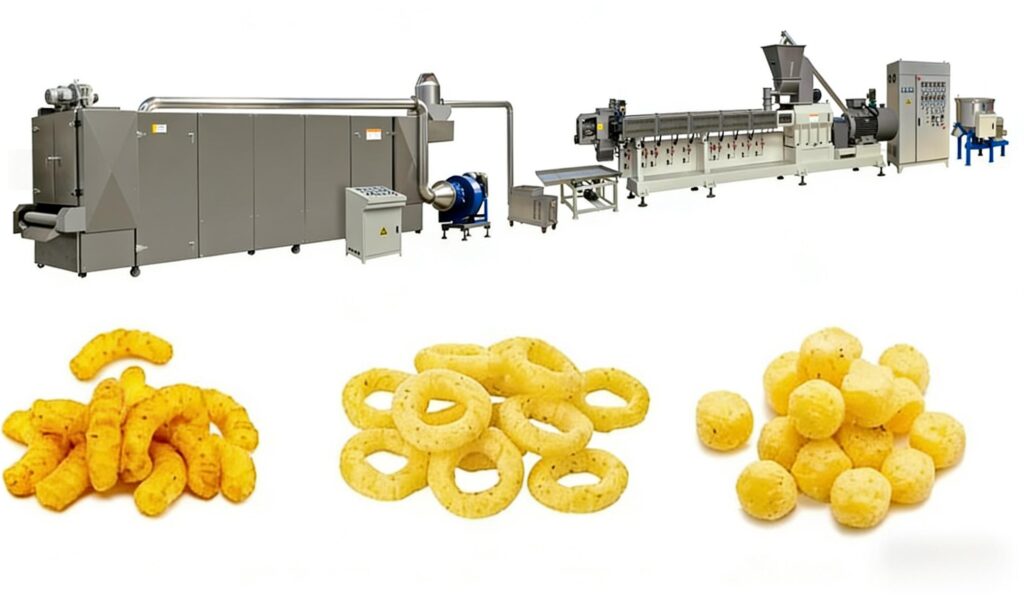
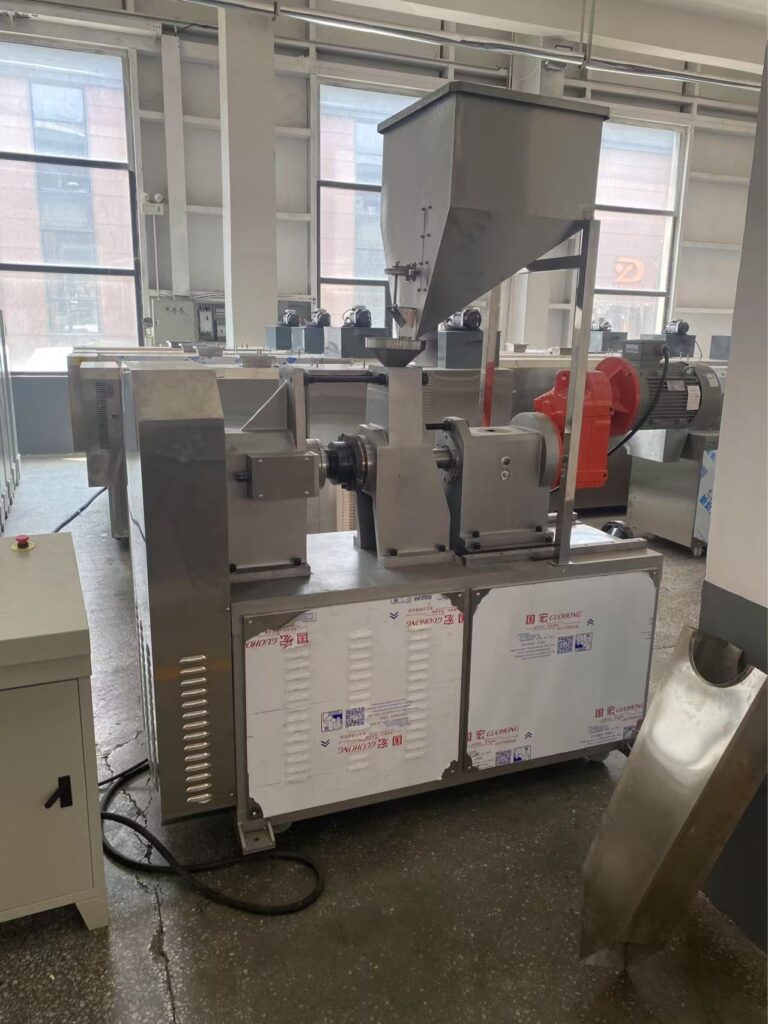
Inside the extruder, the hydrated meal is subjected to intense pressure, often around 300 pounds per square inch, and elevated temperatures to cook the starch matrix . cheeto extruder The die design and cutter assembly must be matched to the specific product shape—whether a straight puff, a curl, or a spiral. For curly variants, the challenges multiply: the extrudate exits the die in a plastic melt state and must be allowed to coil within a containment tube before it cools below its glass transition temperature. Cutting too early produces jagged, fused pieces; cutting too late risks fracturing the brittle structure . Operators must therefore synchronize cutter speed with extrusion throughput, a balance that becomes more difficult as line speeds increase.
Thermal Processing and Acrylamide Management
The baking or frying stage serves two purposes: it drives off the remaining moisture to set the crisp texture, and it develops flavor through Maillard browning. However, this same chemistry creates acrylamide, a process contaminant classified as a potential carcinogen. Research on snack matrices has shown that composition, temperature, and heating time directly influence acrylamide formation, with corn-based products generally forming lower levels than potato-based ones . Even so, the margin is not absolute. Producers must validate their thermal profiles to ensure sufficient dehydration and color development without pushing temperatures into ranges that unnecessarily elevate acrylamide. Continuous monitoring of oven zones and residence times is essential, particularly when line speeds are adjusted for throughput targets.
Coating Uniformity and Color Consistency
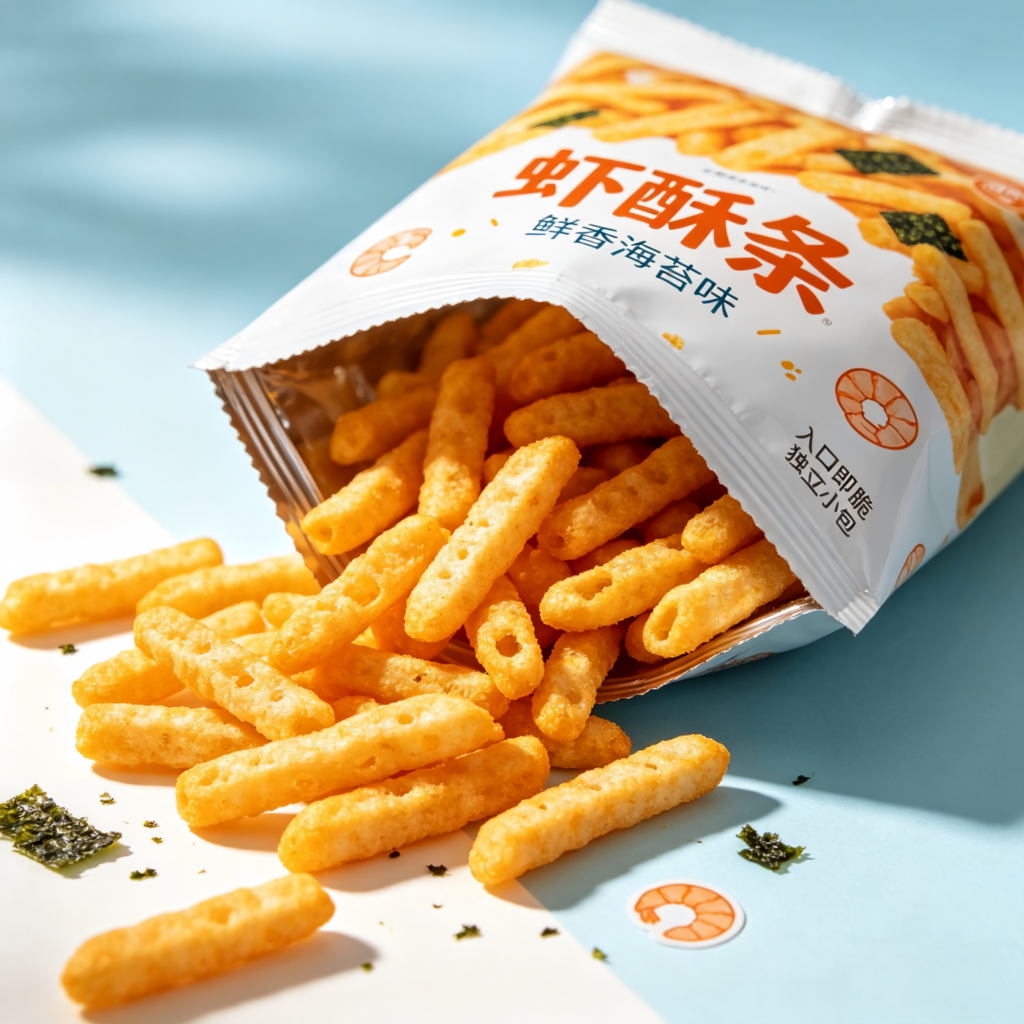
The visual identity of a cheese puff is inseparable from its coating. Consumers use the intensity of the orange hue as a cue for flavor strength and freshness; a pale or mottled puff reads as stale or under-seasoned . The coating drum must apply cheese powder evenly across the tumbling bed, but powder lots themselves vary. cheeto extruder Natural cheese powders can differ in hue from batch to batch, and without objective measurement, these variations enter the finished product undetected. Spectrophotometric monitoring of incoming powder lots—using CIELAB values to track lightness, redness, and yellowness—allows quality teams to reject out-of-spec ingredients before they reach the line . Post-coating checks on the finished puff confirm that the drum is delivering a uniform application; a drop in redness or an increase in lightness typically signals insufficient powder pickup or a worn spray mechanism.
Real-Time Quality Assurance and Process Drift
Traditional quality control in snack manufacturing relies on periodic sampling: a lab pulls product every half hour for density and nutrition analysis, and a sensory panel may convene every few hours to compare against reference samples . This approach has an inherent lag. Between checks, the process can drift—extruder conditions shift, moisture levels wander, or the cutter dulls—and a substantial volume of out-of-spec product may be produced before the problem is caught. Some manufacturers are addressing this by deploying AI-driven monitoring systems that model the extrusion line and flag deviations in real time, allowing operators to adjust feed rates or temperatures before quality falls outside acceptable limits . Whether through advanced simulation or more frequent manual checks, the principle remains the same: the shorter the interval between measurement and corrective action, the smaller the waste.
Hygiene and Equipment Wear
Finally, the operating environment itself imposes maintenance demands that affect product safety and consistency. The extrudate exits the die at temperatures exceeding 150°F and releases steam and hot gases that are corrosive to seals, bearings, and moving parts in the cutting assembly . Vibration from high-speed extrusion further accelerates wear. A worn cutter does not simply produce irregular shapes; it can create fines and dust that interfere with coating adhesion and create sanitation burdens. Preventive maintenance schedules must account for the specific stresses of puffed snack production, and changeover procedures between flavors or product formats must be rigorous enough to prevent allergen cross-contact, particularly given the dairy-based cheese powders involved.

In summary, Cheetos production is a discipline of tight tolerances. Moisture, pressure, temperature, coating mass, and equipment condition are all interdependent variables, and a deviation in any one propagates through the finished product. The manufacturers who succeed are those who treat quality assurance not as a terminal inspection step but as a continuous, data-informed control loop spanning from ingredient receiving to packaging.
 English
 Russian
 Spanish
 Italian
 Arabic
 Portuguese
 German
 French
 Japanese
 Moroccan Arabic
 Persian
 Belarusian