As fortified rice becomes more common in global markets, a critical regulatory question arises: What category of food does it belong to?
The answer determines how it can be labeled, marketed, sold, and regulated. Is fortified rice just ordinary rice with extra nutrients? Is it a health food (like vitamin pills)? Or is it a special dietary food for specific medical or nutritional needs?
This article clarifies the classification based on international standards (Codex Alimentarius), Chinese regulations (GB standards), and typical global practices.
Three Categories Defined
Before classifying fortified rice, we must understand what each category means.
Category
Definition
Examples
Regulatory control
Ordinary food
Any food consumed as part of a normal diet, providing energy and basic nutrients without specific health claims.
Rice, bread, milk, vegetables, cooking oil.
General food safety laws (e.g., hygiene, additives).
Health food / dietary supplement
A product intended to supplement the diet by providing concentrated nutrients (vitamins, minerals, herbs, etc.), usually in non‑food forms like pills, capsules, powders, or liquids.
Multivitamin tablets, iron capsules, fish oil softgels.
Stricter controls: requires pre‑market approval, health claim verification, and specific labeling.
Special dietary food
Foods specially processed or formulated to meet particular nutritional requirements for specific groups (infants, the elderly, athletes, people with medical conditions).
Infant formula, medical nutrition for tube‑feeding, gluten‑free foods for celiac patients, sports protein bars.
Very strict regulations; often requires clinical evidence and prescription or medical supervision.
Where Does Fortified Rice Fit?
Conclusion: Fortified rice is classified as an ordinary food in almost all regulatory systems worldwide.
It is not a health food (dietary supplement) and not a special dietary food. Below is the detailed reasoning.
Why Fortified Rice Is NOT a Health Food (Dietary Supplement)
Health foods/dietary supplements have three defining characteristics that fortified rice does not share:
Characteristic
Health food
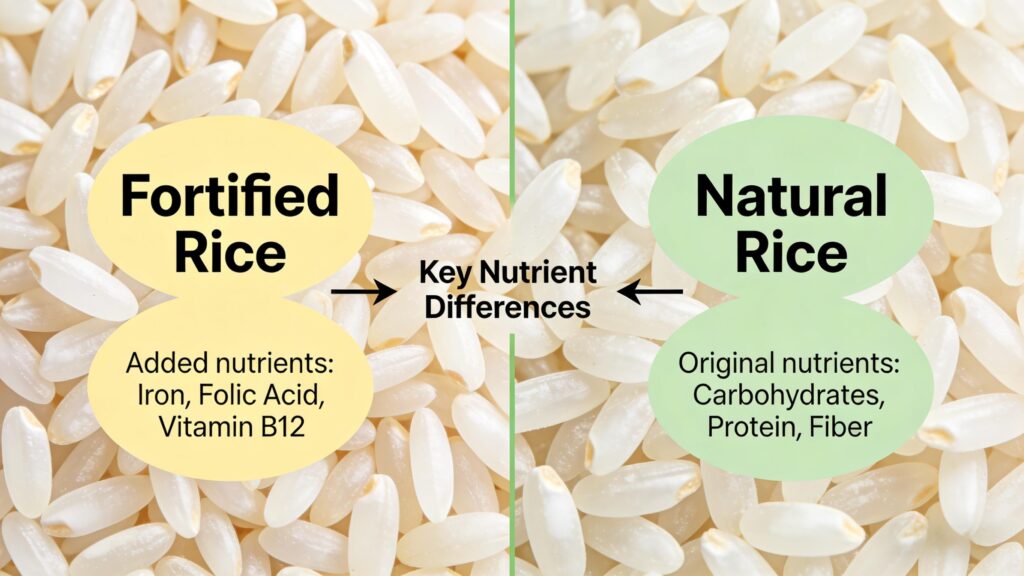
Fortified rice
Dosage form
Pill, capsule, powder, liquid — not a staple food matrix.
Whole grain — looks, cooks, and eats like ordinary rice.
Intended use
To supplement the diet, not replace a meal.
To replace ordinary rice as the daily staple.
Nutrient concentration
High concentration (e.g., 50 mg iron per pill).
Low to moderate concentration (e.g., 0.1 mg iron per gram of rice).
Consumption pattern
Occasional, deliberate intake.
Daily, passive intake as part of regular meals.
If you sold fortified rice in a bottle labeled “Take one grain daily with water,” that would be a supplement — but that is not how fortified rice is produced or consumed. Fortified rice is a food vehicle, not a supplement delivery system in pill form.
Regulatory reference (China): According to GB 16740-2014 (Health Food National Standard), health foods must be administered in limited quantities (e.g., tablets, capsules). Rice does not meet this definition.
Why Fortified Rice Is NOT a Special Dietary Food
Special dietary foods are designed for specific physiological or disease conditions. Fortified rice does not meet these criteria:
Special dietary food feature
Fortified rice response
Targeted at a defined subgroup (e.g., infants, diabetics, PKU patients).
Fortified rice is intended for the general population — anyone who eats rice.
Requires medical or nutritional supervision.
No supervision needed; safe for everyone.
Often has altered composition (e.g., low protein, high fat) for therapeutic purposes.
Fortified rice has nearly identical macronutrient composition to ordinary rice — only micronutrients are changed.
Strict labeling with warnings and usage instructions.
Standard food label without medical instructions.
The only exception would be therapeutic rice designed for a specific disease (e.g., low‑protein rice for kidney disease patients). fortified rice machinery That product would be a special dietary food. But standard fortified rice (with added iron, zinc, folic acid) is not therapeutic — it is preventive and public‑health oriented.
Why Fortified Rice IS an Ordinary Food
Fortified rice falls squarely into the ordinary food category for several reasons:
It is a staple food – People eat it in the same way, same quantity, and same frequency as ordinary rice. No change in eating behavior is required.
Nutrient levels are within safe ranges – The added vitamins and minerals are set at levels that provide 30–50% of daily needs per typical serving. fortified rice machinery These are nutritional enhancement levels, not pharmacological levels.
It is regulated under general food fortification standards – Globally, fortified rice is covered by standards for fortified staple foods, not by health food or special dietary food regulations.
Codex Alimentarius (CXS 192-1995) – General Standard for Food Additives includes provisions for rice fortification under the category of “ordinary foods.”
China – GB 14880-2012 (Standard for the Use of Nutritional Fortification Substances in Foods) specifically lists rice as a food vehicle for fortification. This standard falls under general food regulations, not health food or special dietary food rules.
India – FSSAI’s Rice Fortification regulations treat fortified rice as a standard food commodity.
USA – Enriched rice (a form of fortified rice) is regulated by the FDA under 21 CFR 137.350 as a “standardized food” — again, an ordinary food category.
No health claims required – Fortified rice can be sold without making disease prevention claims. It simply states the added nutrients (e.g., “Contains iron and folic acid”). If a manufacturer wants to say “Prevents anemia,” that would require health food or drug approval — but most fortified rice does not make such claims.
A Visual Summary
                    ┌─────────────────────────────────────┐
                    │         FORTIFIED RICE               │
                    └─────────────────────────────────────┘
                                      │
                                      ▼
                    ┌─────────────────────────────────────┐
                    │       ORDINARY FOOD                  │
                    │  (Staple food with added nutrients)  │
                    └─────────────────────────────────────┘
                                      │
            ┌─────────────────────────┼─────────────────────────┐
            ▼                         ▼                         ▼
     ┌────────────┐           ┌────────────┐           ┌────────────┐
     │ Health     │           │ Special    │           │ Medical    │
     │ Food       │           │ Dietary    │           │ Food       │
     │ (No)       │           │ Food (No)  │           │ (No)       │
     └────────────┘           └────────────┘           └────────────┘
     Pill/capsule form        For specific              Disease-
     High concentration       subgroups                 specific
     Occasional use           (infants, athletes)       therapy
Important Nuances and Exceptions
While fortified rice is generally an ordinary food, there are boundary cases:
Scenario
Classification
Fortified rice sold in a pharmacy next to vitamins, but still as a bag of rice.
Still ordinary food — the sales channel does not change the legal category.
Fortified rice labeled “Helps reduce risk of iron deficiency anemia.”
May be reclassified as a health food (or even a drug) in many countries because a disease risk reduction claim requires higher regulatory scrutiny.
Fortified rice produced for a World Food Programme school meal project.
Still ordinary food — the end user is a healthy child, not a patient.
Rice fortified with a single high-dose vitamin A capsule inserted into each bag (e.g., “VitaRice” sachets).
This is actually a dietary supplement disguised as rice — the nutrient level is too high for ordinary food status.
Key principle: If the nutrient level exceeds the Codex or national standard for fortification of staple foods, the product may legally become a supplement or health food.
Conclusion
Question
Answer
Is fortified rice an ordinary food?
✅ Yes – It is a staple food enriched with micronutrients, regulated under general food fortification standards.
Is fortified rice a health food (dietary supplement)?
❌ No – It is not a pill, capsule, or concentrate. It is a whole food consumed as a meal basis.
Is fortified rice a special dietary food?
❌ No – It is not formulated for a specific disease or physiological condition (except in rare therapeutic versions).
Final statement: Fortified rice is legally and practically an ordinary food — specifically, a fortified staple food. It sits alongside fortified salt, fortified wheat flour, and fortified cooking oil in the category of everyday foods that have been improved to address public health nutrition needs without changing consumer behavior or requiring medical supervision.
Quick Reference for Consumers and Regulators
For consumers: You do not need a prescription or medical condition to eat fortified rice. It is safe for your whole family, just like ordinary rice — but with extra vitamins and minerals.
For regulators: Fortified rice should be regulated under general food safety and food fortification standards (e.g., GB 14880, Codex CXS 192), fortified rice machinery not under health food or special dietary food frameworks, unless the product makes explicit disease prevention claims or contains pharmacological nutrient levels.
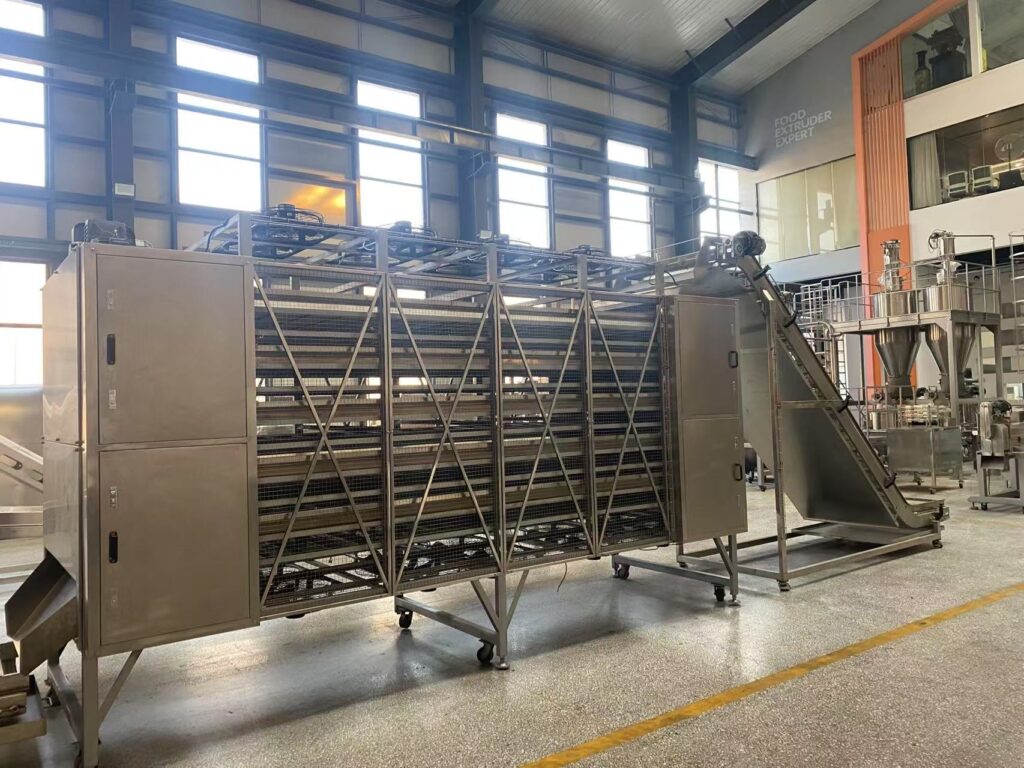
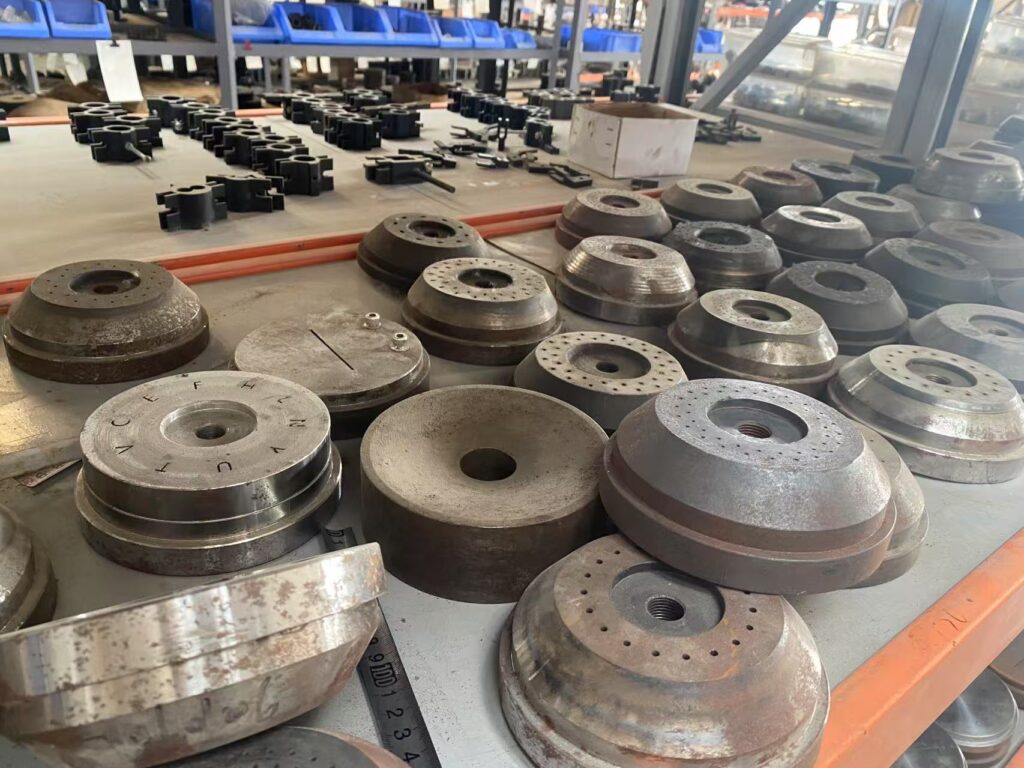
If you are interested in the fortified rice making machine, you can contact me , i will give you good advice and solutions .
1.Will you help us with the installation ?
Yes , We will send engineers to install and debug the equipment, and assist in training your staff.
2.Are you a factory or trading company?
We are a factory.
3.What certificate do you have?
We have ISO and CE certificate.
4.How long is the warranty period?
All of our machines have one year warranty.
5.What’s the main market of your company?
Our customers all over the world.
6.How much production capacity of your company one year?



 English
  Russian
  Spanish
  Italian
  Arabic
  Portuguese
  German
  French
  Japanese
  Moroccan Arabic
  Persian
  Belarusian